If your site is basically a pretty brochure that nobody finds or trusts, it’s not an “asset.” It’s a pretty expense with a nice font.
In January 2026, StatCounter showed a global traffic split ratio: mobile 50.59%, desktop 48.05%, and tablet 1.36%. Desktop is basically half of global traffic—and it’s where high-intent decisions happen: pricing comparisons, long-form reading, and calls booking. Great statistics to stop ignoring HTTPS, right?
A good website is a deal-making machine. It earns trust fast, then points people to one obvious next move—book a demo, hop on a call, or buy a product. If it can’t bring customers in or save your team hours, your site is a simple decoration. So before you drop a budget, decide what the site must produce for the business, then build everything around that outcome.
Do you even need a site right now?
If you can answer “yes” to any of these, a website is more likely to pay off:
● Will a website draw in leads or clients that you couldn’t reach otherwise?
● Can it explain how your product differs from competitors’?
● Is your solution new or complex and needs explanation online?
If your business runs on spread-the-word fuel, or you’re selling something niche with zero plan to drive traffic (say, selling cookies from home), you don’t need a spaceship. A simple page or a sharp social profile can carry you for now.
Still, businesses with paid marketing and high customer value should invest in something more robust.
Brand-building and sales-driven sites
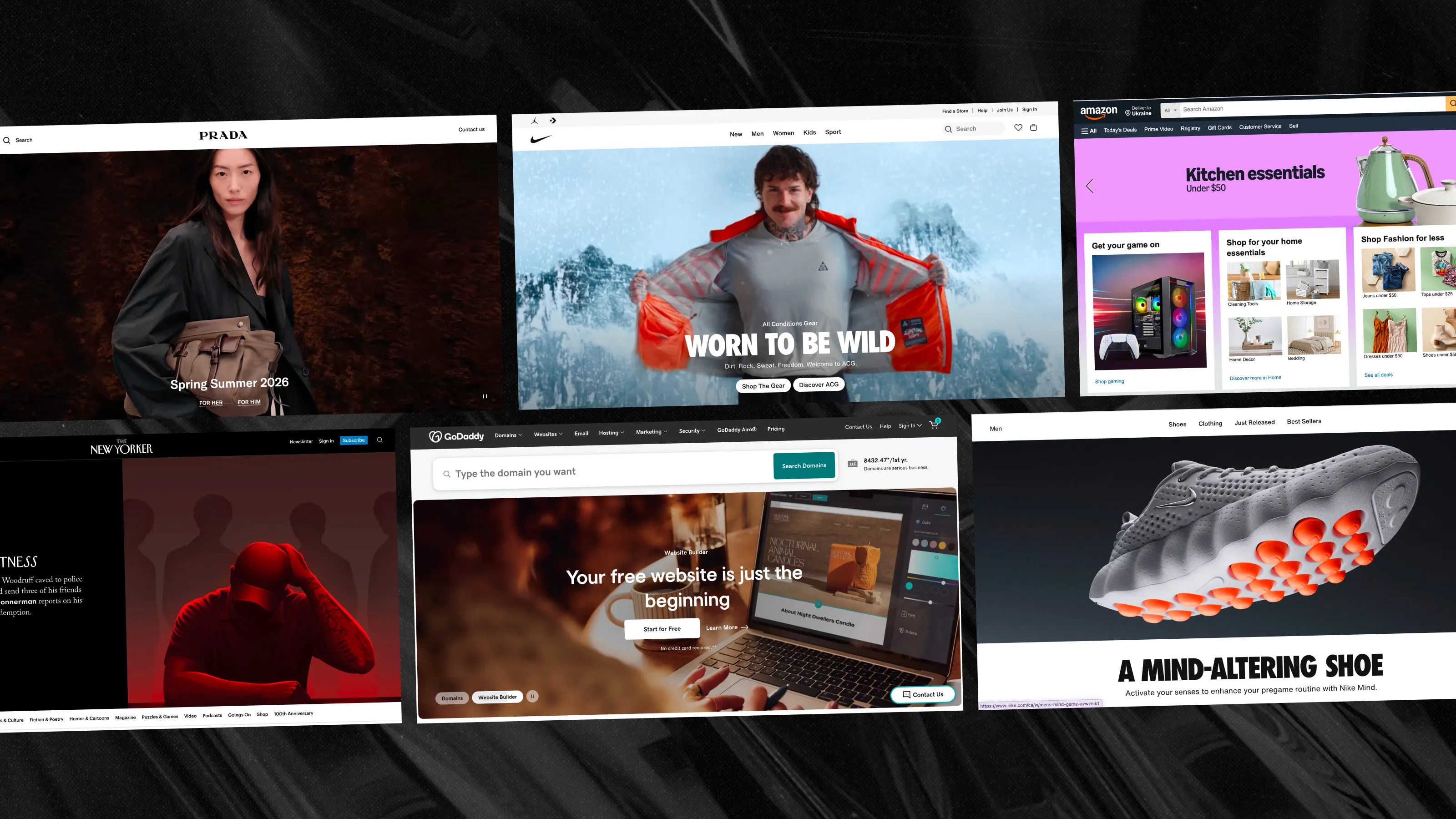
Most websites have two main jobs: build trust (make people feel safe saying “yes”) or drive sales (help people buy, sign up, or book fast).
Brand-focused sites
Such pages are common for premium services and tech companies. Sites like Nike, The New Yorker, or Prada usually lean on rich media (videos, animations, and 3D) to land an emotional punch fast. That stuff costs more because it takes time to concept, produce, and polish.
And yes, the trust bar is real. A 2026 consumer survey found 69% of people say a website is essential for a business to feel credible. But it has to look like it belongs to a real company with standards. In the 2025 GoDaddy survey, 71% consumers said businesses should maintain a dedicated website and domain, and 80% said they avoided buying because the domain name looked off.
High-quality assets (video, animation, 3D) are also crucial to communicate the story and positioning in seconds. According to Wyzowl’s annual report, in 2026, 89% of consumers said video quality affects their trust in a brand. But remember that low-quality flashy is worse than no flashy at all.
Sales-focused sites
Such sites are typical for online stores and mass-market products, but they play a different game. The priorities are simple: lightning load times, SEO that actually pulls, and a flow so frictionless that users don’t even notice it. According to a European Commission report, in 2024, 77% of people in the European Union reported buying or ordering goods and services online (up from 59% in 2014).
Here’s the catch: large e-commerce platforms built from scratch can cost hundreds of thousands of dollars and, in some cases, approach seven figures—because you’re not just building pages, you’re building infrastructure. Baymard Institute’s last-year research puts average cart abandonment at 70.19%, so every extra second or broken step turns into silent, expensive goodbyes at checkout.
That’s why high-volume sales sites often look plain, and that’s totally fine if they convert. Think of Craigslist or early Amazon: not trying to impress, just trying to do fast, clear, and scalable work. Flashy design doesn’t guarantee revenue, and simplicity doesn’t doom it. The only real rule is: make it as beautiful or as fast as your business goals demand.

Typical website budgets
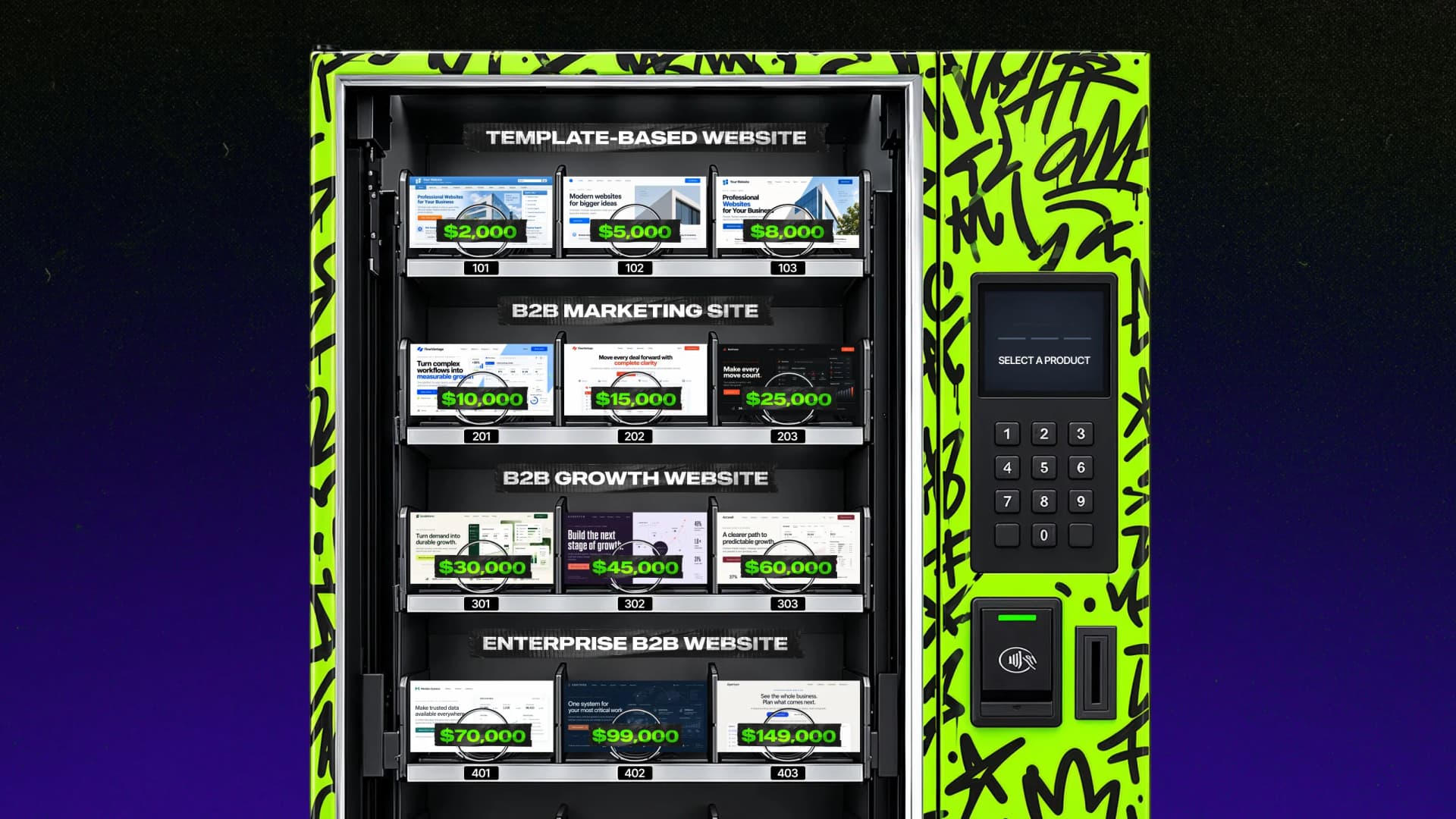
“How much is a website?” sounds like one question, but it’s really three: how fast, how flexible, and how much revenue pressure it needs to handle. A basic informational site might run from a few hundred dollars (DIY or template) up to a few thousand.
Industry numbers are usually pretty clear:
● Landing page—$8–10k
1 key scenario: show the product, build trust, and drive one clear action—with minimum pages, maximum clarity.
● More complex landing page with animations and interactives—$15–20k
When you need an emotional impact in 3–5 seconds: motion, micro-interactions, custom blocks, production, and polishing.
● Multi-page website—$20–150k
More content, roles, logic, and scenarios. Here, the budget grows because of the systematic nature of the project: structure, UX, content models, QA, and scaling.
● Large e-commerce—$150k+
This is no longer a website but an infrastructure: catalog, filters, search, integrations, payments, promo logic, analytics, performance, and stability under load.
What drives website costs
Website pricing isn’t random. It’s based on a mix of several key factors:
Business position and scope
If you’re taking part in a “Premium vs. Premium” battle, you'd better have a sharper design, stronger UX, and custom touches that justify the price tag. Otherwise, you’ll be knocked out. If you’re a local company that just needs to be findable and credible, a simpler presence can be the smarter spend.
Site size
More pages and content = more work. Every new section adds writing, layout, responsiveness, QA, and edge cases. A one-page brochure is a sprint; a multi-page site or catalog is a production.
Functional complexity
The moment you add things like custom animation, interactive tools, or complex forms, you’re buying more than design—it’s engineering time and specialist skills. Basic sites with standard components (text, images, contact form) stay cheaper because they don’t require custom dev.
Development approach
Building everything from scratch (custom code) is expensive and time-intensive. Using a CMS or site builder (WordPress, Shopify, Webflow, etc.) with templates greatly reduces hours. For example, a professionally scripted site may cost 10× more than a template-based one. A template can save roughly 80–90% of the design cost versus a custom design.
Team and timeline
A solo freelancer might be cheaper per hour, but an agency shows up with a full bench: strategy, design, development, QA, and PM. This means more complex website architecture, refined UX flows, expertise in SEO, and your saved nerves. And if the deadline is “yesterday,” costs can jump.
How to reduce the budget without killing results

Even on a budget, you can optimize costs smartly:
Stay honest in negotiations: instead of “Can you do 30% off?”, try: “My budget is $X. What can we ship inside that—without breaking conversion?” That question forces smart trade-offs: fewer pages, simpler components, phased features, tighter scope.
Choose the right tools: building on WordPress, Shopify, or Webflow is much faster than coding from scratch. These tools can bring near-custom quality at lower cost.
Launch an MVP: you don’t need every feature on day one. Clarify the key pages and functions, and launch with that. Everything else is Phase 2. If the site starts earning, you can add a cherry on top with less stress and better data.
Trim non-essentials: animations, custom illustrations, 3D graphics, and video can wow visitors, but also cost time and money. Keep them only when they sell, as cutting them can save budget, but remember you may also lose some “wow factor.”
Plan for growth: if your business isn’t likely to change its structure soon, keep it simple. If you expect rapid change, invest in a flexible platform.
Final considerations before launch
A website should never be a vanity project. Before you approve anything, ask: “Why are we doing this? What business results must it deliver?” If you merely want a pretty-face site, you invest elsewhere (marketing, production, etc.). But if the site’s purpose is to increase sales, improve efficiency, or expand your market—then proceed with confidence.
Also, make sure the scope fits your stage. A newly founded startup often needs a basic presence, not a multi-thousand-dollar site. Always match the agency’s proposal to your actual needs. The proposal should fit your reality, not your Pinterest board.
And don’t be shy to ask questions. The cheapest quote isn’t always best—a very low price might mean missing functionality or poor quality. On the other hand, the most expensive option isn’t necessary unless it aligns with a strong ROI. Weigh every quote against your goals because a good website should be a measurable investment, not a sunk cost.
Written by

Qream co-founder | Design and product direction
Leads Qream's creative and product direction, connecting brand strategy, experience design, and business goals. Reviews content where design strategy, UX/UI, customer experience, and brand execution are central.