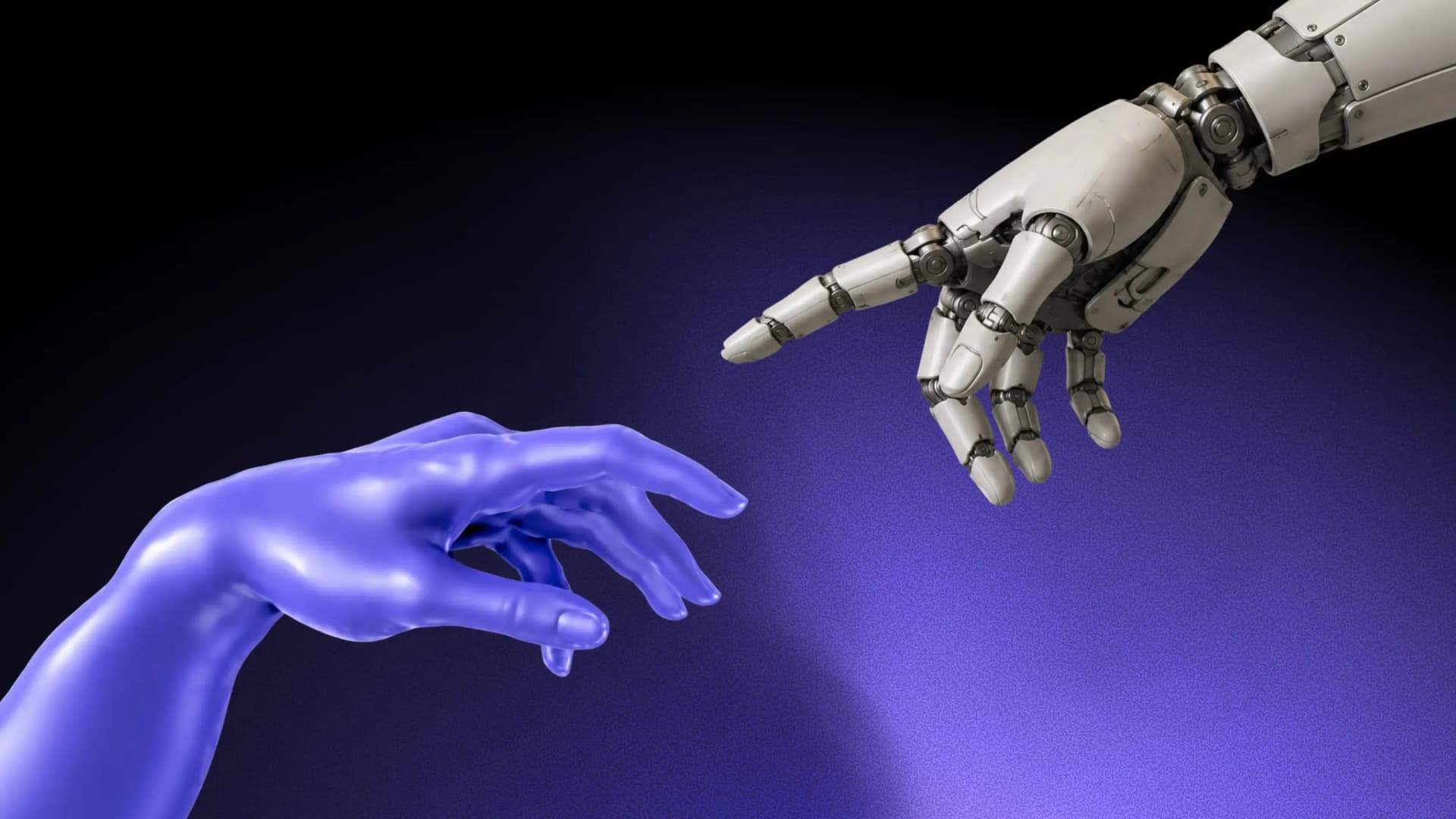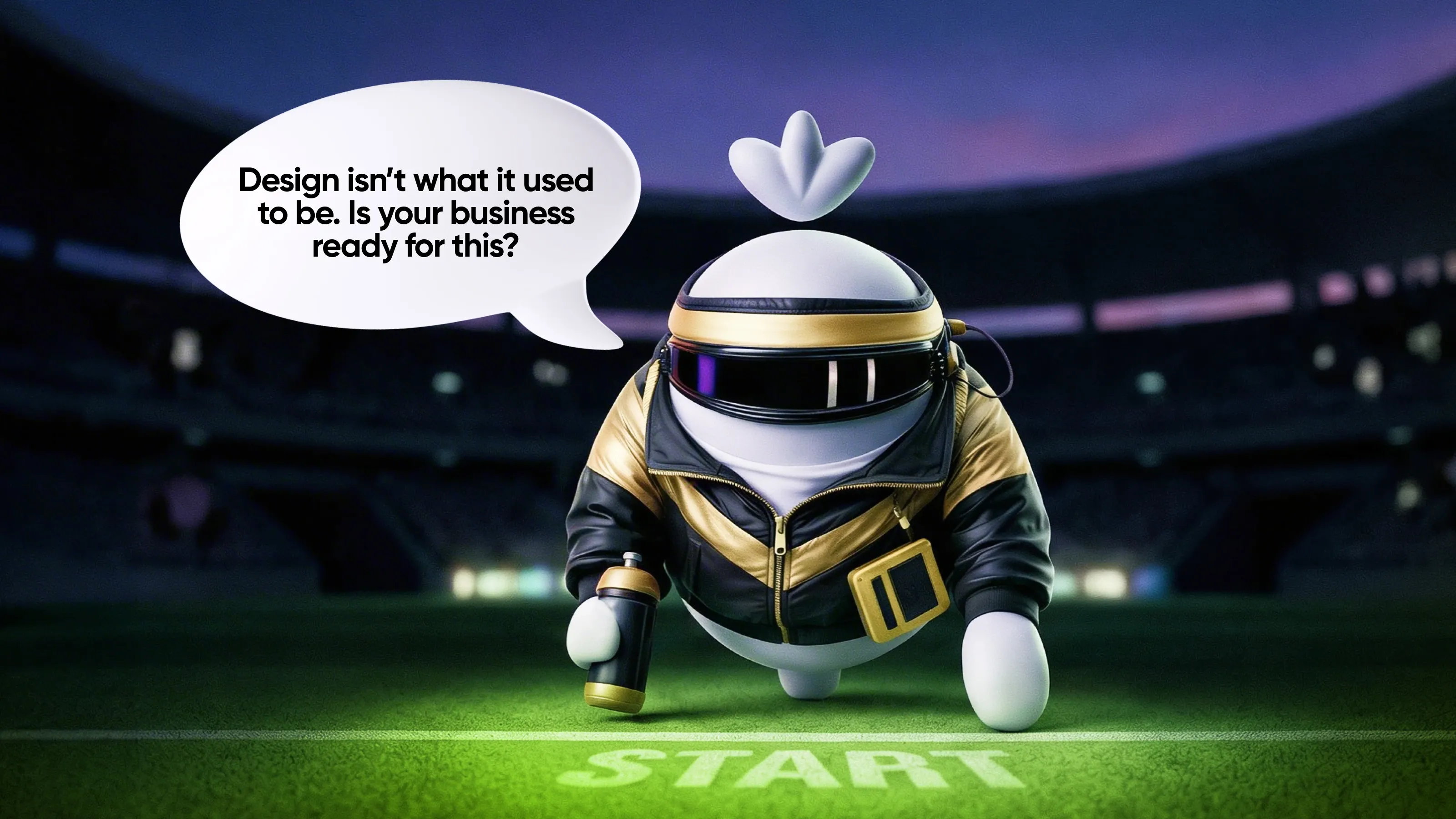
Design is changing—not stylistically, but structurally. AI is shrinking production timelines, budgets are getting audited line by line, and execution is cheaper than it was even a year ago. And that’s just the visible part.
For tech companies, this is no longer a cute “creative industry update.” It’s a business shift. Design is becoming one of two things: a growth lever or a production commodity.
Here’s what business leaders need to understand before the market makes that choice for them.
The design service market is changing fast
To date, demand for design got much pickier.
At the top end of the market, large companies are still moving forward with serious projects. Brand systems, digital products, launch campaigns, platform redesigns—that part is still alive and kicking. But in the small and mid-sized segment, the mood has changed. Budgets are tighter. Risk tolerance is lower. Experimental work gets questioned faster. Teams want more certainty before they spend.
That shift affects design directly.
When businesses become more cautious, they now worry about what they can justify. And once that happens, design gets pulled into the same conversation as every other line item: cost, efficiency, output, ROI.
On top of that, there’s the bigger market mess no one can ignore. Geopolitical instability, pressure on funding, shifting priorities across industries, and constant economic weirdness all shape how companies invest. Sectors are growing and freezing. Some of them are suddenly trying to do more with half the budget and twice the pressure.
This is where the pattern becomes obvious.
When budgets tighten, safe vendors win. Experimental spend gets harder to defend. Internal teams get asked to stretch further. And suddenly design is treated less like strategy and more like a focus thing to optimize.
So companies start asking: “Do we really need branding right now?” “Can AI handle this cheaper?” “Should we build in-house instead of hiring specialists?”
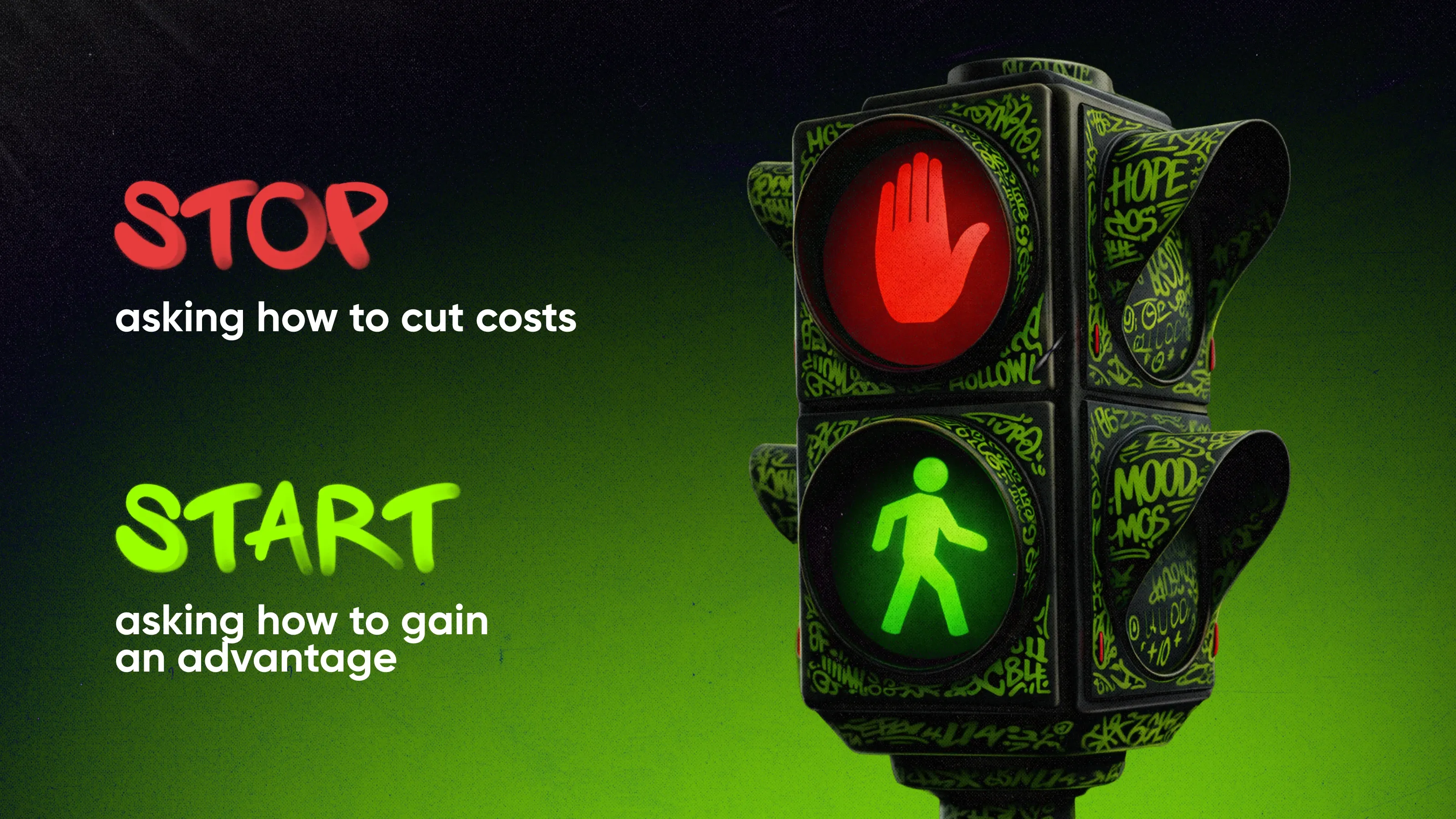
But most businesses ask the wrong follow-up. The better question is “How do we make design pull more weight?”
That’s a very different game. One is about saving money. The other is about building leverage. And in 2026, leverage wins.
AI is no longer just a tool. It’s changing the value chain
A couple of years ago, tools like ChatGPT, Midjourney, and Sora still felt a bit like shiny toys for curious teams. They were fun to test but not always something you’d trust with real business output.
But that phase is over. AI is now deeply useful in everyday execution. Many businesses across diverse industries—retail, healthcare, finance, and manufacturing—have integrated AI to streamline their operations and enhance productivity. In fact, AI-driven applications, such as chatbots for customer support or predictive algorithms for sales forecasts, are becoming essential to stay competitive in a fast-paced market. The quality gap is closing fast, and the cost gap is already here.
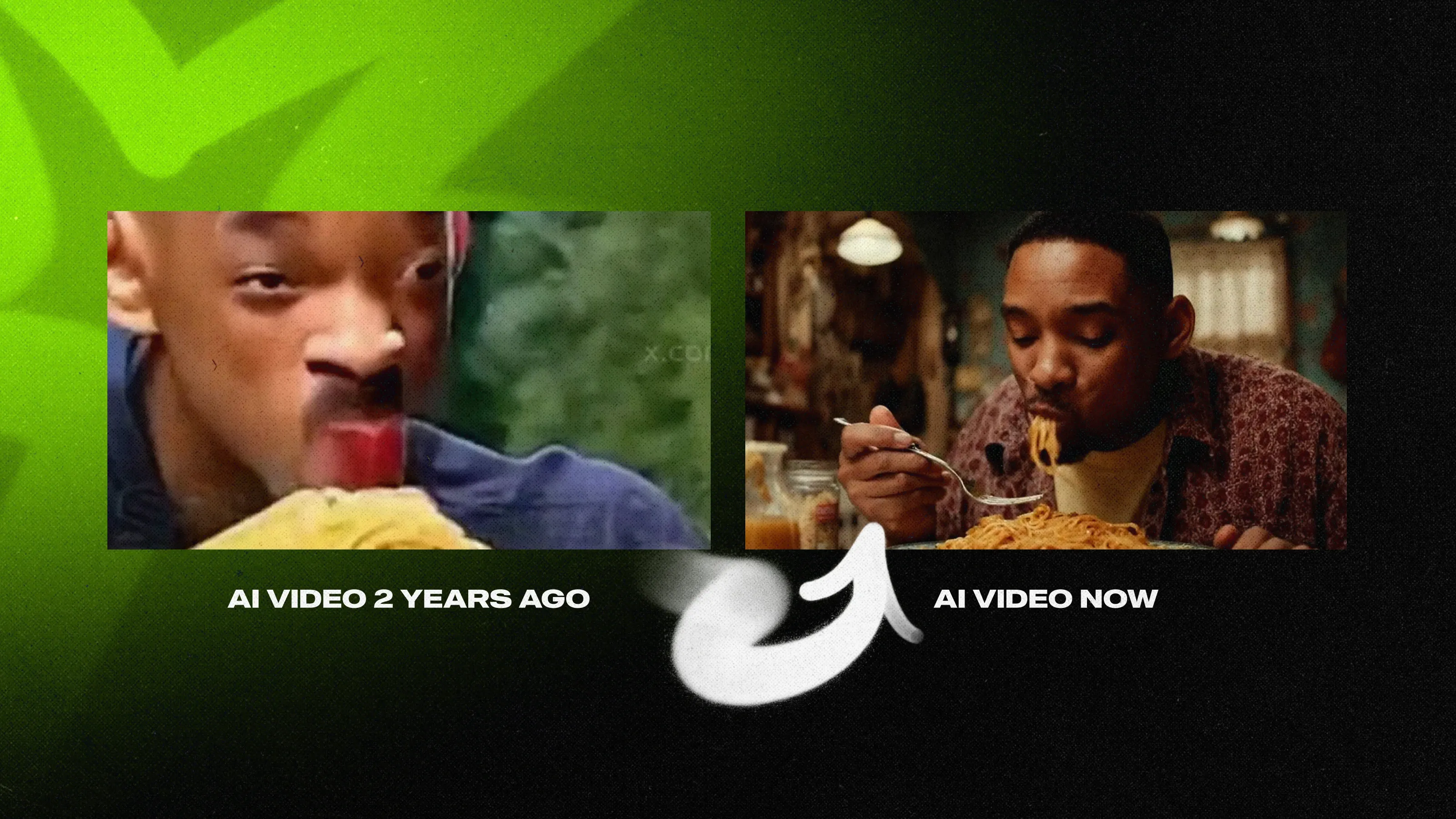
Validation gets faster. Teams can test concepts, flows, messages, and visual directions in days instead of weeks.
Production gets leaner. Smaller teams can now do work that used to require a wider bench of specialists, especially in early-stage concepting and content-heavy tasks.
Pattern recognition gets sharper. AI can process huge volumes of data, references, and signals faster than any team with four tabs open and a coffee addiction.
But here’s the catch most companies miss. When execution gets cheaper, strategy gets more valuable. Because once everyone can generate decent-looking outputs fast, the market gets flooded with average visuals, copy and interfaces. And that is where brands start disappearing into the wallpaper.
The question is now “Can this be designed in a way that matters?”
What this means in business terms
Time-to-market is shrinking
AI is accelerating research, ideation, prototyping, and validation. That means product and marketing cycles are getting tighter across the board.
If a competitor can test, refine, and ship in 6 weeks instead of 12, your old planning logic starts aging badly. Speed is no longer a flex. It’s table stakes.
Moving slowly now doesn’t make a company thoughtful. Sometimes it just makes it late.
Execution is getting more accessible
Motion, 3D, content systems, prototypes, front-end support, campaign assets—AI doesn’t erase these disciplines, but it does compress the resources needed to produce them.
For businesses, that means faster iterations, smaller production teams, and lower cost for certain layers of execution.
Strategic design becomes a growth engine
This is where the value moves upstream. AI can speed up production. It can support ideation. It can help teams get from a blank page to a workable draft much faster.
What it cannot do on its own is understand the deeper logic behind a business. It cannot define what a product should mean in the market. It cannot build positioning with actual taste and context. It cannot connect user behavior, product logic, business goals, and category dynamics into one sharp design direction without a strong human brain steering the ship.
That’s why strategic design matters more now, not less.
What changes over the next 5 years?
Expect two things to happen at once: more automation and more complexity.
AI will keep expanding into workflows, products, interfaces, and customer experiences. And as human-machine interaction evolves, design will expand with it. We’re already seeing this in AI-native products, conversational interfaces, AR/VR environments, spatial computing, and new hardware categories that change how people consume information.
The interface is no longer just a screen. Increasingly, it’s behavior.
That matters because every time interaction changes, design has to change with it. Teams aren’t just designing pages anymore. They’re designing systems, flows, feedback loops, trust signals, and whole decision environments.
At the same time, low-leverage production work will keep getting compressed. Repetitive execution, predictable visual tasks, and manual output-heavy roles will be under pressure. Not because creativity is dying, but because average production is becoming easier to automate.
Honestly, that’s not tragic. It’s useful. It forces the industry to raise the bar.
So what should companies do?
Reframe design. Use AI where it removes drag. Let it support research, early exploration, internal ops, content adaptation, and lower-value production layers. That’s just operational sanity.
But push human talent closer to the decisions that actually move business: positioning, product logic, user understanding, narrative, systems thinking, category differentiation, and the kind of creative judgment that can’t be reduced to a prompt.
That’s the sweet spot.
At Qream, AI isn’t treated like a threat in a cool robot costume. It’s infrastructure. It helps speed up internal workflows, supports research, and can reduce production waste when budgets are tight. But the key decisions stay human—because that’s where business context, responsibility, and actual taste still matter most.
The real risk isn’t AI
The companies that will struggle aren’t the ones using AI too aggressively. They’re the ones underinvesting in R&D, treating design and marketing like optional extras, and optimizing for short-term savings so hard they quietly flatten their future.
That’s the real danger: not automation, but stagnation. Because the market is not rewarding companies for being cautious in the old way. It’s rewarding the ones that integrate fast, think clearly, and know where human input creates actual value.
When execution gets cheaper, rarity becomes more valuable. And rarity in business usually looks like this: Clear positioning in a crowded market and sharp product logic.
If you’re building a serious company in 2026, the goal isn’t to look polished enough. Average can do that now. The goal is to be harder to confuse, harder to replace, and harder to ignore.
That’s what design is for now. Not just making things look good. Making the business clearer, sharper, faster, and more distinct.