Cybersecurity branding isn’t a lame talk. Companies always rack their brains to find a way to build trust—because that’s the question of surviving.
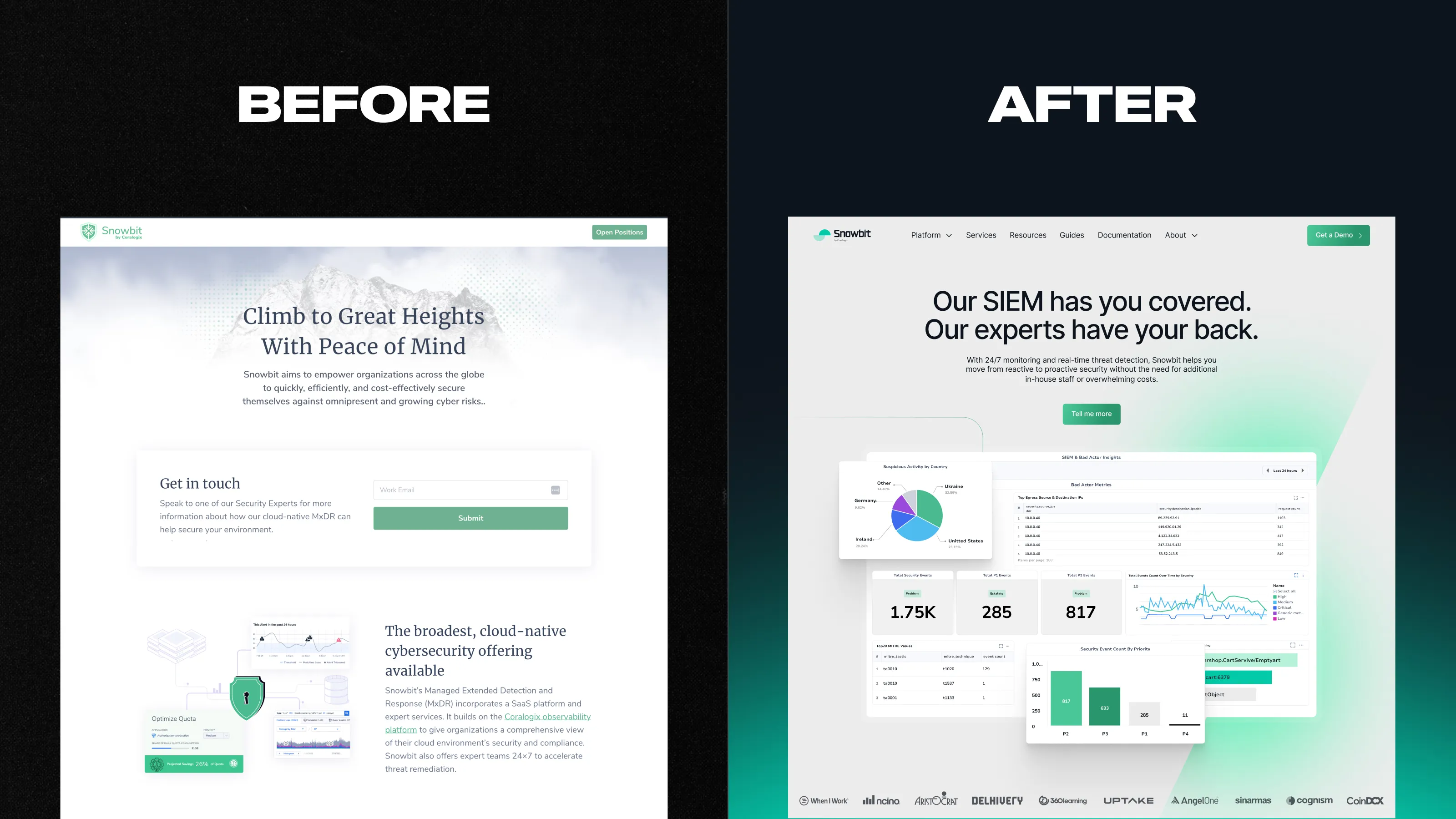
When Coralogix, an observability platform, launched Snowbit to enter the cybersecurity field, they needed a fresh approach. Sub-brand design is like a surgical decision: how much of the parent brand do we keep, and how much do we kill?
So we gave them the Qream brand approach: spun off the core from the parent brand, which became the foundation for the cybersecurity startup branding.
The problem of sub-brands: too similar = invisible, too different = untrusted
Snowbit is just a more tailored solution for companies that don’t need Coralogix’s full stack. Besides the enterprise weight, everything else is the same: the same brains under the hood, a talented team, and a core approach.
We saw the vibe of an ambitious younger sibling who isn’t trying to replace the older one. Just trying to move quicker and hit a different market.
Snowbit needed Coralogix’s credibility—that’s non-negotiable. Cybersecurity clients are picky and don’t make quick decisions. So, if we don’t have 3 years to build trust from scratch, we can kinda borrow it from the earned brand. Because cybersecurity brand identity isn’t cooked from scratch.
The challenge was that if Snowbit looked too much like Coralogix, it’d give just another feature, not a product. If we pushed too far, they’d lose the association and become a random startup asking people to trust you with their security. This is the tension every sub-brand lives in: be recognizable, but not replaceable.
The solution: stay in the family (and steal a bit of spotlight)
We decided not to cut the cord to the parent brand but change the attitude on the vibe level:
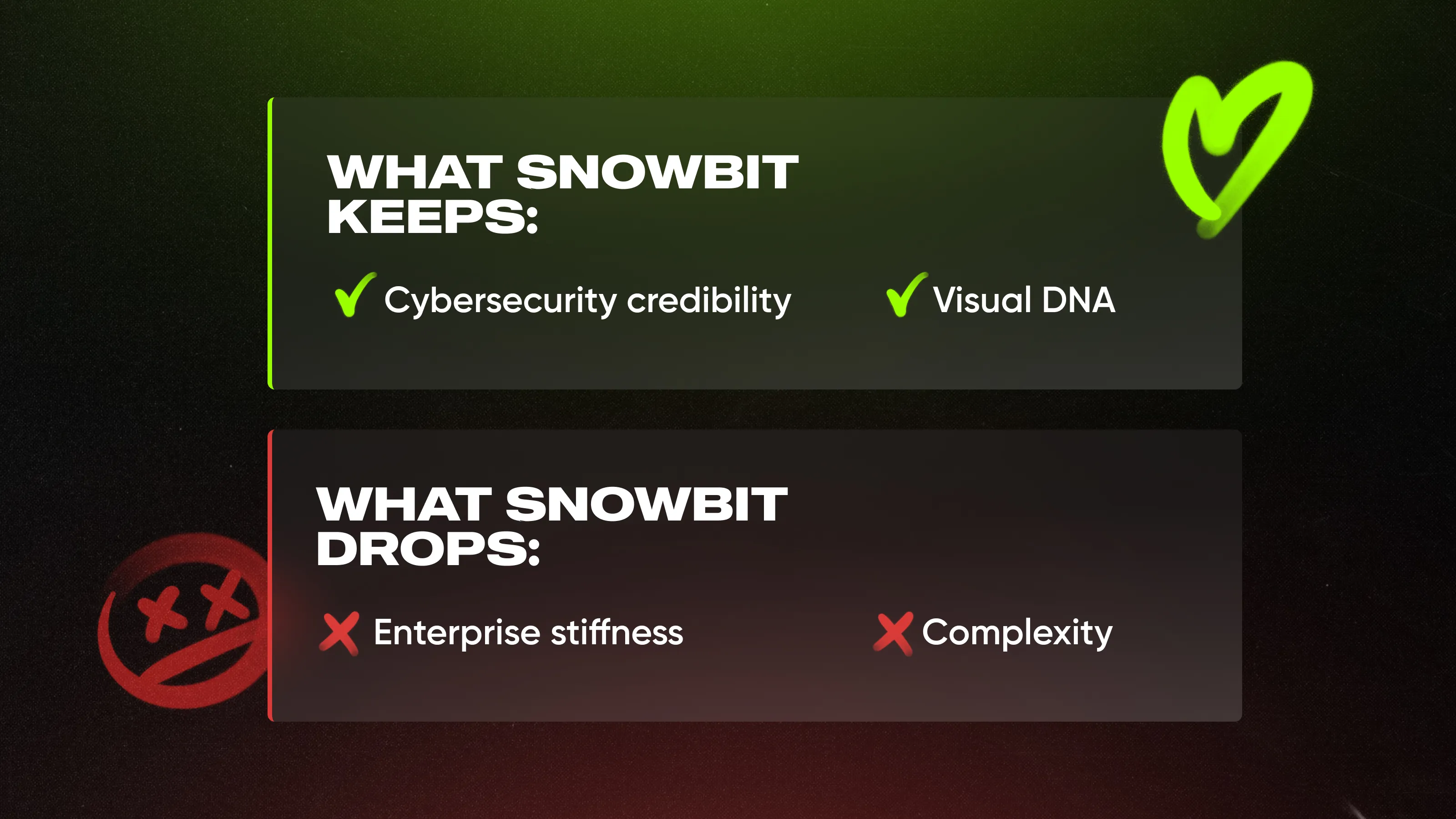
The tricky part was there: cybersecurity is a pretty heavy category. And if your product is complex, you can’t rely on abstract or overly associative visuals alone—you need a deeper bond. So we built everything from that constraint.
Don’t clone the identity system—translate it
Coralogix already had recognizable elements, including a distinct circular form at the core of its logo. We treated it as a structural move that became our starting point.
We explored three logo directions, all based on form manipulation rather than decoration. We tried to blend in the previous circle, add a new icon, or change one letter in the name and make it an icon (you can see the ideas in Snowbit’s full case study). Anyway, the winning concept came with a hidden layer, literally.
We took Coralogix’s circle and split it in half. Those halves overlap, layer on top of each other: one more visible, one partially hidden (but Snowbit is always in control of both).
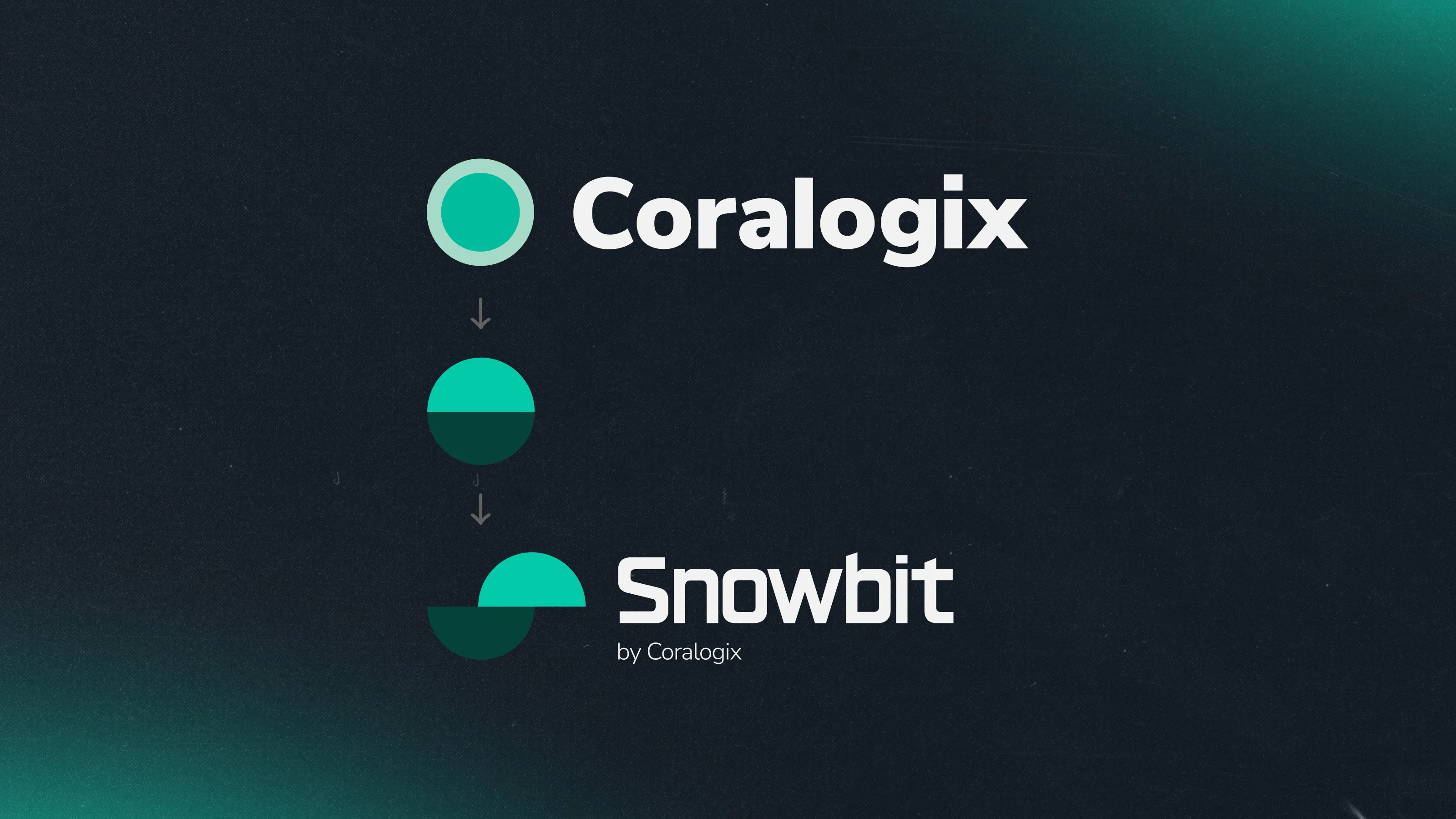
And then, the twist: flip these halves, and they become an “S.” Boom, Snowbit is literally embedded inside the system! Instead of breaking away from Coralogix, we created a visual mechanism that keeps the connection alive but transforms it into something new.
The color strategy, aka a different drip of the same DNA
Color is brand recognition that triggers emotion before logic even kicks in. Some colors, e.g., red and yellow, feel aggressive, energetic, and loud. Blue and green feel stable, grounded, trustworthy. Cybersecurity lives in that second zone—trust-driven by default.
At first, Snowbit’s idea was radical: ditch green completely and start fresh. But we quickly pushed back on that, and instead of reinventing, Qream’s branding approach was to reinterpret.
We kept the Coralogix green as an anchor, and then expanded the system around it to create a broader emotional range. We explored three directions:
- A high-saturation acidic green system that is loud, disruptive, and almost startup-aggressive.
- A muted green spectrum with extended tones that create flexibility without losing identity.
- A neutral black/grey base with green as an accent, which turned safe, calm, and balanced.
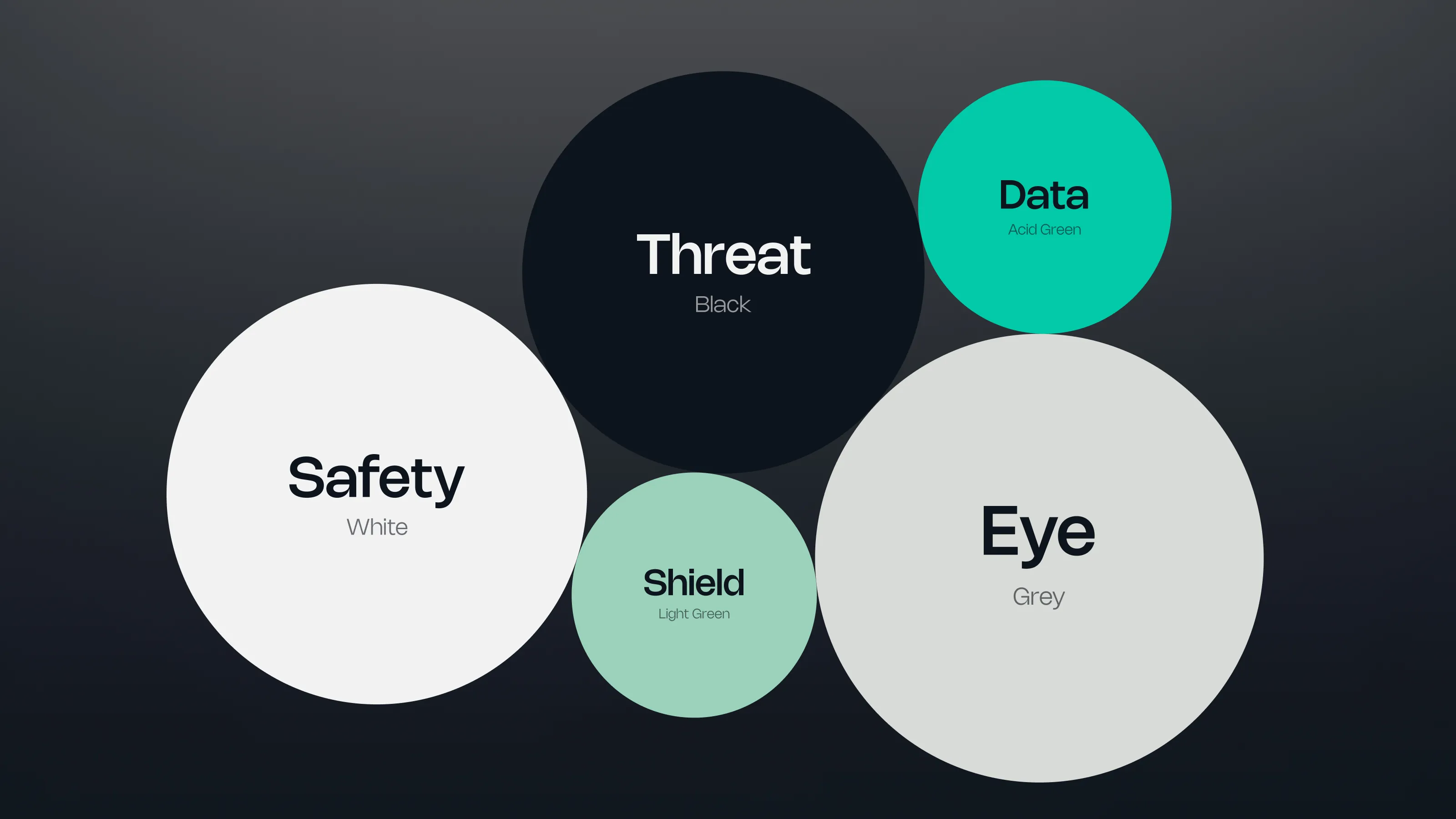
And… drumroll, please… we went with option three!
The new palette works on different levels:
- It preserves immediate family recognition as the accent tone comes straight from Coralogix.
- It creates a softer, more modern cybersecurity vibe as we balance neutral and bright shades.
- It allows strong contrast pairing across the visual system—the number of pairings and gradients is big too.
- It’s a scalable visual system that could carry product UI, marketing, and storytelling without collapsing into sameness.
3D icons that remove clichés
Say “cybersecurity,” and your brain probably goes straight to one thing: serious people in serious offices looking at serious dashboards.
We didn’t want any of that stock vibe. The category is already visually exhausted. You simply skip visuals of shields and locks, looking flat and predictable. So we broke it.
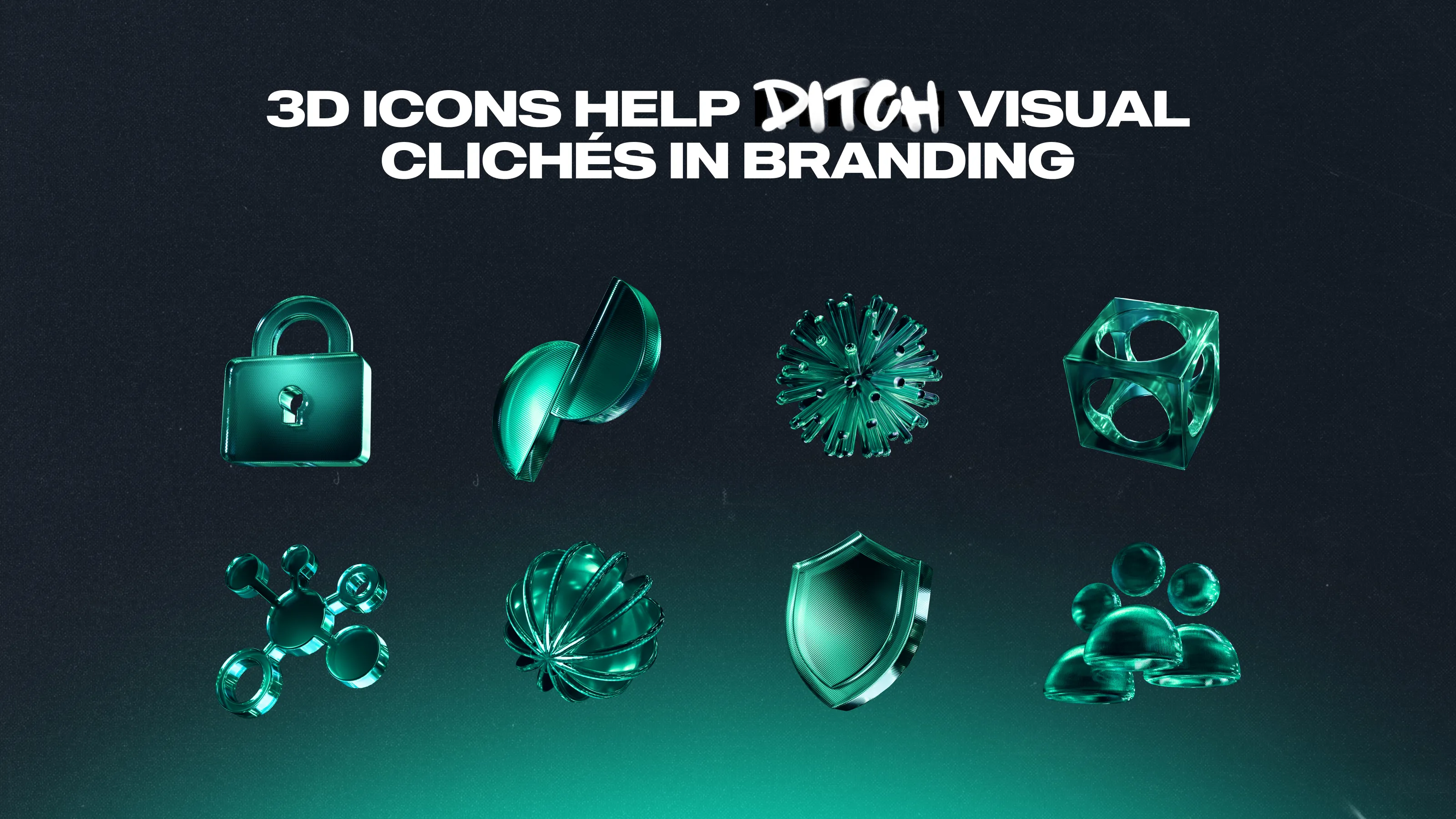
Instead of generic symbols, we built a full set of custom 3D icons. We took familiar cybersecurity objects (and less familiar ones) and rebuilt them as glass-like forms. They truly look more like engineered objects than stock illustrations.
“Snowbit trusted us fully and gave us room to experiment. I’m obsessed with what we’ve done, and these glass-like 3D elements I liked the most—they became a defining move, signaling transparency and trust.”
Sophia Lev, Lead Graphic & Brand Designer
3D has been everywhere in branding for years, which is exactly why the challenge was to do it slightly differently. We didn’t want to mindlessly follow the trend, but use it to break category expectations. See how cool these 3D banners turned out on Snowbit’s website, banners, and merch.
The payoff is… a sub-brand that upgrades the parent
In the corporate world, the response was immediate: 165K impressions on LinkedIn and strong engagement across the launch.
But the real signal came from the client:
“Now, we have a cohesive visual identity that supports and tells a story in relation to our parent brand. We’ve been told that the branding of Snowbit made our parent company’s branding look outdated.”
Lily Waldorf, Product Marketing Manager at Snowbit
And, dare we say, that’s the real win: not just a good-looking sub-brand but a system that outshines the parent brand by comparison.
Steal this playbook: 2 questions before you design a sub-brand
If you’re building a sub-brand, start with structure as Qream did. First, ask yourself or discuss with a team: what does the new brand inherit, and what does it reject? Because even the strongest parent brand carries things you don’t want to inherit.
And then, imagine how a stranger will recognize the family connection in 3 seconds. This can live in logo structure (similar shape or monogram), color logic (shared base but different expression), typography (same font family), etc.
Answer those, and your design has a chance. Ignore those, and you’re just making pretty visuals with no architecture behind them. Strategic thinking has always been a love language of bold design.
Got a sub-brand challenge of your own? Let’s talk!
Written by

10 years in UI/UX | Awwwards, FWA and Webby jury
Leads strategic visual direction and acts as a senior design authority across major project milestones. Reviews content on UX/UI, design systems, user-centred experiences, and conversion-focused design.