You poured serious money into a new logo, refreshed the color palette, and launched ads across Google, Meta, and LinkedIn. Even threw in a few influencer placements. Checked the dashboard every morning and waited for the magic to happen—ROI that makes you happy. But nothing.
Someone on Reddit told you people might not be buying because they don't like your design. But that doesn't track—your design stands out. It's modern and sharp, and your whole team loves it. Yet your competitor, running what looks like a template, keeps closing deals you're losing.
You probably didn't need a redesign. You needed a rebrand. And those two things are not the same.
Redesign vs. rebrand: what's the actual difference?
Most companies confuse these, and that confusion is expensive.
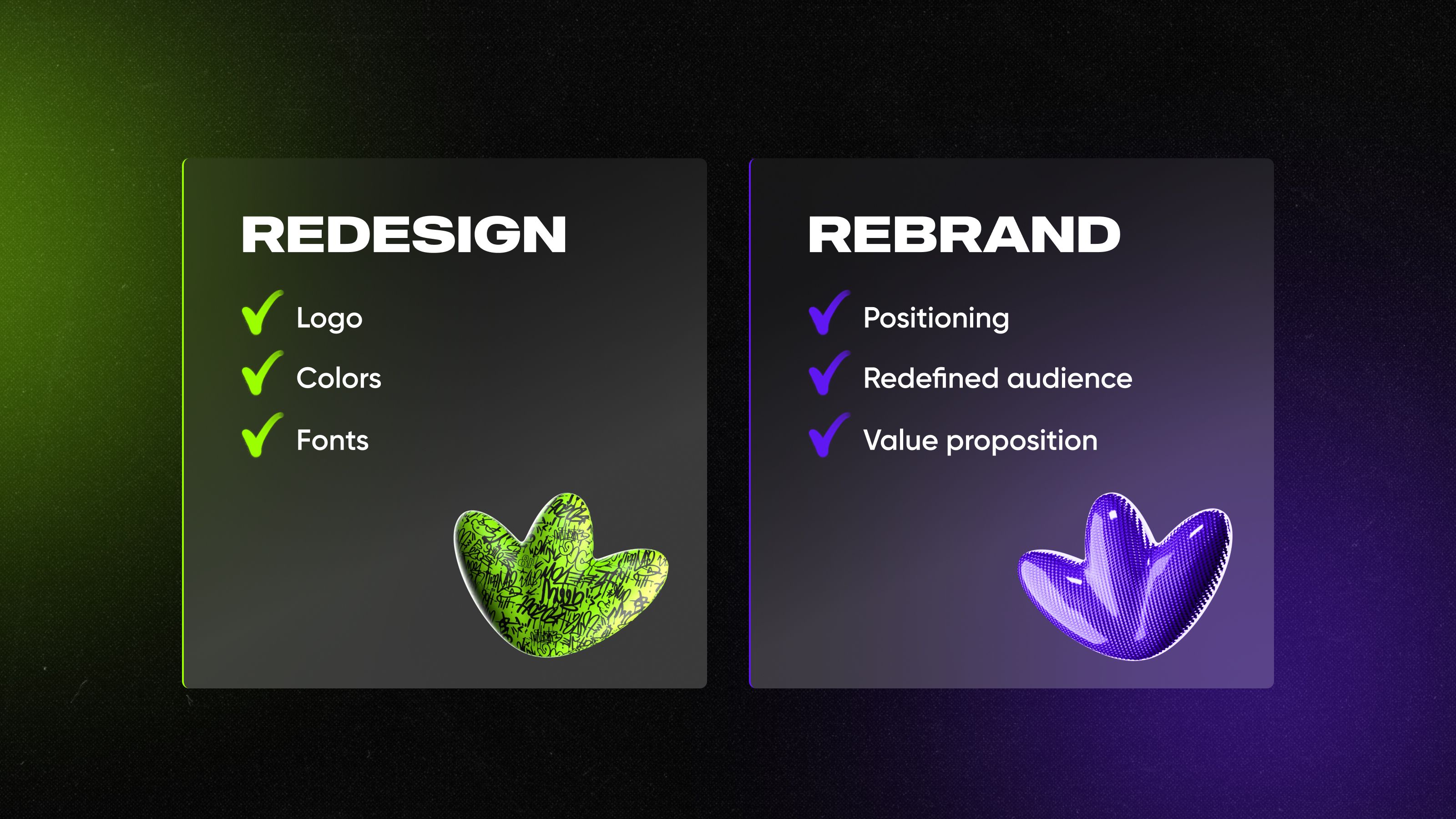
A redesign is surface-level. New logo, updated colors, refreshed website, maybe a packaging overhaul. It makes the brand look more current without changing what the brand means. Think of it as repainting the walls.
A rebrand goes to the foundation. It's a strategic shift in how a company positions itself—a new philosophy, a redefined audience, and a repositioned value proposition. Design changes usually follow, but they're the output, not the starting point. Think of it as rebuilding the house.
The problem is that most companies run to design first. It's tangible, it's visible, and it feels like progress. Strategy is slower and harder to put in a deck.
But here's what that approach actually produces: a prettier version of a brand no one understands.
Most rebrands fail because they just change the packaging without a strategy. Actually, they’re doing a redesign instead of a rebrand.
Most rebrands fail before the design process even begins
The failure usually happens in the brief. Companies walk into a rebrand with a vague sense that something is off—"we look dated," "we don't stand out," "our website feels old"—and hand that to a design studio. The studio produces three concepts. Everyone in the room picks their favorite based on personal taste. That favorite becomes the brand.
What went wrong? The brief was built on aesthetic observations, not strategic ones. Before any design decision gets made, you need answers to harder questions:
- Who is actually buying from you—and why? Not who you think is buying, but real data on who converts, retains, and refers.
- What does your category look like? Pull up the top 10 players in your space. What visual language do they share? What emotions do they trigger? Where's the white space no one owns?
- What's the one thing someone would say when recommending you? Not your tagline. Not your mission statement. The actual sentence a happy customer says to a friend. That is your brand in its truest form.
Design just answers the questions asked by the strategy
Knowing your audience and understanding what moves them are different things. You should find answers to these three questions before design gets involved:
- What emotion should this brand trigger? Not a list of emotions—one. Clarity, trust, ambition, rebellion, warmth. Pick one. The designer figures out how to evoke it.
- What's your positioning in the market? This isn't about being "premium" or "innovative." Those are adjectives. Positioning is about place: where do you sit relative to competitors, and why does that spot matter to your buyer?
- What's your product-market fit? This is where the brand touches the business model. If your product hasn't found its market yet, no amount of beautiful design will fix that. A rebrand can sharpen positioning, but it can't manufacture demand.
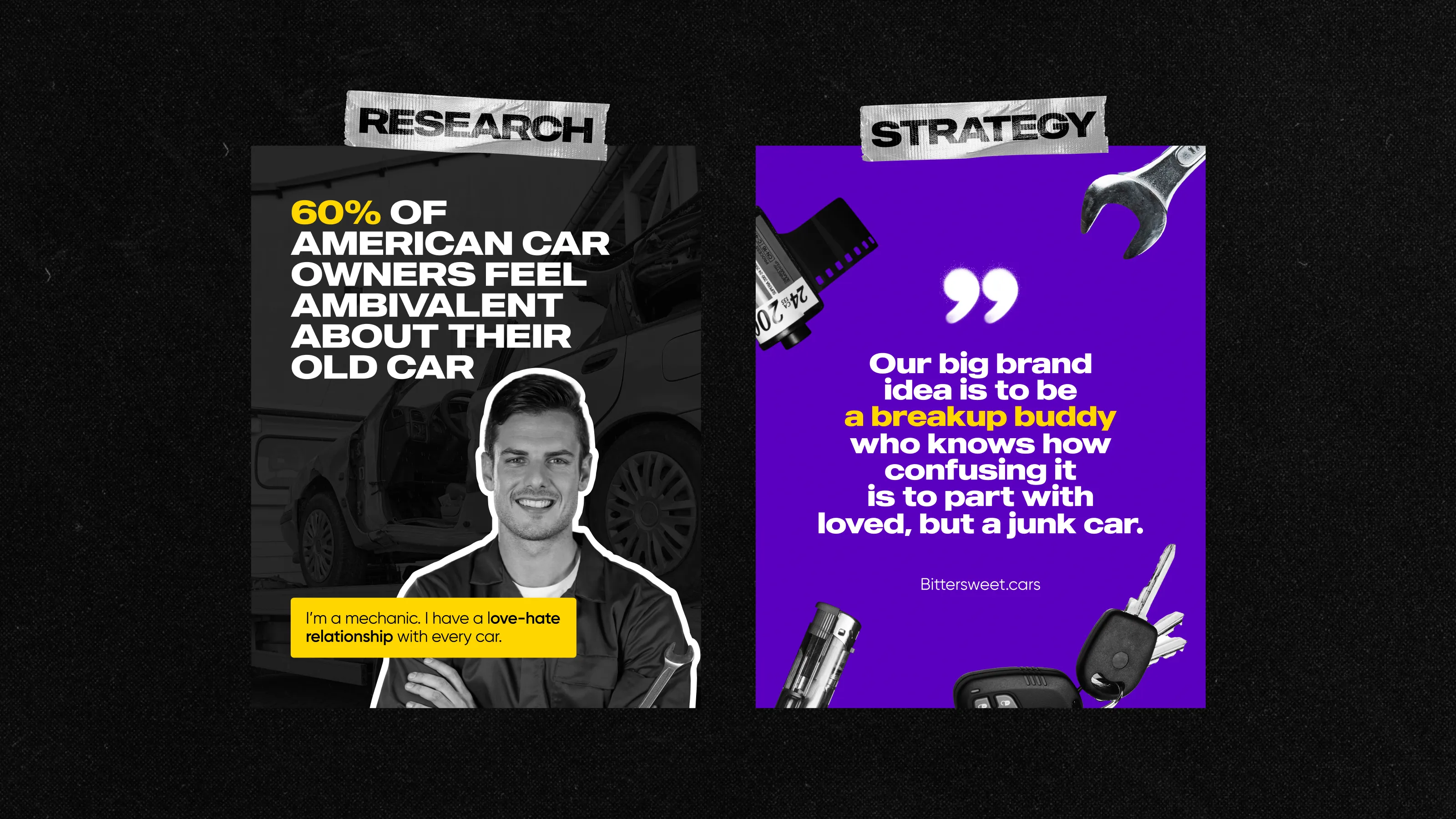
In the used car market, most players act as intermediaries—just facilitating deals. We took a different route for our client: not rational, but emotional. A brand that helps you end a bittersweet relationship with your car.
Explore the full strategy in the case study.
How to actually stand out and not just stand next to everyone else
Here's how rebrand should work. On your side: you dig into your audience—what moves them, what they respond to, and what makes them choose one brand over another. You find the insight that makes you different. On the agency side: they map the competitive landscape visually—what your category looks like, what colors dominate, what visual language every player is borrowing from each other, and where the white space actually is.
When both layers come together, brand strategy and visual design stop being separate workstreams. They become the same argument, made in two languages.
Skip either one, and you get the purple problem. Your audience research says buyers in your space respond well to purple—it feels premium, trustworthy, and calm. So you build an entire identity around it. Looks great in isolation. Then someone opens a browser and lines up your competitors. Every major player in the category is purple. You just became one more brand in a sea of violet.
Not because the design was bad. Because no one asked what the sea looked like before jumping in.
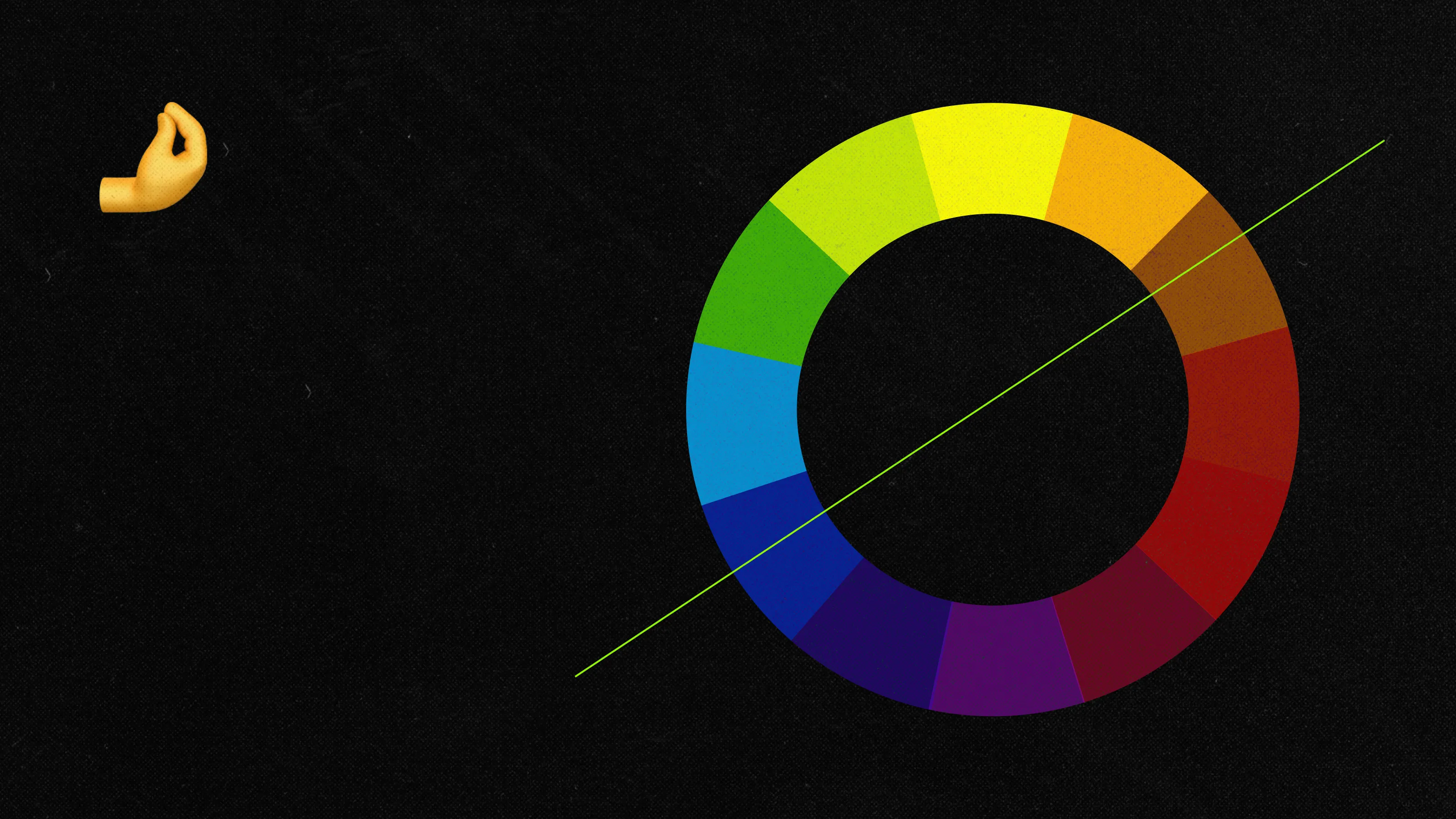
Before developing the Shoring brand, we conducted research and noticed that competitors prefer subdued pastel colors. So we chose the standout, aggressive, eye-catching colors.
Explore the Shoring case study.
And remember: you're not designing for yourself
This one is simple to say and hard to practice. You are not the audience. Your marketing team isn't the audience. The people who will pay for your product are your audience, and their preferences, cognitive biases, and emotional responses are the only ones that matter in a rebrand.
That doesn't mean you have to love the result less. But when there's a design direction that's built on research, validated against market data, and argued clearly by the agency—trust it more than your gut.
If you're truly unsure, run a focus group. A/B test the directions on a small audience segment. Let real data make the call. What you shouldn't do is pick the option that feels right in the conference room, watch it underperform for six months, and then commission another redesign.
When you actually need a redesign
To be fair, sometimes a redesign is exactly right. If your strategy is solid, your positioning is clear, and your audience is defined—but your visual identity is genuinely outdated or inconsistent across channels—a redesign makes sense.
Signs you need a redesign, not a rebrand:
- The brand strategy is working, but the visual implementation is inconsistent
- You've entered new markets or channels where the current design doesn't scale
- The visual language predates digital-first distribution and looks broken on screens
- There's a specific aesthetic reason you're losing consideration
Signs you need a rebrand:
- You're not winning deals and can't explain why
- Your sales team struggles to articulate what makes you different
- You've pivoted the product, but the brand still reflects the old version
- You're invisible in a market you should be owning
Your brand isn’t underperforming because it looks wrong. It’s underperforming because it means nothing. Fix the meaning first. The look will follow.
Written by

Qream co-founder | Design and product direction
Leads Qream's creative and product direction, connecting brand strategy, experience design, and business goals. Reviews content where design strategy, UX/UI, customer experience, and brand execution are central.