TL; DR
The agency vs. freelancer debate is a distraction. Budget, headcount, and org structure don't determine branding outcomes—strategy does. The real question to ask any potential partner: do they have a process for positioning, or are they just delivering files?
A strategist shapes every stage of the work—brand identity, website architecture, and campaign direction—not just the kickoff deck. Ask the right questions in the interview, keep the brand and website in the same hands, and stop optimizing for price. Optimize for thinking.
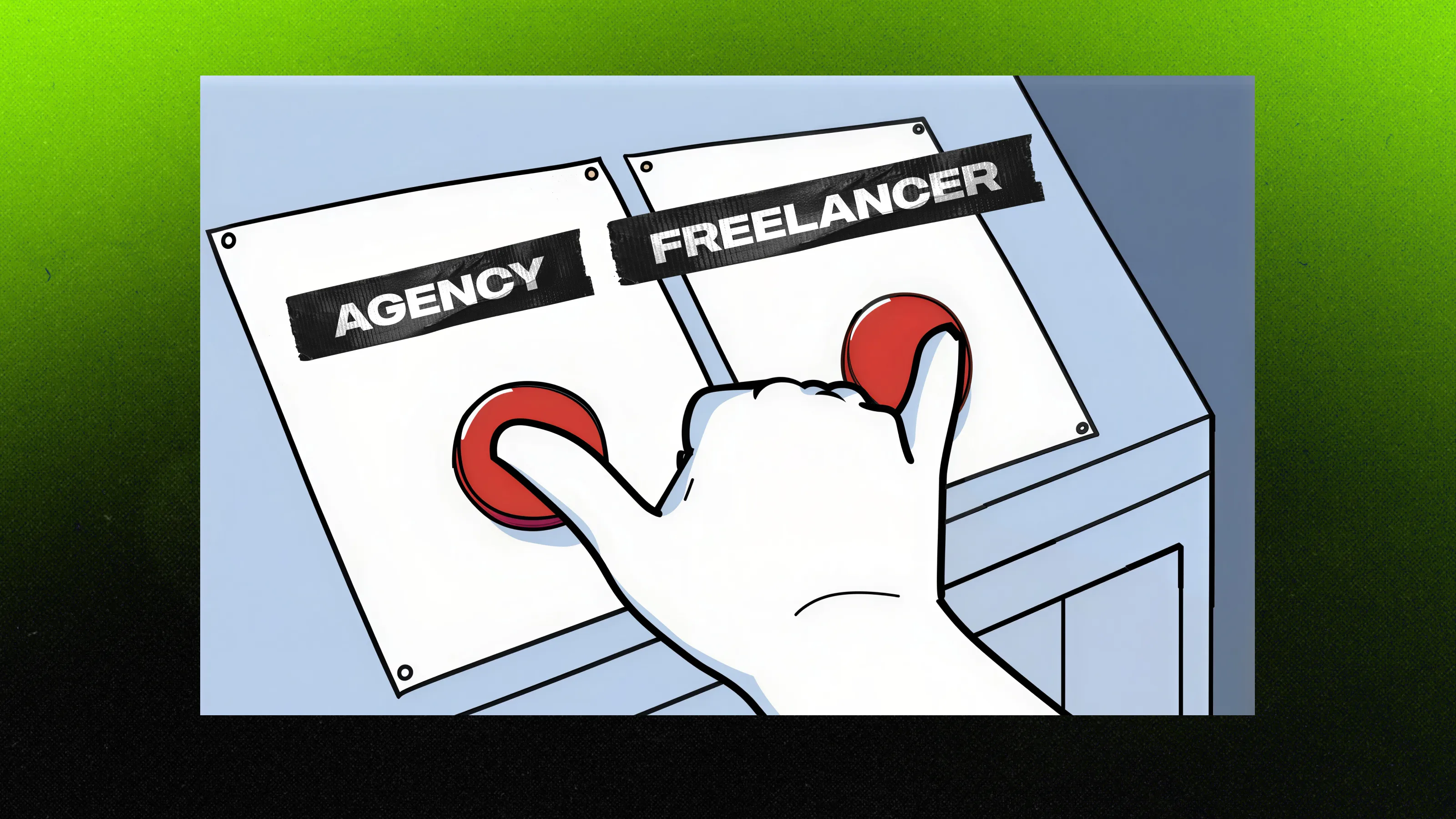
Every founder who's ever launched a brand has ChatGPTed it. “Agency or freelancer for branding?” The Reddit threads are long with mostly the same answers: agencies are expensive, freelancers are risky, and the budget decides everything.
Today, we’re finally putting this debate to rest. The real question has nothing to do with hourly rates. It's this: does the person or team you're hiring have a strategy process—or are they just delivering the files?
Why cheaper vs. pricier is the wrong filter
Price feels like a logical place to start. Agencies cost more. Freelancers cost less. If the budget is tight, the math seems obvious.
But price comparison only works when you're buying a commodity—something where the inputs and outputs are roughly the same regardless of who produces it. Brand identity and website design are the opposite of that. Two studios can charge the same rate and deliver completely different outcomes: one gets you an identity system that positions you against competitors, the other gets you a nice logo that everyone on the team likes.
What drives that gap isn't the number of people working on the project. It's whether anyone on the project is thinking strategically—about your market, your positioning, what makes your brand impossible to ignore, and how every visual decision supports that.
So yes, some freelancers can do this. And plenty of agencies can't. Strategy is the real metric.
The strategist is the one making the calls that actually matter
This is the part that doesn't get discussed enough in the agency-vs-freelancer conversation: strategy expertise isn't just a “phase” at the start of a project. It's an ongoing lens that shapes every decision throughout.
A strategist determines your positioning before a single visual is created—not just the tone and mood, but the actual market logic: what gap you're filling, what perception you're building, and why your audience should choose you over the alternatives.
A strategist makes decisions at every stage of the process:
Branding. The same strategic thinking determines which visual language will credibly communicate that positioning. Whether your brand needs 3D renders or real photography. Whether motion serves you or distracts from clarity. Whether a minimal system will read as premium or just empty.
For our German client, our strategist spotted a clear pattern in the retail market: every competitor looked restrained, predictable, and forgettable. So instead of blending in, we created a bold mascot-led identity for Shoring—a brand designed to instantly stand out
A website. Architecture and information hierarchy aren't UX decisions—they're strategic ones. What goes on the homepage first? What do visitors need to understand before they're ready to act? Where do you lose them, and why? A strategist answers those questions before a designer builds the first wireframe.
For the launch of Self App, we designed a landing page focused on one thing: turning visitors into downloads. The content strategist shaped the entire structure around that goal—showcasing the app’s key features, simplifying the onboarding experience, and building enough curiosity to make users want to try it.
Campaigns. The content, the creative direction, the format—strategy is what makes the difference between something that gets scrolled past and something that gets remembered. Anyone can produce assets. Fewer people can build a campaign that sticks because it came from a genuine understanding of the audience and what they actually respond to.
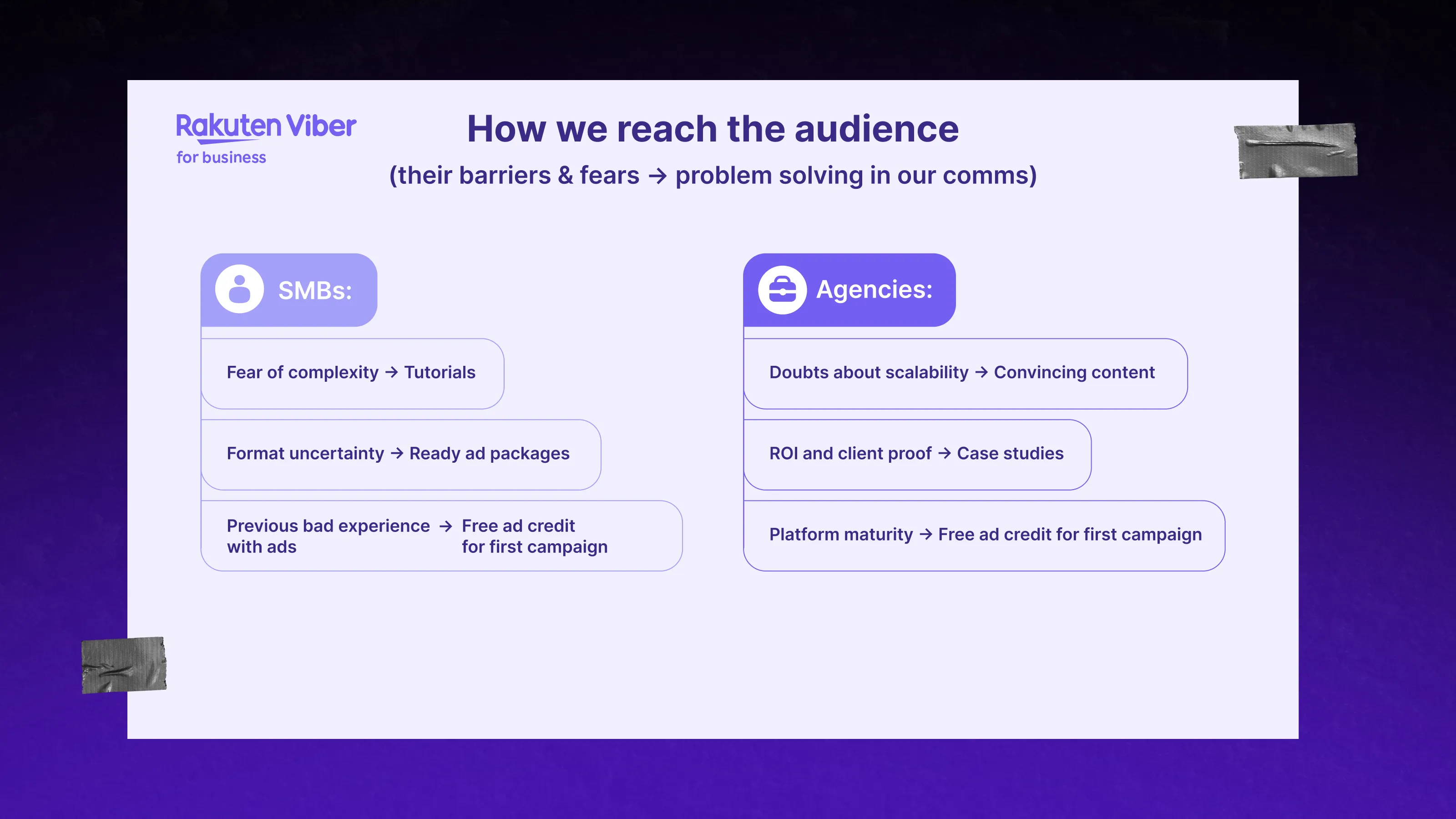
Before we touched a single ad creative for Viber for Business, we mapped the fears, barriers, and hidden triggers behind every audience segment. The strategy wasn’t built around what the product does—but around how it solves something people already feel.
The point isn't that you need a separate “strategist” role with that title. The point is that someone on your project—whoever is leading it—needs to be thinking this way. If nobody is, you're buying decorations instead of real branding.
How to tell if someone has a real strategy process
This is where the interview matters. Before you agree to anything, ask:
- “Walk me through how you approach brand strategy before design starts.”
The answer tells you almost everything. You're looking for a process that includes research (market, competitors, audience), a clear framework for positioning decisions, and a way of translating strategy findings into creative direction. If the answer is vague—"We start with a discovery call and then develop concepts"—that's a design process with a discovery call attached.
- “What happens if I like the visual direction but it doesn't fit the strategy?”
A team with real strategic conviction will push back. If the answer is “we'll adjust to whatever you prefer,” that's a service mindset, not a strategic one. Both are legitimate business models, but only one gets you brand outcomes.
- “Can you show me an example where the strategy led to an unexpected creative direction?”
This separates practitioners from presenters. Genuine strategic work sometimes produces surprising outputs—a brand that looked like it should be minimal ended up being loud because the strategy showed the market was saturated with minimalism. If every portfolio piece looks like a predictable version of the brief, that's a sign strategy isn't really driving the work.
Friendly tip: try to keep brand identity and website in the same hands. When the team that built the brand system also builds the site, they know exactly why every decision was made—and they build accordingly. Splitting the two often creates inconsistency that's difficult and expensive to fix later.
So: agency or freelancer?
Both can be the right answer. Neither is automatically better.
A senior freelancer with 15 years of brand strategy experience will run circles around a mid-tier agency where a middle designer is doing the actual work while the senior presents it. And a focused agency with a sharp strategy process will outperform a solo designer who's great at visual execution but doesn't have a framework for positioning decisions.
The question was never about the org chart. It was always about whether the person leading your project is thinking about your business outcomes—or just delivering files that look good on a portfolio.
Written by

Qream co-founder | Business growth and strategy
Leads Qream's business development and commercial strategy, bringing experience across sales, customer support, and complex digital projects. Reviews topics around project scoping, agency engagement, strategic partnerships, and growth.