Once upon a time, designers were “the artsy ones.” You know, the people who made things look nice while the “serious adults” handled the business. And now, those days are gone.
Today, designers are business partners, strategists, and drivers of a company’s culture. The real power move here is mindset—the moment a designer starts thinking like a leader, their work stops being decoration and starts being a growth engine.
So let’s break down how designers with leadership brains make strategic decisions, influence company growth, and finally ditch the role of “just an executor.”
Why the best designers think like leaders
Here’s the insight we’ve learned at Qream after years of working with clients: they don’t come for “pretty design” but for results. Design affects how a product stands out in a crowded market, how it communicates with users, and what kind of reputation it earns. It boosts marketing metrics, shapes perception, and—yes—makes money.
That’s why the most influential designers know one simple thing: they don’t create “visuals,” they create interfaces and experiences that help businesses grow revenue.
Take Monobank, for instance. Ukrainian banks created an insanely competitive market—zero room for mediocrity. If you launch a new brand, you simply have to suggest something fresh and unique. That’s what they did—went all in on design and user experience. And it worked.
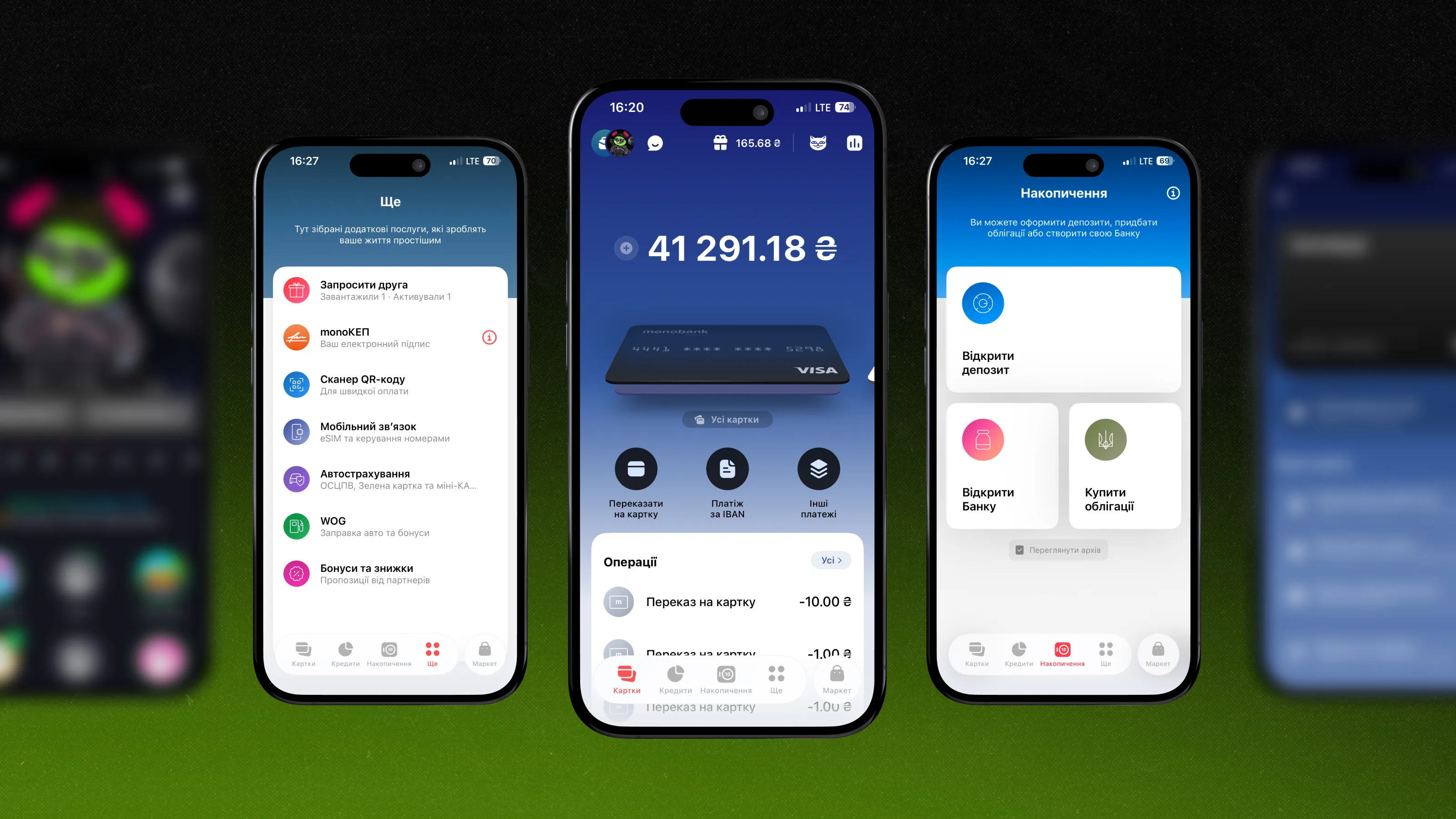
Smart UX and a bold visual identity turned into a massive competitive edge. It helped Monobank dominate and become one of the most loved banks in the country.
If business thinks in profit, customers, and impact, designers must think the same way. Their work directly affects key metrics, including conversion rates, cost per lead, CTR, brand metrics, and website traffic. And once a designer understands that, they stop being a service provider and become a real partner.
Today’s designers aren’t artists in ivory towers. They’re experience architects shaping marketing, sales, brand perception, and even company culture. Thanks to digital tools and data-driven thinking, designers now influence real business processes. Not just the convenience of forms and chatbots, but emotions, trust, and loyalty.
Those who got it early (hello again, Monobank) turned design into a growth weapon. And this trend is only getting stronger. The future designer isn’t just executing tasks; they’re analyzing, strategizing, and engineering emotional experiences.
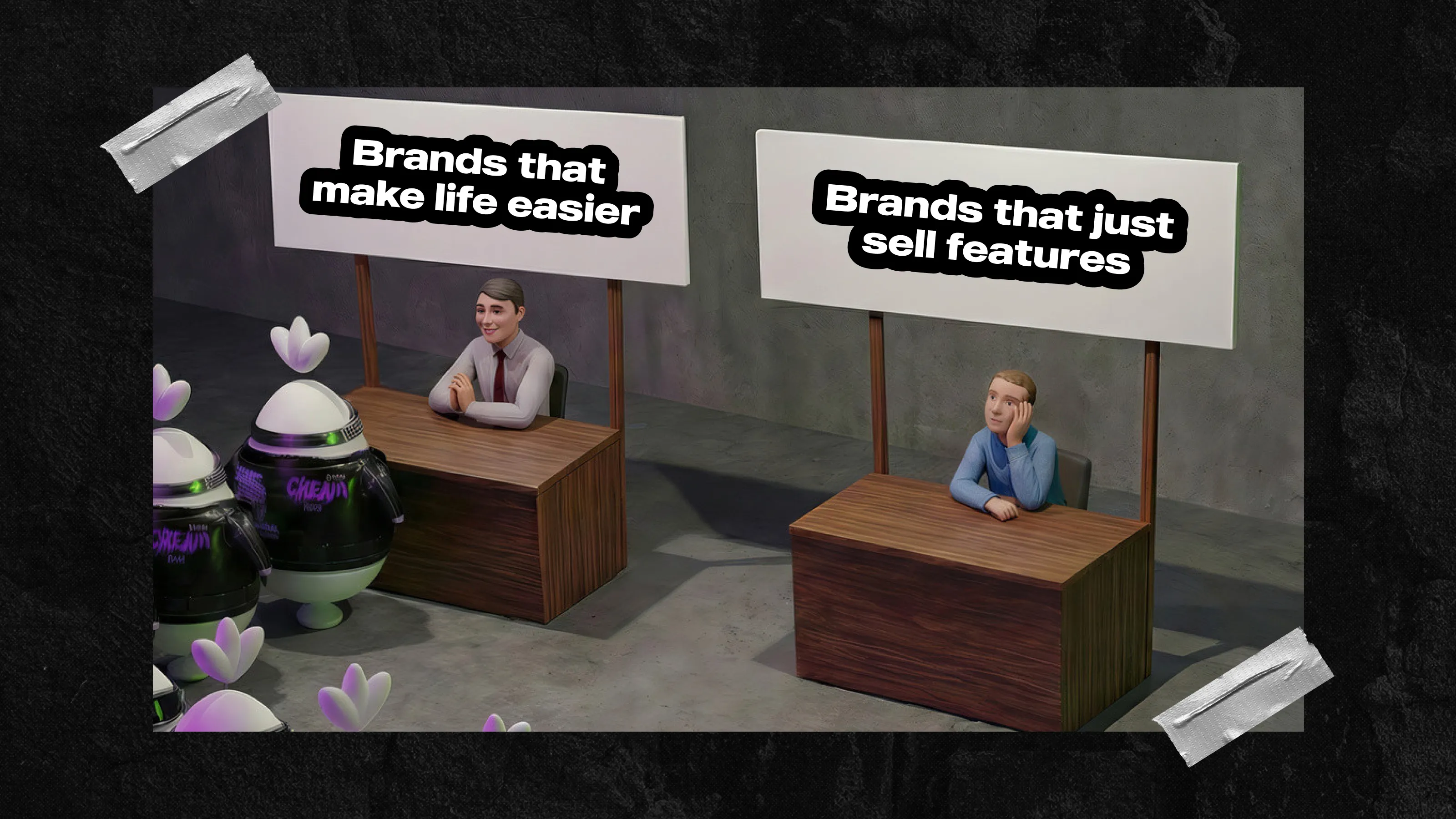
How design turned companies into market leaders
Want proof? Let’s look at companies that are already playing this game at a high level.
Nova Poshta’s mobile app is a perfect example of a big player in the Ukrainian logistics market. Well-thought-out UX and product design moved a huge chunk of the customer experience into digital. Users create shipping labels, pay for services, and upload data—all without standing in endless lines. This reduced the load on terminals and offices, lowered operational costs, and boosted customer loyalty.
You see, through design and thoughtful experience, Nova Poshta established market dominance—since the app launch, alternatives simply don’t exist anymore for many users.
Now let’s look at Apple. They moved their focus from designing products to designing feelings. Simplicity, aesthetics, and emotional interaction are why every Apple product screams “premium” without saying a word. Design became the core of the brand, not a feature—people trust Apple blindly because experience never lets them down.
And then there’s Slack. Strong UX, frictionless workflows, and a visual identity are so recognizable that one chat screenshot instantly gives it away. That’s when you know design has burned itself into people’s brains (and into the market).
Tools that help designers think like business bosses
If you want to think like a leader, you need the right weapons.
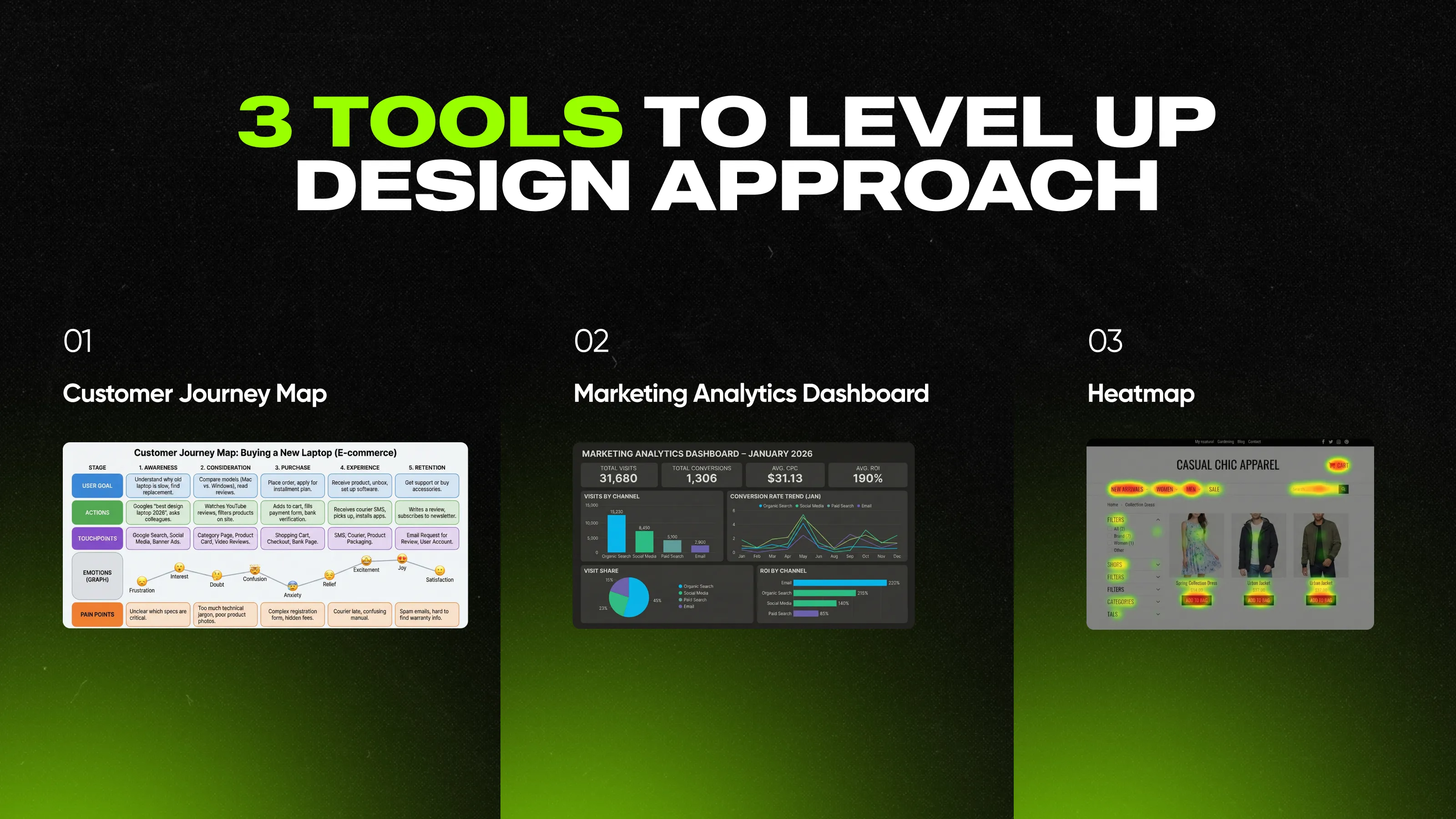
First up: Customer Journey Maps
They visualize the entire customer path from first touchpoints to further interactions. No guesswork on how users might act, just research.
Next: analytics + design thinking
Analytics gives you cold data with numbers and patterns: which channels work, where users drop off, and which products generate the most revenue. Design thinking turns those numbers into human-centered solutions built on empathy, simplicity, and customer value.
Last but not least: heatmaps
They literally show how users interact with a website or app: where they click, pause, and get lost. For designers, this is an opportunity to validate hypotheses and optimize interfaces based on facts rather than intuition.
How to balance creativity and business goals
Let’s clear something up: creativity isn’t the goal. It’s the tool.
An idea shouldn’t win because it’s “wow, so fun.” It should win because it drives metrics and improves user experience.
Creativity gets misunderstood all the time. The word literally comes from “create,” meaning to build something that works within constraints, yet people think of creativity as a way to do crazy things. Wrong. Creativity is basically problem-solving.
So how do designers stay creative and business-driven? Actually, by building safe spaces, aka conditions for free thinking. Any creative team needs space where extreme, boring, or risky ideas are all welcome—without judgment or instant criticism. In such conditions, solutions are born that resonate with both the customer and the business.
Another critical skill is handling feedback properly. Leadership thinking starts when you stop confusing your work with your ego. Feedback isn’t a personal attack; it’s data for growth. When designers stop defending themselves and start listening through a business lens, creativity levels up.
What business leaders should learn from designers
01 Visual awareness
Designers constantly consume new experiences from exploring interfaces, visuals, communication, and flows. They train their brains by seeing a lot and analyzing UX and UI. That’s where fresh ideas come from.
02 Design thinking
Designers don’t solve problems from inside the company bubble. They step into the user’s shoes to feel what they experience, where they stumble, and why they make certain choices. Business leaders should do the same. Sometimes the smartest move is to become your own customer and walk the journey yourself.
03 Empathy
Designers don’t guess what users feel; they try to feel it themselves. That’s how solutions become precise instead of generic.
04 Neuroplasticity
Brains hate repetition—doing the same leads to templated, predictable solutions. Designers know this, so they experiment, break patterns, and rethink the familiar. Businesses that adopt this mindset open the door to innovation and high-quality results.
Written by

Qream co-founder | Business growth and strategy
Leads Qream's business development and commercial strategy, bringing experience across sales, customer support, and complex digital projects. Reviews topics around project scoping, agency engagement, strategic partnerships, and growth.