TL;DR
Financial website design is about one thing: to make complex products instantly understandable and trustworthy. The best fintech websites don’t waste time explaining features; instead, they highlight the product’s value, reduce perceived risk, and walk different audiences through personalized journeys. Strong trust signals, a clear structure, and a design tailored to your funding stage, that’s what really drives conversions.
If users don’t understand your product or trust it within seconds, they won’t buy it, no matter how beautifully you package it.
Most financial website design fails at the same thing: it explains the technology but forgets to explain the value.
You’ll see APIs, infrastructure, “seamless transactions”… but still have no idea what the product actually does or why it matters.
So instead of polishing the surface, fix the one thing that actually costs you deals—clarity.
Why fintech websites are different from regular B2B
Financial services website design is not your typical SaaS playground. The bets are higher, the products are more complex, the audience is more skeptical.
First, the complexity of the product
You often sell systems that are simply invisible, such as payment infrastructure, lending models, and risk assessment mechanisms. If your website doesn’t make this instantly clear, there’s practically zero chance that anyone will stick around and “dig deeper.” Keep it simple.
Second, trust and the perception of funding
Come on, you’re a fintech company. People Google you before they sign a deal. If your website looks like a raw MVP, you look like a serious risk rather than a reliable fintech site.
Third, the pressure to demonstrate compliance
The key here is how you state your compliance with the basic PCI DSS and SOC 2 requirements. Go overboard, and you’ll overwhelm your audience. Try to hide it, and you’ll look unreliable. The only solution is seamless integration that strikes the happy medium of accessibility.
Finally, the lack of differentiation
“Fast,” “secure,” “scalable” , all say exactly the same thing. Is that really what sets you apart? If so… you're an invisible fintech ghost.
What the best fintech websites get right
1. Product explanation without jargon
Strong fintech sites certainly don’t hide behind complex terms. They make it clear exactly what’s happening “under the hood”: how payments are processed, how KYC/AML is handled, how cards are issued, and they break it down into specific steps: API integration, integration time, and the types of data the system works with.
2. Trust signals for enterprise buyers
Fintech websites working with enterprises don’t stop at displaying certification logos. Here's the deal: they specify the exact PCI DSS level, the encryption used (such as AES-256), where data is stored, what uptime is guaranteed under the SLA (Service Level Agreement), and they back this up with case studies featuring hard numbers: for example, how exactly they reduced fraud or increased the approval rate.
3. Design that matches funding stage
Fintechs at the Series B+ stage showcase a complete system: with comprehensive security sections, up-to-date developer documentation, status pages, and public roadmaps, while early-stage startups still focus on quickly and clearly demonstrating their core functionality. A design that looks like a simple color presentation just doesn’t cut it.
4. Clear path for different audiences
Pushing everyone down the same path is a bad strategy, both in life and when building a fintech website. Segmentation is the only and best way forward: for developers, quick access to APIs and a sandbox; for businesses, specific use cases and monetization models; and for financial institutions, a focus on compliance and regulatory requirements.
5. Differentiation beyond “seamless transactions”
How will fintechs differentiate? They clearly break down their advantages into specific technical features: their own acquiring stack instead of third-party providers, support for local payment methods tailored to specific markets, ML models that effectively reduce fraud, or faster settlement (for example, T+0 instead of T+2). And the key point is that they explain exactly how these differences impact the business: higher approval rates, lower fraud losses, or faster cash flow.

See how Qream approaches fintech branding
What works:
Better to simplify once than to lose another hundred customers
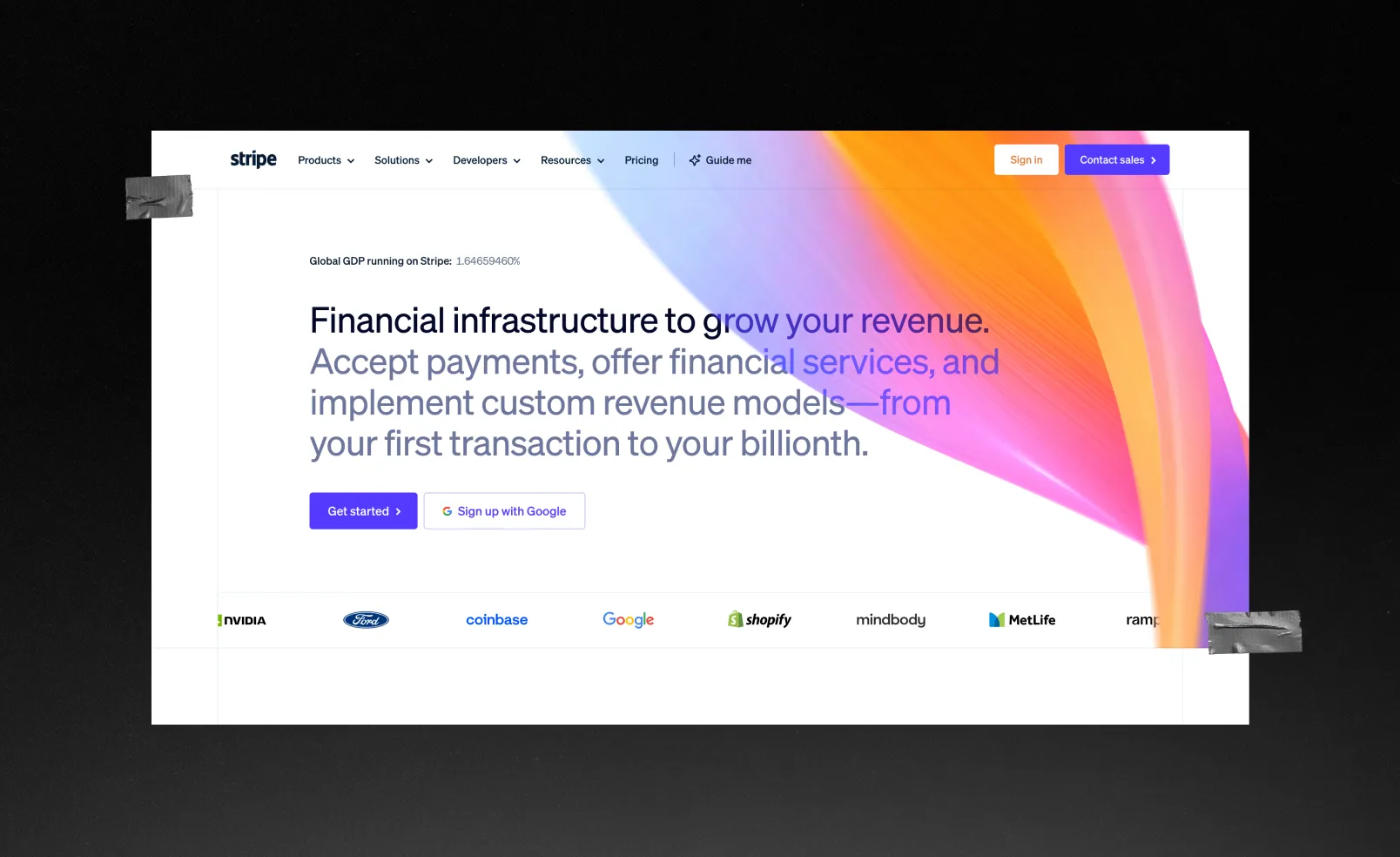
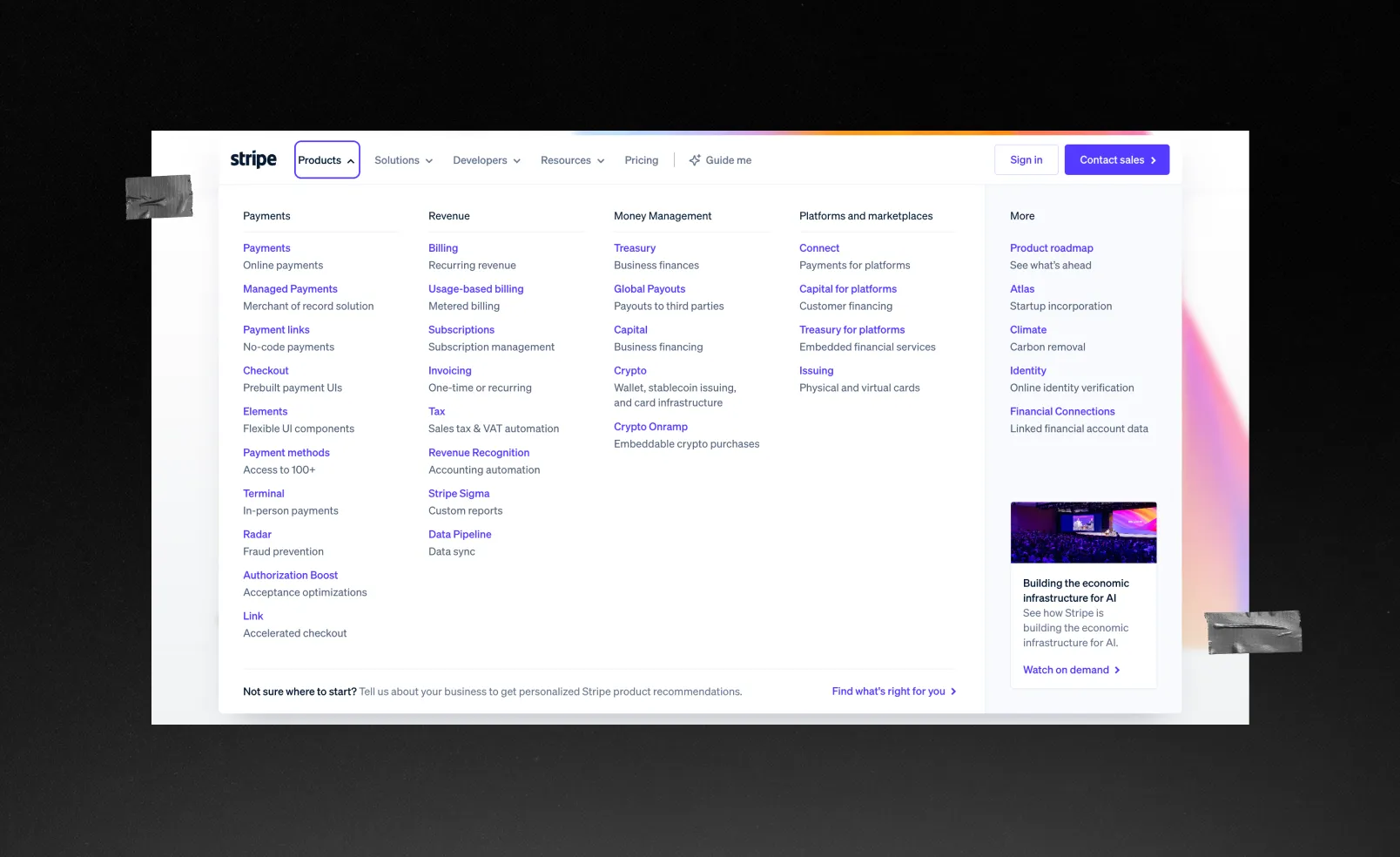
Stripe sells payment infrastructure, but on its website, this is presented through very simple categories: “Payments,” “Billing,” “Connect,” “Radar.”
Each product is explained in terms of a business outcome (accepting payments, managing subscriptions, launching marketplaces), which greatly lowers the barrier to entry even for non-technical users.
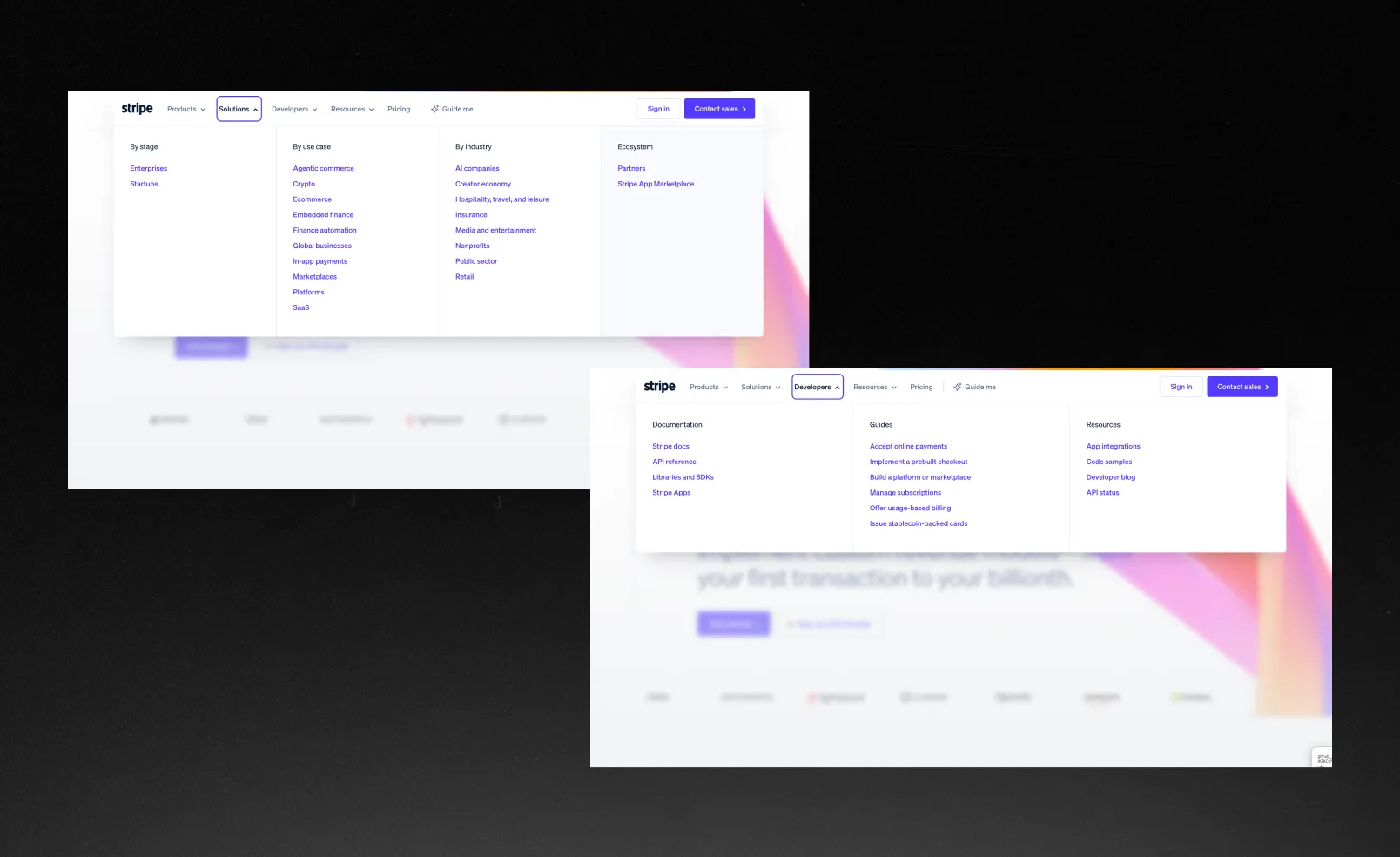
Is segmentation the enemy of chaos?
Stripe works for three worlds at once: developers, startups, and enterprises.
This is achieved through a clear architecture: API documentation for developers, product pages for businesses, and separate enterprise solutions featuring case studies from large companies, all without mixing messages in a single place.
What could be better:
Vast Ecosystem
Stripe is a large, growing ecosystem (with many products and sub-products). For new users, this can sometimes feel like a labyrinth. It’s often difficult to quickly figure out where to start “Payments”, “Checkout”, or “Elements”, and how these components are connected. This is a common and rather significant mistake in fintech website design.
What works:
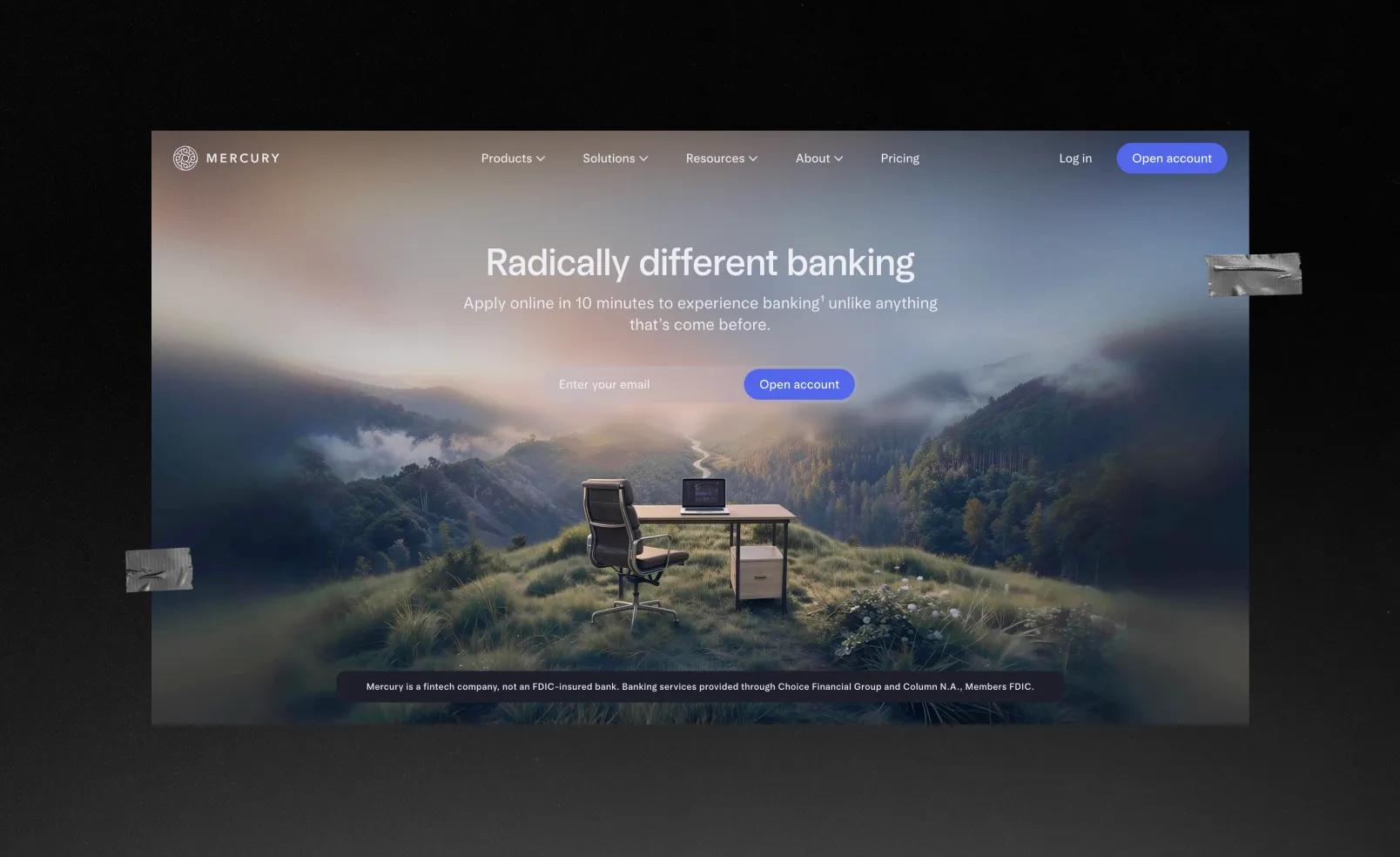
Simplicity as the core UX principle
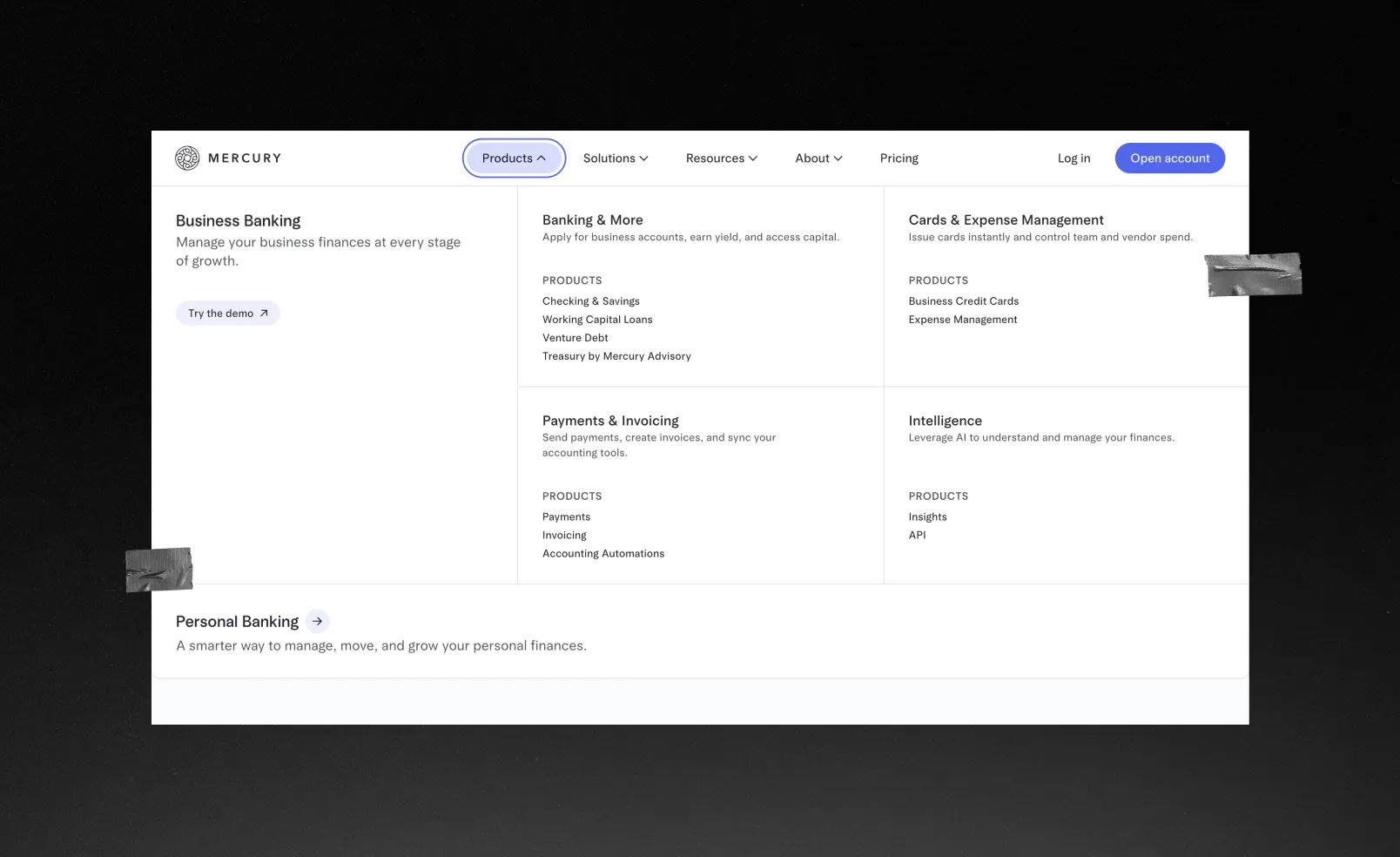
The website is as “light” and “airy” as possible: minimal text, plenty of white space, clean sections, and very straightforward wording.
Unlike most fintech companies, Mercury doesn’t overwhelm users with products or technical details, which greatly simplifies the decision-making process. Moreover, the site’s fintech design strongly sets it apart from others through its visual branding.
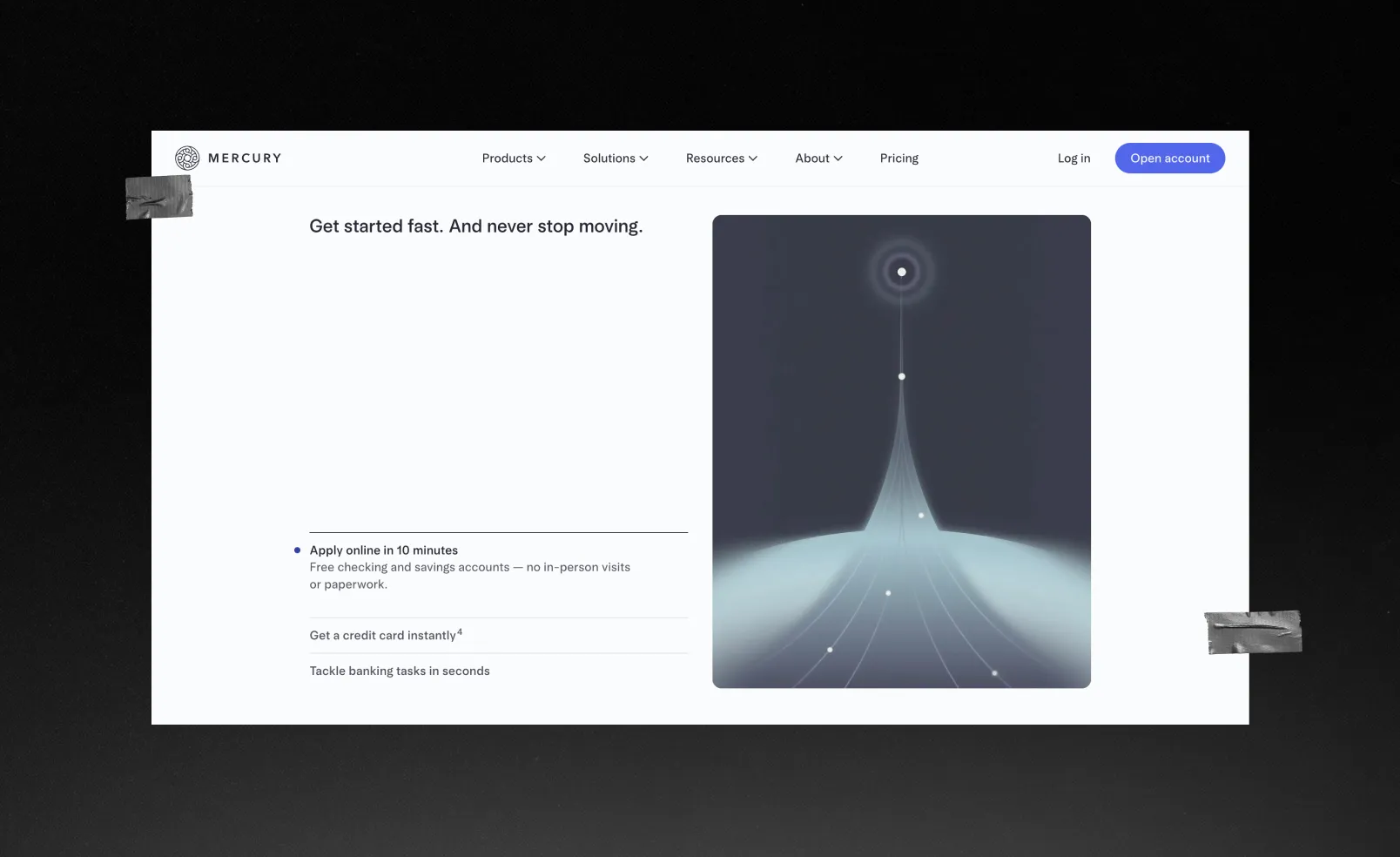
A strong accent on speed and onboarding
One of the key messages is how quickly you can open an account and start using the product.
The CTAs and copy constantly encourage action (“Get started”), which works well for early-stage companies where speed is crucial.
What could be better:
Limited depth for more advanced clients
For more established companies or finance teams, there may be a lack of detail regarding how the infrastructure actually works, what limitations exist, security levels, and deeper-level integrations.
The website does a good job of promoting simplicity, but it is less effective for those seeking complex solutions.
What works:
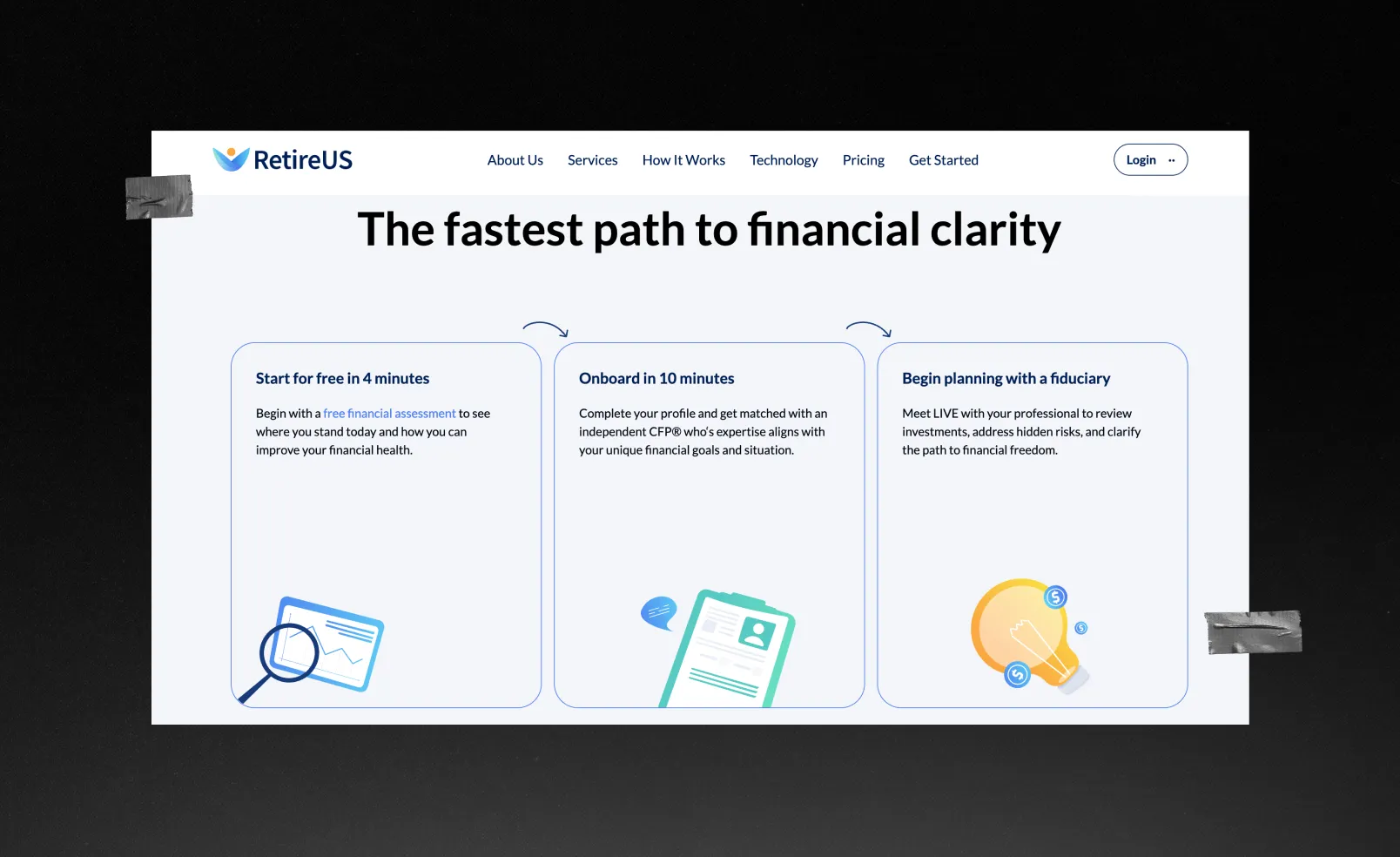
A really clear value proposition based on a financial goal
RetireUS sells a result: a clear and manageable retirement plan. Their messaging is built around a specific user challenge, how to prepare for retirement, how much money is needed, and how to achieve it, which is much easier to grasp than traditional investment products.This approach works much better in fintech web design.
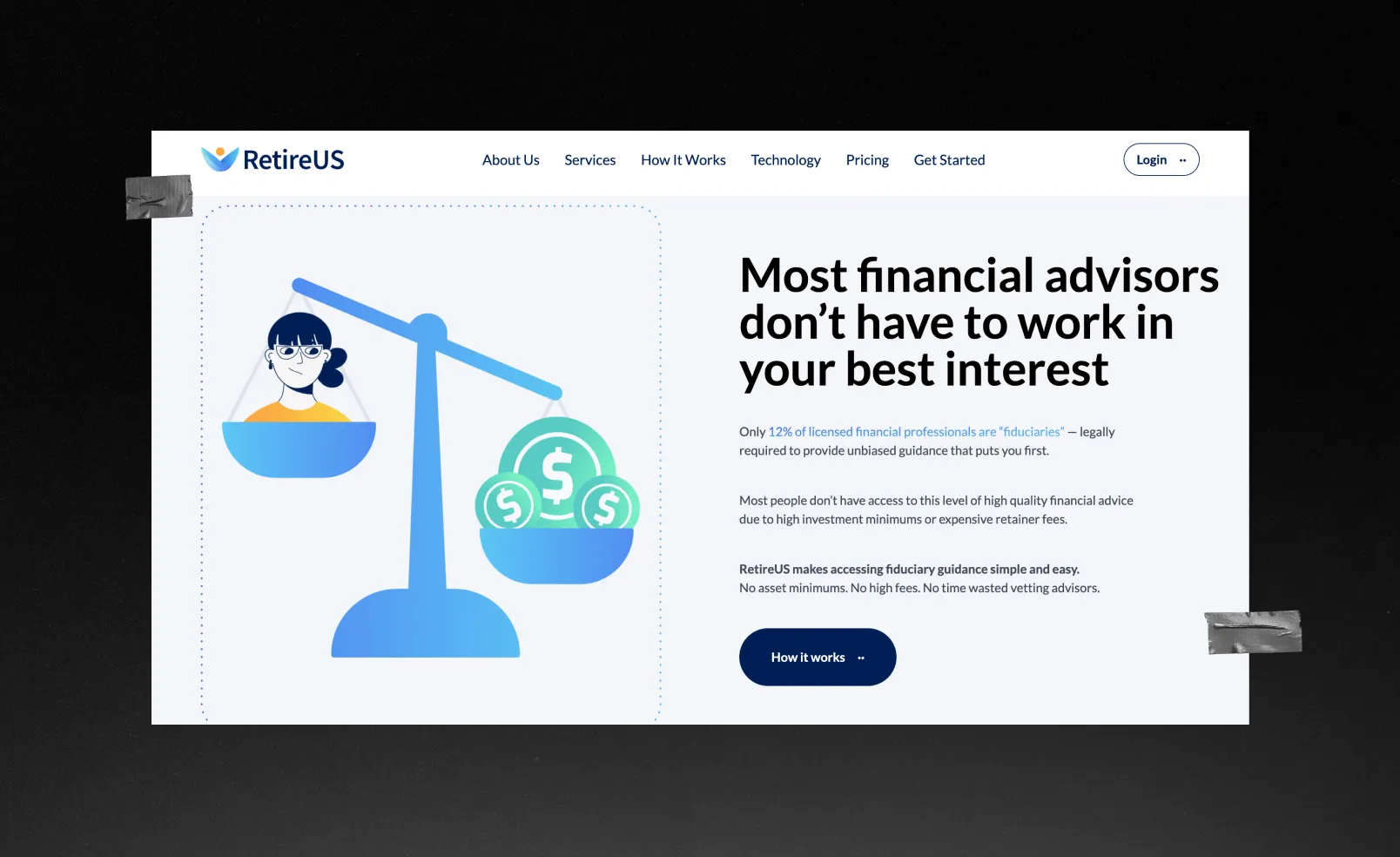
Building trust through expertise in addition to certifications
The website actively uses educational content, explanations of strategies, and financial scenarios, creating the feel of a user-friendly “guide.” This is critical for wealthtech, as users are making long-term financial decisions and are looking not only for a tool but also for guidance.
What could be better:
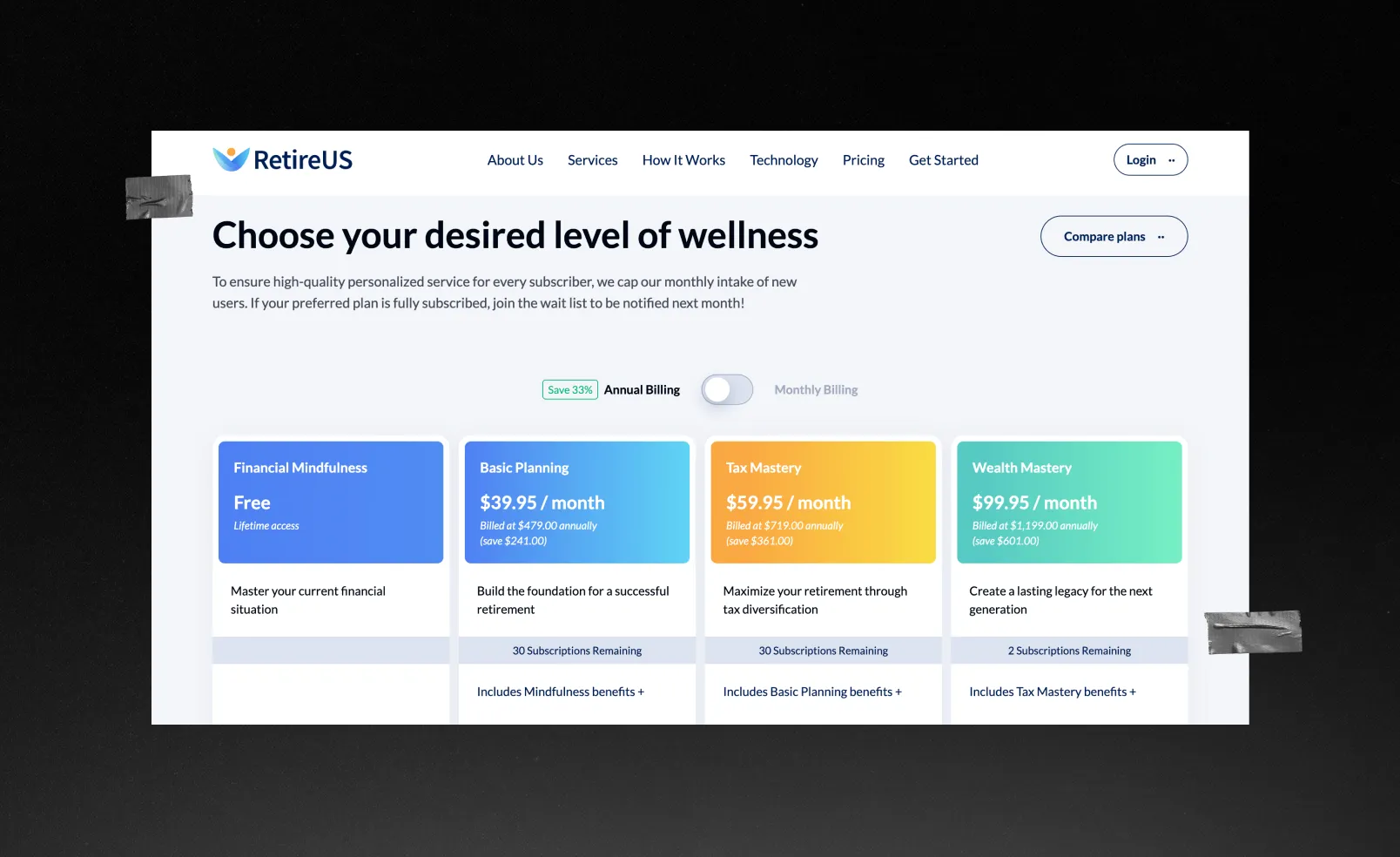
Soft CTAs?
There are CTAs, but they’re more “soft” and don’t always push users toward a quick decision. This fits the site’s overall concept and aligns with the theme (long-term planning), but it may slightly lower conversion rates in the early stages.
Common mistakes
Explain everything, but say nothing
Lots of fintech websites list features without explaining their value. Users are left confused, let alone making a good first impression.
At Qream, we often see products that are technically flawless but fail to translate functionality into clear business results.
Overloading with compliance language
Yes, compliance matters. But turning your homepage into a legal document kills UX and trust.
From Qream’s experience, the most effective fintech websites separate trust signals from core messaging, instead of mixing both into one overwhelming layer.
Looking smaller than you really are
At Qream, we’ve seen this in many fintech website design projects: super-powerful products, weak websites.
Do you look like a startup experiment? Then that’s exactly how people will perceive you.
Copy-paste positioning
What other common fintech UX design mistake can you come across? “Secure, scalable, innovative.”If this sounds like your homepage, you’re blending in. Want some advice from Qream? Specify concrete technical or business details and spice it up with distinctive visuals. That’s what makes it truly unique.
You built the product? Now build the trust

Fintech website design typically ranges from $10,000 to $100,000+, depending on complexity, integrations, and compliance requirements. The price increases significantly if you need to integrate product logic (such as calculators, onboarding flows, or a sandbox environment for developers), rather than simply creating a marketing website. The cost also depends on the depth of UX development: the more difficult it is to explain the product and demonstrate its reliability, the more resources are allocated to structure, copywriting, and design.
A good fintech website explains complex products clearly, builds trust through proof, and guides different audiences through tailored journeys. In addition, it explains not only “what it is,” but also “how it works” and “what business impact it has” through scenarios, case studies, or statistics. It’s important for users to quickly find the path that’s relevant to them (for example, dev vs. business) and not get lost in a generic message.
Look for agencies with real fintech experience, understanding of compliance, and the ability to simplify complex products without losing credibility. A good agency doesn’t just stop at “creating cool visuals”; it structures product communication: what to highlight first, how to segment audiences, and what arguments to use. Another important factor is that the team understands the specifics of fintech, from regulatory constraints to the behavior of enterprise clients.
Strong fintech UX design focuses on clarity, progressive disclosure, trust signals, and reducing friction in decision-making. This means that complex information is opened gradually: first the value, then the details, then the technical depth, without overwhelming the user on the first screen. It’s also important to incorporate trust signals (certifications, case studies, metrics) at the right moments when the user is making a decision.
Written by

Qream co-founder | Business growth and strategy
Leads Qream's business development and commercial strategy, bringing experience across sales, customer support, and complex digital projects. Reviews topics around project scoping, agency engagement, strategic partnerships, and growth.