A crisis always tests a business's resilience. At this point, it becomes clear who was just doing a simple blahblah marketing and who is truly standing by their team and customers. But what exactly helps a brand become the real Die Hard when Apocalypse is jogging around the planet?
Let’s talk about what makes a brand strong in difficult times, what to include in an anti-crisis plan, and why a crisis is an opportunity for growth.
Three key pillars for a brand during a crisis
At Qream, our major motto is “believe in the best, but prepare for the worst”. This means accepting that circumstances may become more difficult and having a plan of action for any scenario. Same for business: if founders and management are prepared for a tsunami (emotionally and strategically), then the brand has a high chance of surviving.
So what makes a brand resilient in times of crisis?
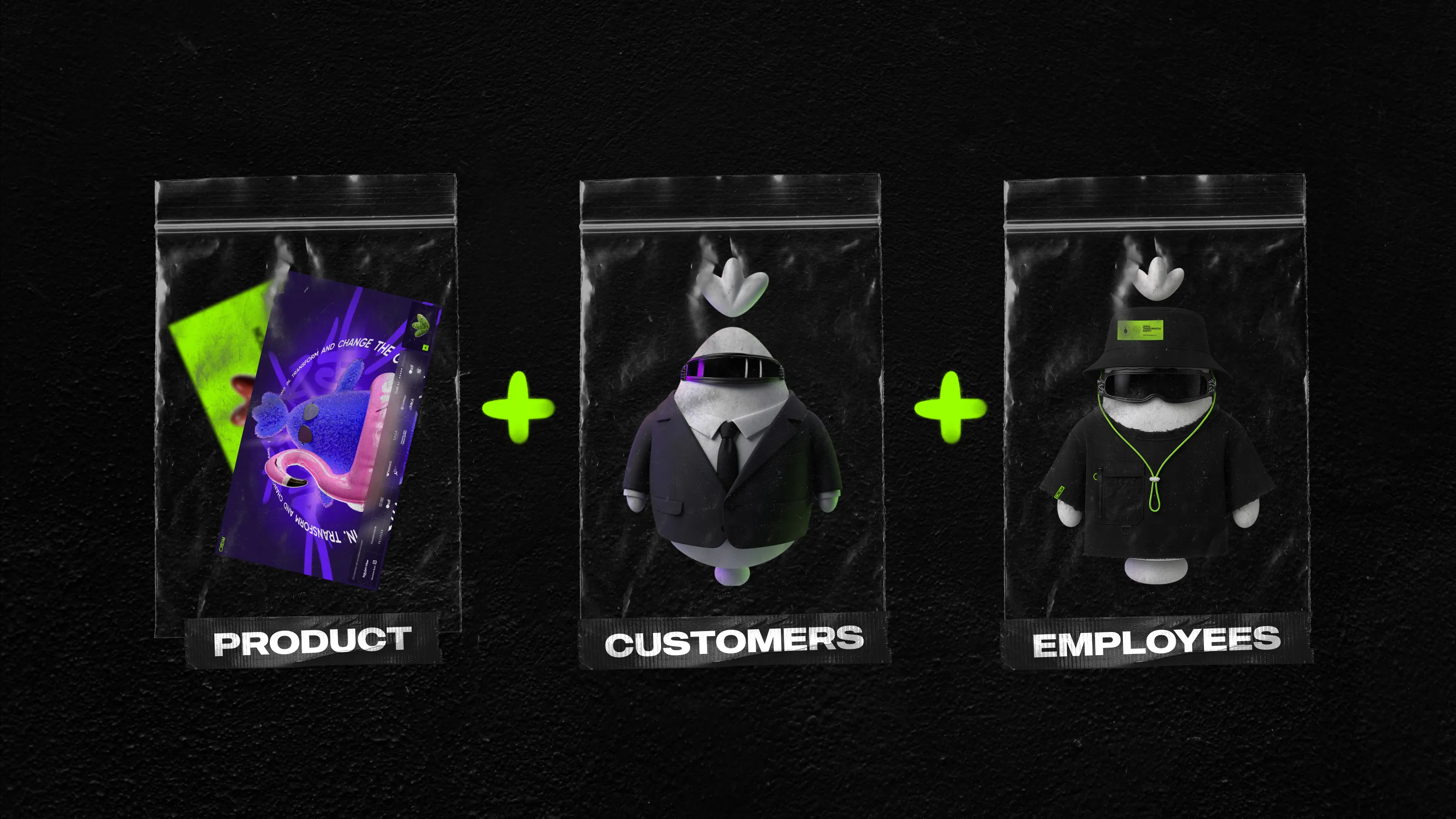
- The superstar employees. Without a strong, stable, people-oriented culture, the team quickly falls apart, and with it, the product and brand. So strong internal support is the number one foundation.
- A quality product. As Andriy Fedorov (Ukrainian marketer and entrepreneur, founder of the top-notch Fedoriv Agency) aptly said, people don't need cool brands; they need cool products that are also well-branded. First comes value and real solutions to needs, and only then comes beautiful packaging.
- Constant dialogue with customers. A lazy response to feedback doesn’t count. React quickly and proactively, predict problems as a fortune teller, and solve problems before they escalate into a crisis. Yep, identity matters too. Your brand must mean something unique and cool for your customers. That’s how you create that emotional bond!
The superstar employees + A quality product + Constant dialogue with customers = reputation. You can’t buy it on the spot, but it’s exactly what saves you in the hardest moments.
Every crisis is a springboard for growth
A crisis can both cause problems and create opportunities. Those who understand this pattern can not only stay afloat, but also win. During a crisis, most people panic and sell their assets ASAP to save cash. And that's when bold players thank you for the rush and buy the most valuable assets at a lower price. Ooops.
The same applies to brands. In difficult times, there is a chance to absorb competitors who can’t withstand the pressure. Where some see only risks, others see new markets, customers, and room for growth.
The main point is to be able to analyze the preconditions, find what could be the starting point for future success, and skim the cream off the crisis period.
Take Airbnb as an example. In 2008, when the hotel business was declining, they offered a cheaper alternative and were able to grow during the crisis. The strongest ideas are born in the most difficult times!
A strategy that will keep the brand afloat
A brand strategy is the story you keep telling—and the promise you keep keeping—so customers know who you are for the long run. In a crisis, that promise doesn’t vanish; it just has to learn how to breathe in new conditions.
We understand better than anyone in turbulent times: a brand must take into account the context of the times and society. Some communications that are appropriate in normal times may seem weird in a crisis. That’s why it is extremely important to keep your finger on the pulse of society in order to gauge people's moods and adjust your communications in a timely manner. Otherwise, you risk seriously damaging your reputation.
The strategy must also change when old approaches show poor numbers. Consumer behavior is constantly evolving, and what worked yesterday may lose its effectiveness tomorrow.
Always listen to your audience. Negative feedback, customer churn, or a drop in engagement are signs that your strategy needs to be boosted. Make changes quickly so that the brand remains stable even in the most difficult times.
Crisis plan: what to consider?
Add some flex to your checks
- Start with the team, as it’s the foundation of your brand. Determine in advance how to act when a crisis hits: how you’ll support people, keep internal communication clear, and make fast decisions without chaos.
- At the same time, interaction with customers is no less important. The plan should clearly spell out what you’ll say (and how), what commitments you can realistically make, how you’ll reduce risk for customers, and what you’ll do to protect trust. After all, customers determine whether the brand will remain strong.
- Next, you need to take care of the financial side. A solid financial plan with different scenarios will allow you to respond quickly to any changes.
In other words, a crisis plan is not a one-time instruction, but a flexible document. It helps the brand to adapt quickly, maintain trust, and even find new opportunities when the market seems paralyzed.
Honesty and stability as a lifeline in a crisis
At Qream, we faced the biggest critical moment in 2022—markets shifted, plans changed fast, and uncertainty became our brand new routine. But we survived because we did not stop working. We continued to do our job: launching websites, creating identities and transforming brands, and carrying out various creative projects.
It gave our clients that steady “we’ve got this” feeling: even when the world went off-script, we kept moving. And it proved something bigger—if new problems show up tomorrow, we’ll meet them head-on and make it through.
How we designed our anti-crisis playbook
Our anti-crisis strategy isn’t a “folder on a shelf.” It’s a system designed to keep the business moving—even when reality gets super messy because of inflations, market instability, wars (insert whatever you want). On February 24, we addressed our clients directly: “We are at war. Give us until Monday.” We took a break to take care of the team: we paid advances and made sure everyone was safe. And on Monday, we returned with a clear plan to continue working and fulfilling our obligations. Here are the core rules for the brand new turbulent reality.:
Make work transferable, not fragile
We can quickly shift tasks to team members who live abroad, so operations don’t depend on one location or one set of circumstances.
Engineer energy independence
Generators are our baseline—so the office has electricity and stable internet when the grid doesn’t.
Document the worst-case scenarios
We have a written action plan for accidents involving employees, plus medium-term and long-term crisis management frameworks—because “we’ll figure it out” isn’t a strategy, it’s bullshit.
Build stability through diversification
We set standards for diversifying both customers and services. The goal is long-term balance, not dependence on a single revenue stream.
Strengthen the financial cushion
We actively grow the business reserve—so decisions can be strategic, not desperate.
Add experience to the room
We brought an angel advisor onto the board—someone who’s been through turbulence before and can pressure-test decisions when the stakes are high.
Bet on relationships, not just ads
We prioritize interpersonal marketing and networking over traditional marketing—because in a crisis, trust travels faster than traffic.
Invest when others freeze
During “peak months,” we proactively increase marketing budgets to capture momentum while the market is still listening.
Have a clean “pause button” for low-ROI initiatives
If something starts draining resources, there’s a procedure to “disconnect” or conserve initiatives based on negative ROI—without drama, and with clear criteria.
Prepare for large-client churn and blackout-scale disruption
We plan for the possible “departure” of big clients with defined timelines and responses. And we proactively prepare for massive power outages—before they happen.
______
No matter what the market throws at us, we always rely on stability and predictability above all else. That is why honest communication plays a key role. It is important not to remain silent, but to speak openly about moments of crisis and immediately offer solutions.
A brand that keeps its promises even in the most difficult times will earn trust and loyalty for years to come. Qream experience confirms this.
Written by

Qream co-founder | Design and product direction
Leads Qream's creative and product direction, connecting brand strategy, experience design, and business goals. Reviews content where design strategy, UX/UI, customer experience, and brand execution are central.