TL;DR
The factory floor runs on precision engineering, but manufacturing website design usually runs on assumptions about how buyers behave. And those assumptions cost RFQs. Engineers evaluate suppliers through spec sheets, certifications, and navigation logic they encounter on your site long before any contact happens.
While buyers rely heavily on self-service and autonomous interactions to make buying decisions (Forrester’s State of Business Buying 2024), the website becomes the decisive factor that qualifies or eliminates suppliers long before sales gets involved. This guide covers what the strongest industrial B2B sites do structurally right—and why it matters most before the first call is ever made.
Walk through any precision engineering workshop, and the technology will make you feel like it’s truly 2026: CNC machines with real-time quality monitoring, automated inspection systems, and self-calibrating climate control systems. Then visit the company’s website. That’s where the sense of time gets lost and you’re transported back to the past.
Sometimes, manufacturing website design produces navigation that works only for internal staff, not for buyers—it’s convenient for employees who already know everything, and confusing for everyone else. Because how else can you explain a technical specification that requires five clicks, filling out a long form, and searching through a 30-page PDF to access?
Manufacturing website design isn't an aesthetic decision. It's a structural one. Industrial buyers research online before they reach out: they cross-reference certifications, compare specs across suppliers, and filter by application suitability. The companies that make that research frictionless get the RFQ.
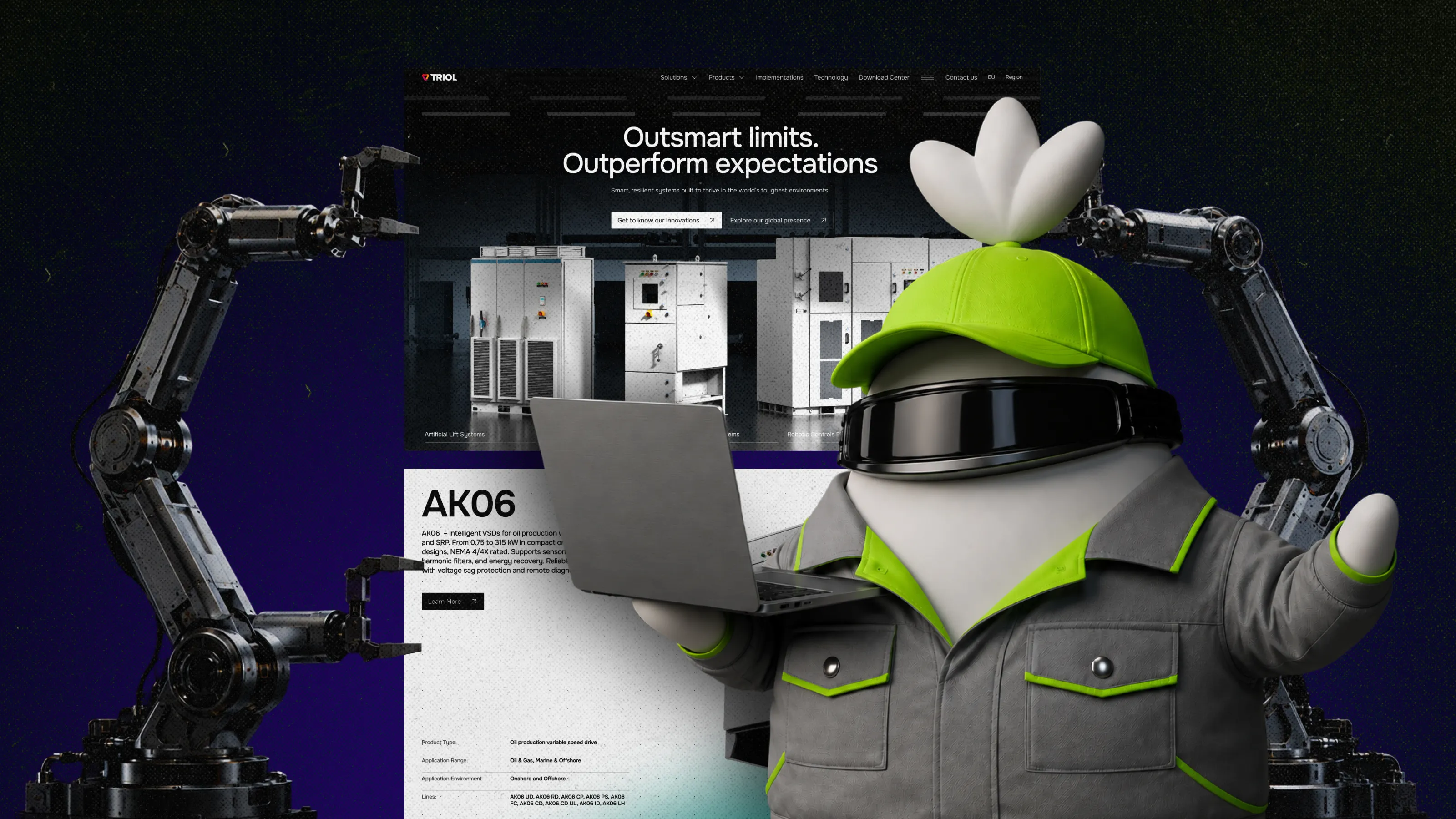
Qream is a brand transformation agency that designs branding and websites for industrial B2B companies, including Triol Corporation—industrial equipment for oil & gas, mining, and marine, operating in 30+ countries.
If the site has to carry trust, clarity, and positioning at the same time, it starts with the brand layer behind it. See how we approach branding for industrial B2B companies.
Let's start with the patterns that keep industrial websites out of the running.
Why most industrial website design loses RFQs before the first call
Industrial buying isn't browsing. At Qream, we see it as a technical audit from the very first visit. When an engineer evaluates a supplier, they're running a practical review: checking certifications, verifying tolerances, confirming whether your equipment fits their application.
Procurement is assessing vendor risk in parallel, drawing conclusions from what they see on your site—and from everything they can’t see. The patterns that make manufacturing website design fail that audit are surprisingly consistent across product categories and markets.
01 Brochureware built around your org chart, not your buyer's question
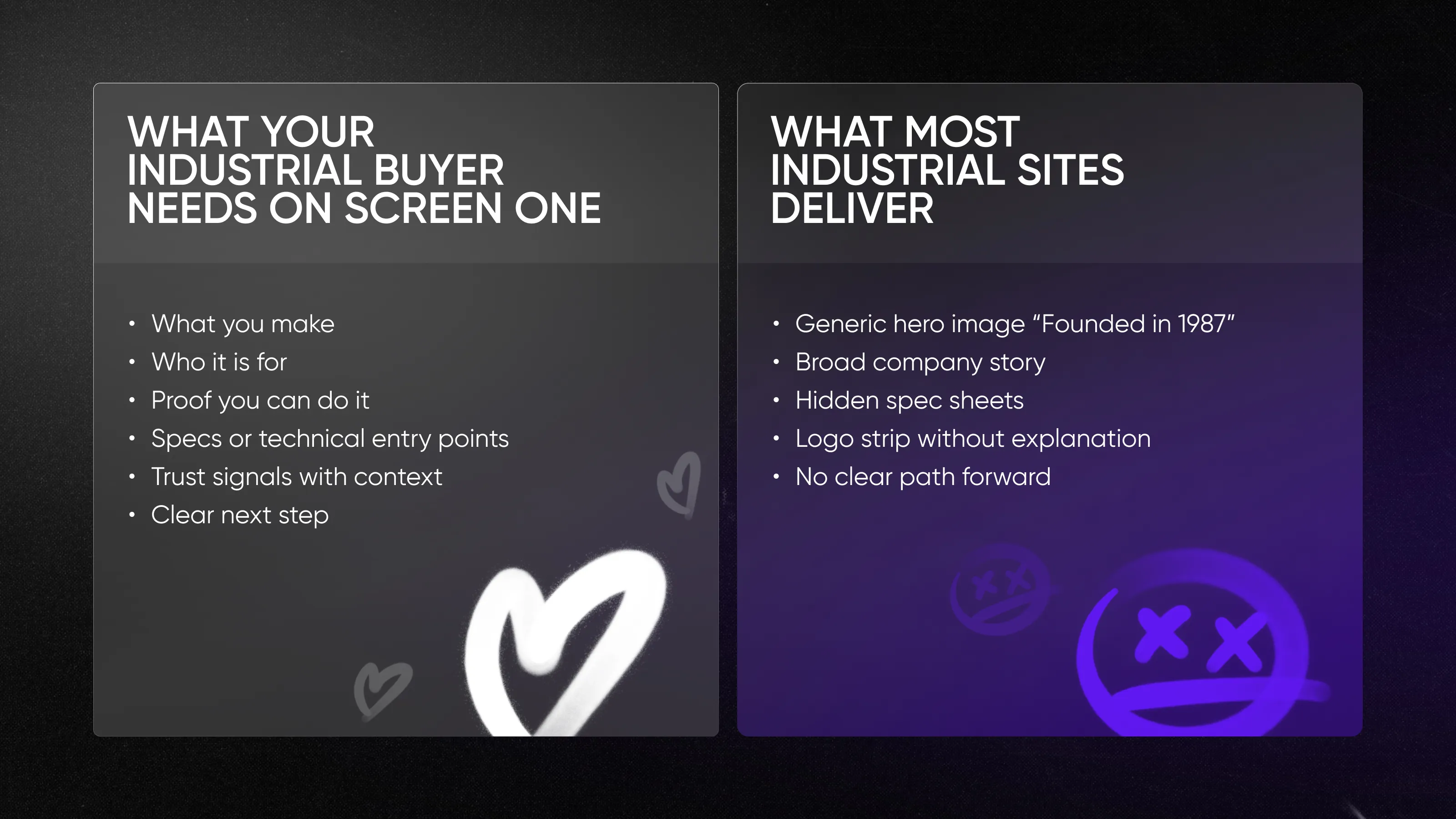
Navigation built around internal product categories tells engineers one thing: they’ll have to work to find anything. "Products → Category A → Subcategory → Model" is how your team organizes things internally—not how buyers think. Engineers search by application, environment, and certification. When they can’t find a spec sheet in two clicks, they don’t fill out a contact form. They open the next supplier tab and move on.
02 A founding year is not a value proposition
A homepage hero with a facility photograph and a decades-of-experience message occupies the exact screen space a procurement manager uses to decide whether to stay. They give each vendor a homepage in under thirty seconds. "Founded in 1987" answers none of their questions: what do you make, for which industries, at what tolerance and certification level, and have you done this for a company like ours? The company's history belongs deeper in the site—not on the screen where buyers qualify you.
03 The homepage doesn't sell to different buyer groups
There’s no one-size-fits-all solution. Engineers need spec sheets, certifications, CAD files, and DFM data. Procurement needs lead times, pricing context, and verifiable case studies. Distributors need channel program details, territory logic, and margin structure. When all three land on the same homepage with no segmented paths, each scrolls looking for their entry point and finds nothing calibrated to their role. The problem is not traffic. It's a mismatch.
04 Trust signals that don't match the deal size
An ISO badge in the footer and a logo row with no company names works for a $10,000 order. For a $500,000 supply contract, procurement needs named clients in the same industry vertical, specific technical challenges resolved, verifiable outcomes with numbers, and certifications presented with compliance context. Vague trust signals do not just fail to help—they make the company look under-evidenced or out of touch with what serious procurement committees need to see.
7 manufacturing website design decisions that help buyers say yes faster
Most manufacturing websites still think like a catalog. The strongest ones organize around how buyers evaluate suppliers—and route them to the right answer in two clicks. This is the kind of work we usually talk about in website production. Here are seven structural decisions that separate the sites generating RFQs from the ones generating PDF downloads.
01 "Put your best foot forward" for a wide range of buyers
An engineer, a procurement specialist, a distributor, and a talent specialist may visit your site with completely different agendas. And when they encounter the same site navigation without clear distinctions, each has to find their own entry point—and that’s not in your best interest.
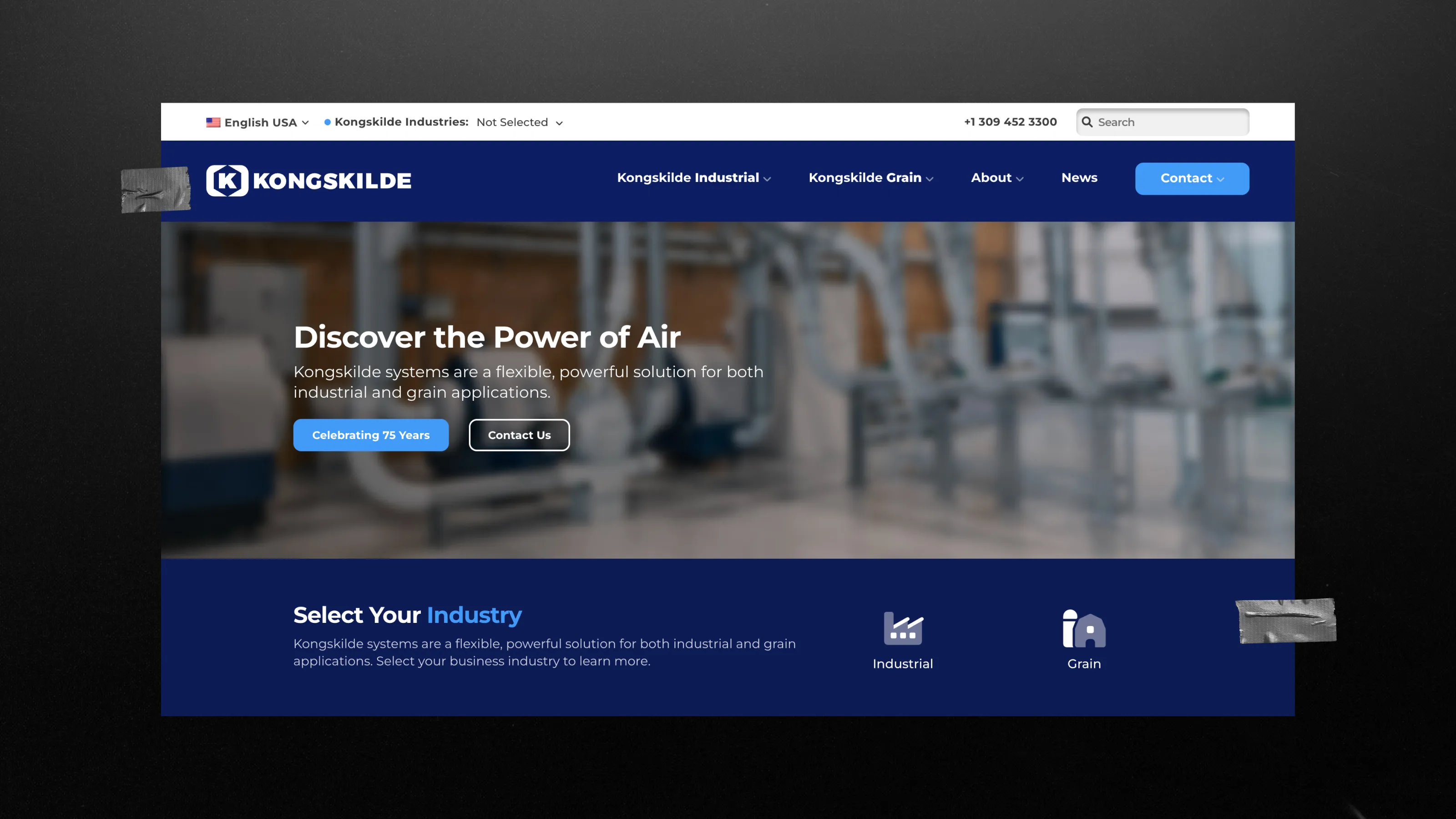
Kongskilde Industries surfaces two distinct entry points from the homepage itself: industrial and grain. Each vertical gets its own navigation layer, proof points, and content. The architecture answers the audience question before the visitor asks it, and this runs through every level of the site—not just the homepage header.
02 Organize the site the way buyers actually search
"Products → Category → Model” is your logic. Buyers search by application: "pneumatic conveying for plastic granules”, "variable speed drive for submersible pump”. When the taxonomy doesn’t match how buyers think, they stop looking.
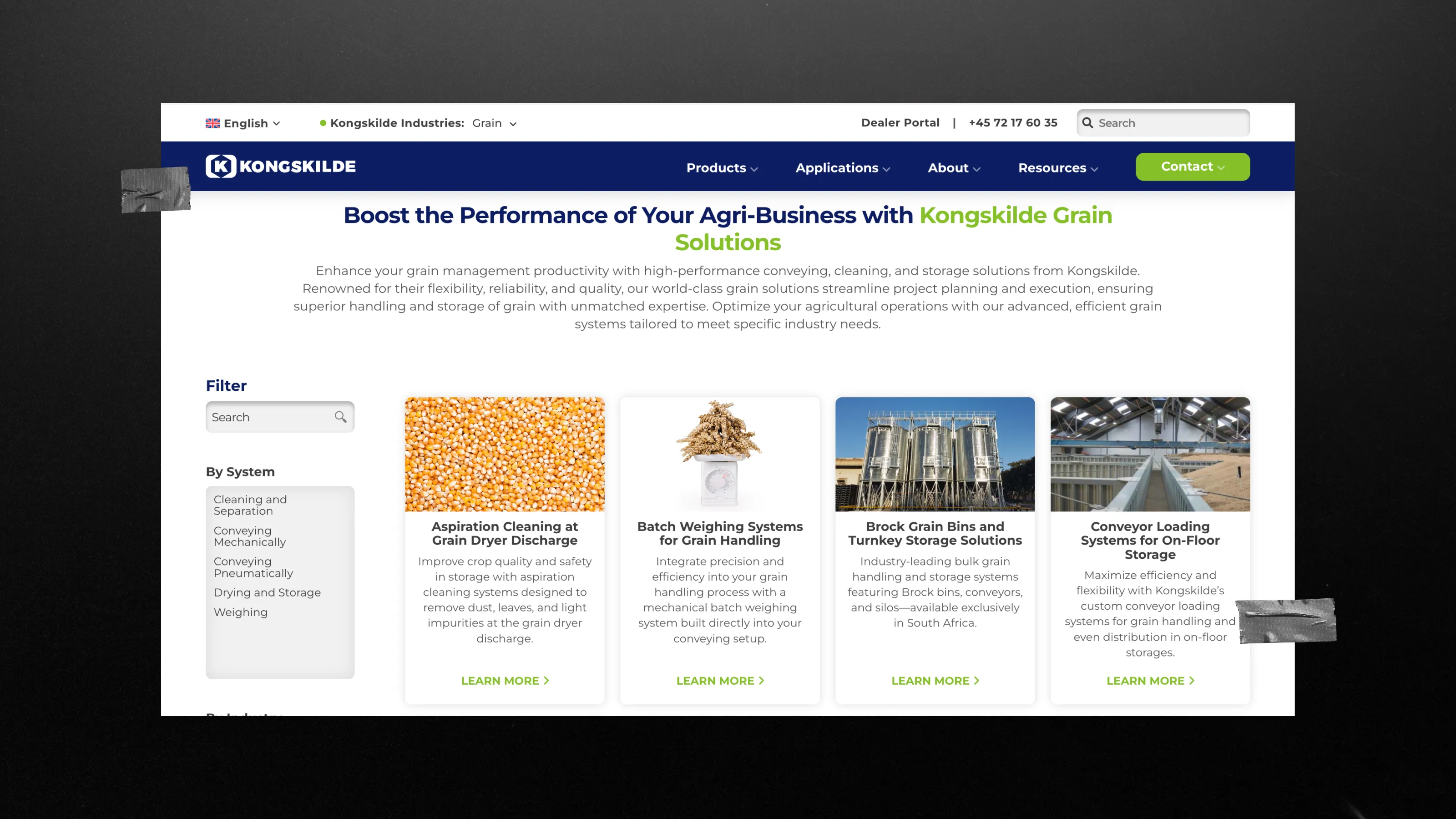
Kongskilde renamed all "Solution pages" to "Application pages" and rewrote the content in buyer language instead of internal product classification. This move has made the site easier to navigate and search.
03 Spec sheets that load fast, filter well, and don't require a PDF
An engineer reviewing five suppliers during a floor meeting will not download five PDFs and cross-reference them manually. In-page spec display: filterable by application, power range, environment rating, certification—is the difference between "qualification confirmed" and a tab quietly closed.
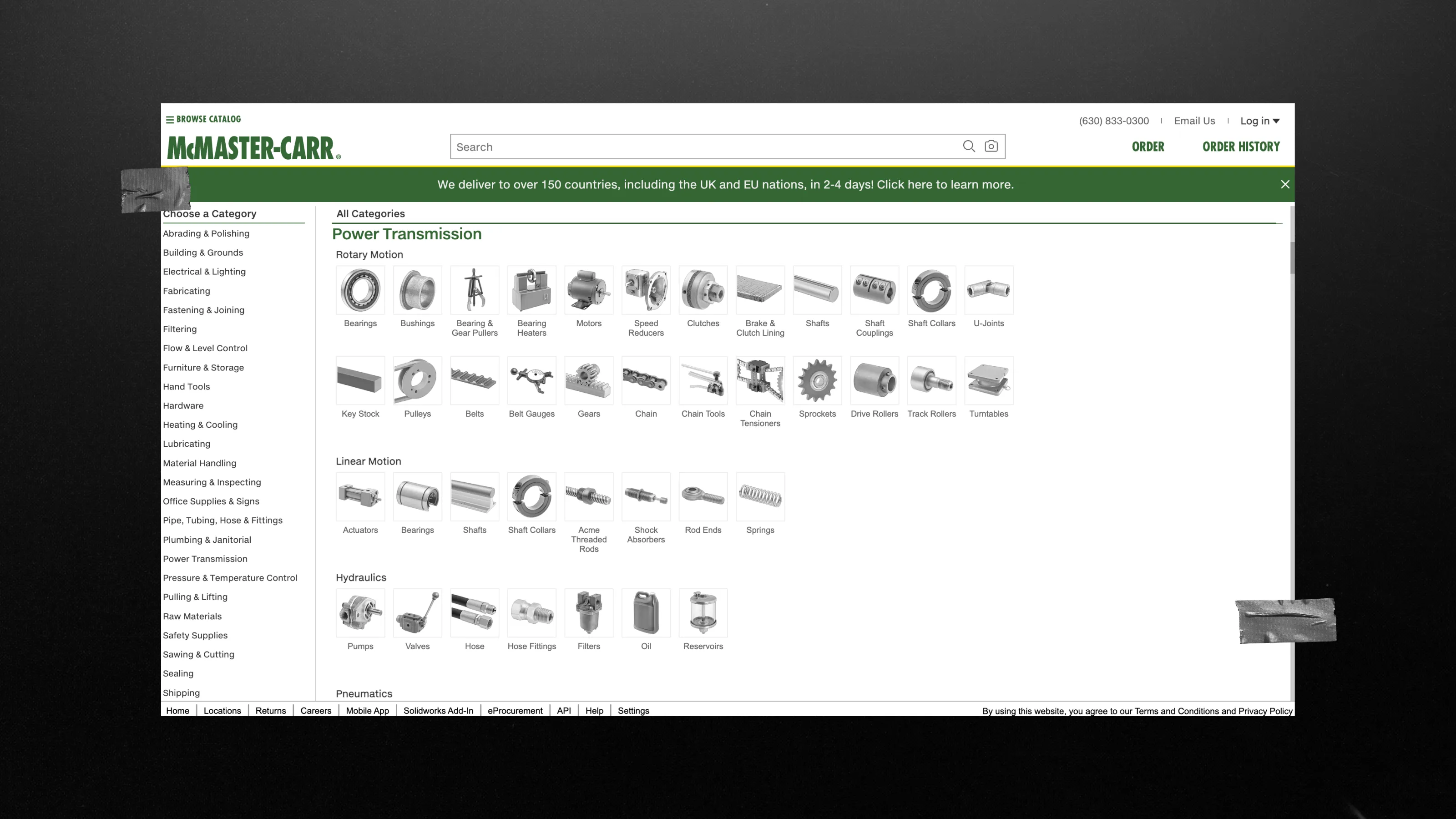
McMaster-Carr has made this the benchmark for industrial parts sourcing: 600,000+ products structured into a relational database of quantitative technical specifications, with parametric search and schematic illustrations embedded directly into the page—effectively transforming the site into an engineer's handbook and catalog in one. This principle holds for any product range: every spec your buyer needs should be findable, filterable, and visible in-page—before anyone reaches for the phone.
04 Big deals need bigger proof
Generic social proof works until deal sizes grow. At enterprise procurement level, committees need named clients in matching industry verticals, specific technical challenges described in verifiable detail, outcomes with numbers, and certifications presented with their compliance context—not just logos in a footer. Companies that surface this evidence clearly signal they understand what serious buyers need to see. Companies that bury it signal the opposite—and procurement committees notice both.
05 Visual language that signals modern operations
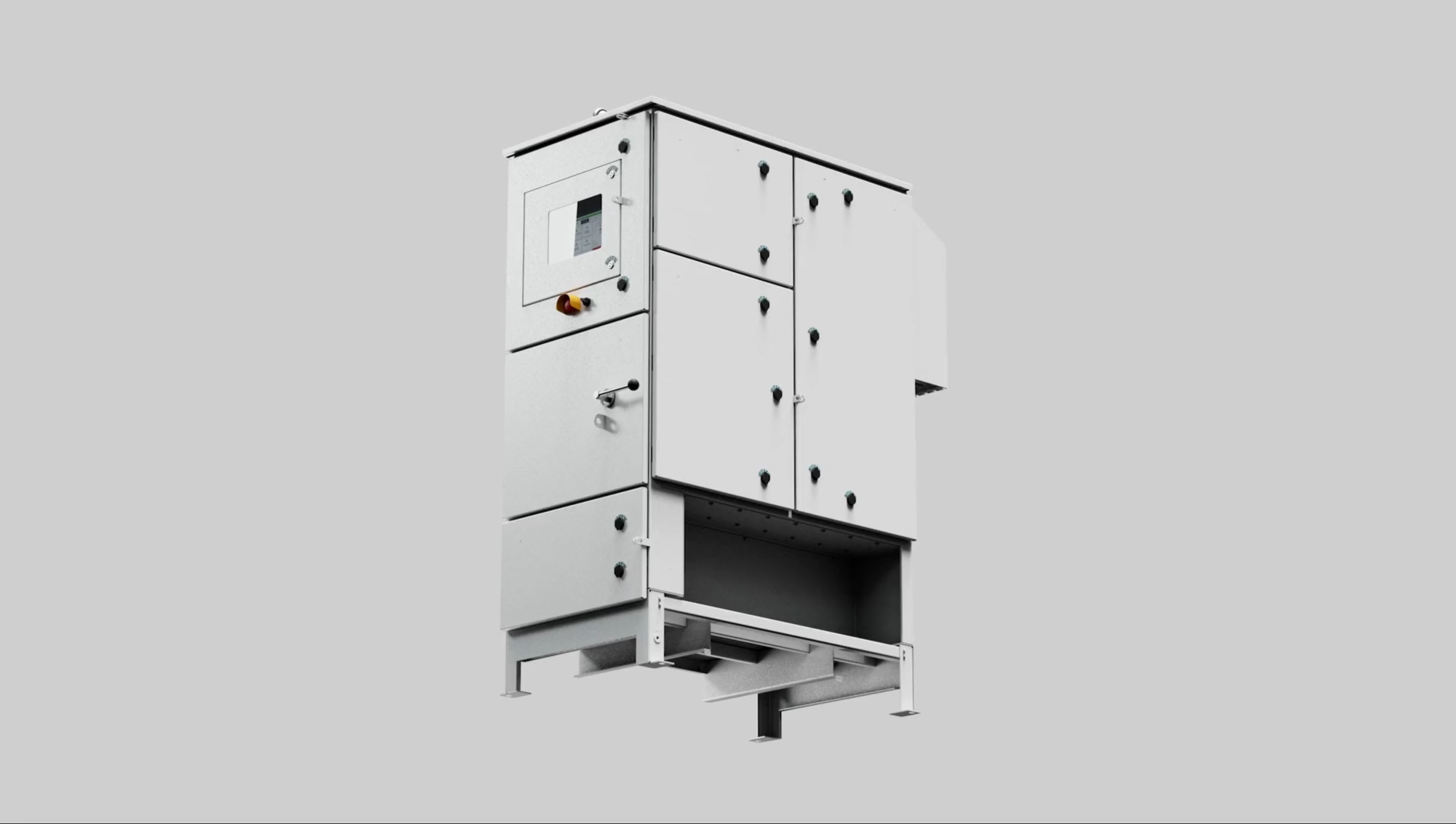
Hard hats, clipboards, and generic factory aerials make a manufacturing web design look stuck in 2008. 3D renders can surface engineering detail. Dark interfaces can signal precision and technical seriousness. Custom product illustrations can simplify complex industrial flows. For Triol Corporation, Qream replaced flat icons and stock photography with 3D renders and motion that put engineering detail front and center.
06 Multilingual where your markets are—with documents that follow
An industrial company that sells products in Germany, Poland, and Kazakhstan needs more than just a translated version of its website. It needs spec sheets, certifications, and technical data that automatically switch with the site language. A document library that stays in English when the site switches to German isn’t localized. It’s a translation layer on top of a site that wasn’t built for that market.
For example, Kongskilde operates in seven language versions with document libraries that auto-switch when the site language changes. For global industrial operations, this is the difference between a market you genuinely serve and a territory where you technically have a URL.
07 Content depth that survives engineer scrutiny
An engineer building an internal business case needs material certifications, operating tolerances, compliance standards, installation docs, and production capacity data. If any of it takes a sales call to unlock, you add friction at the exact moment the engineer is ready to decide. Every spec page that's missing, gated, or buried in a PDF hands that evaluation opportunity to whoever was easier to find first.
Industrial web design in action: three decisions that changed how buyers reach the right product
The best industrial sites don’t just look current. They help buyers move faster, decide sooner, and waste less time hunting for basic answers. Triol, Protolabs, and Xometry each solve that problem in a different way. But together, they show what industrial UX looks like when it works.
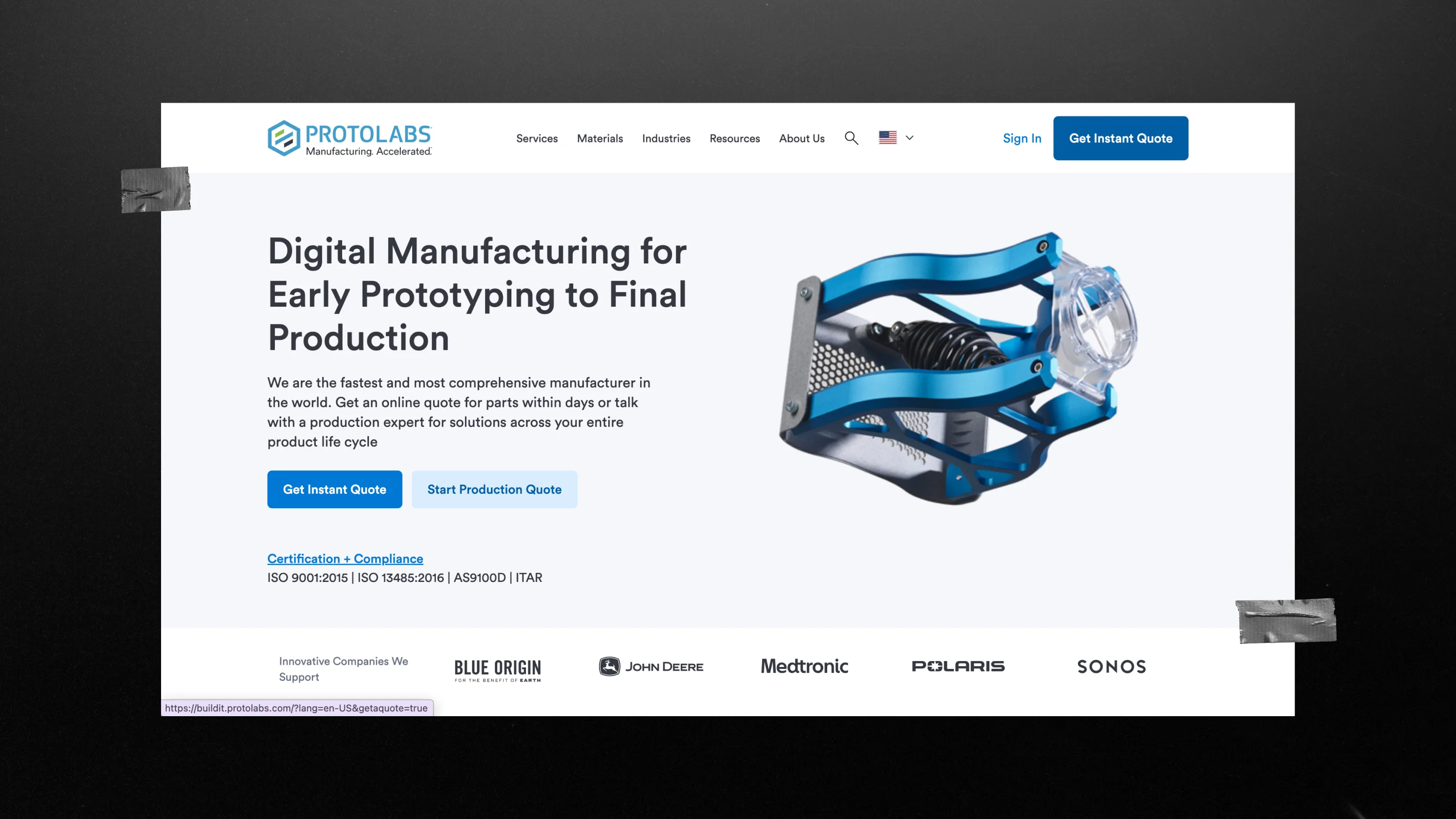
The site that moved pre-qualification entirely online. Protolabs wins not because it removes the form. It wins because it makes the form feel useful instead of painful. The site gives buyers a clear path from CAD upload to DFM feedback and pricing, with technical trust signals visible along the way through certifications, compliance pages, and a full-service product lifecycle structure. That makes the experience feel guided, fast, and credible—exactly what industrial buyers need when they’re trying to qualify a supplier without wasting time.
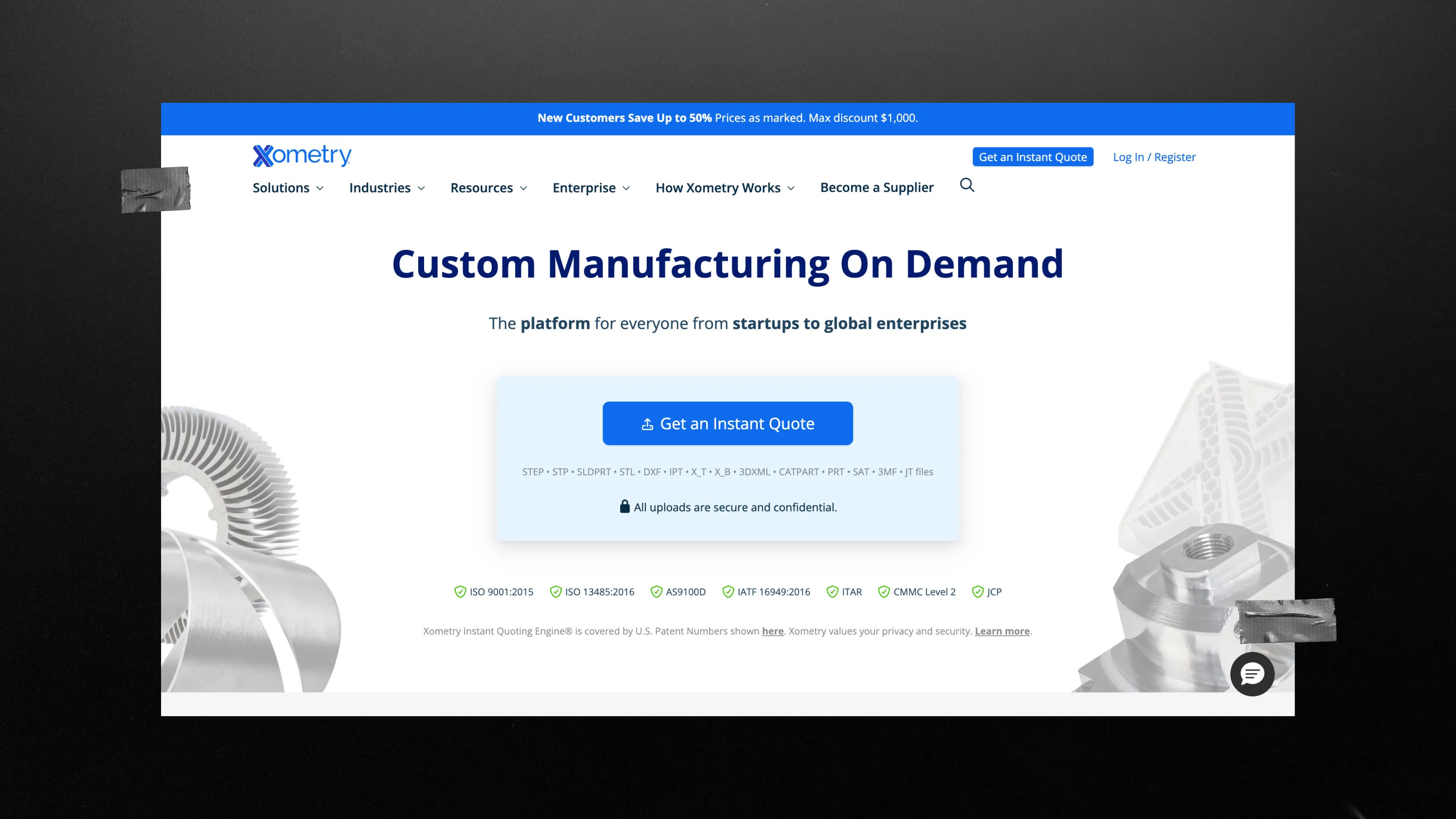
Short path, fast price. Xometry keeps the quote path short and obvious. Their instant quoting flow is built to get buyers to a price quickly, with only a minimal first step before the rest of the process opens up. That works because industrial buyers often want a fast check before they commit to a longer sourcing conversation.
When multi-product families with hundreds of specs become navigable in 2 clicks
Triol Corporation builds precision equipment for extreme conditions: variable speed drives, downhole telemetry, automation platforms for oil & gas, mining, marine, and manufacturing.
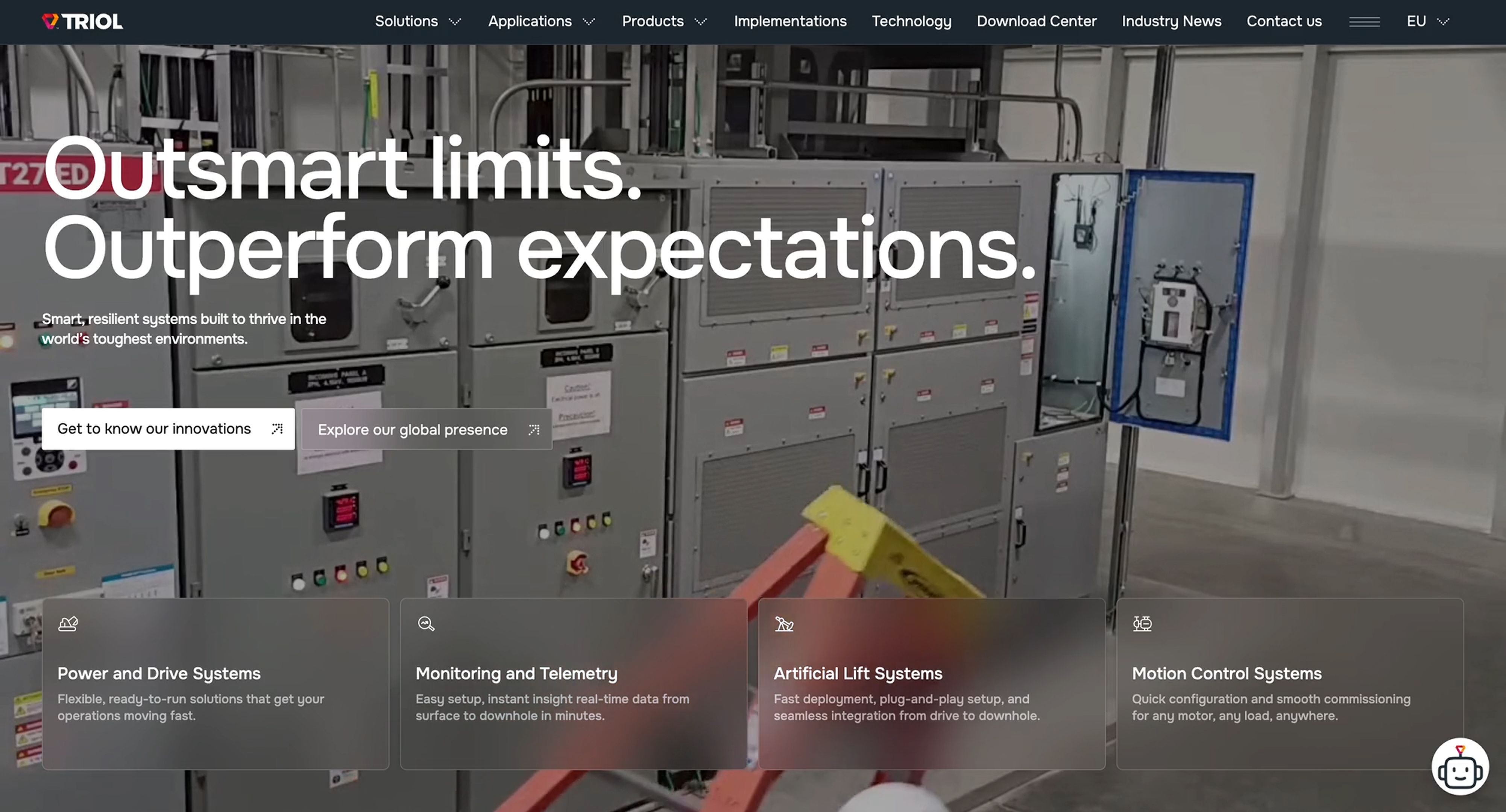
When Qream designed the website for Triol Corporation, the biggest challenge wasn't the design—it was making complex product families with hundreds of specs feel navigable in 2 clicks. That’s the real test for industrial UX: whether the site helps technical buyers get to the right answer fast.
Four b2b manufacturing website mistakes that cost you RFQs
Every industrial site we audit tells roughly the same story. Different products, different markets—and the same four gaps showing up again and again.
Mistake 01: Treating all buyers as one
In our experience working with industrial companies, this is the single most common structural failure. Engineer, procurement, and distributor land on the same homepage with no segmented paths, no role-specific proof points, no CTAs calibrated to each buyer's next step. Each scrolls looking for their entry point, finds nothing immediately relevant, and moves on. The fix isn't three separate sites—it's a segmentation layer from the first screen: navigation, proof points, and CTAs that match what each buyer actually needs to do next.
Mistake 02: "Contact us" as the only pricing path
Every industrial buyer searches "[your product] pricing" and "[your product] lead time" before any conversation with your team. If pricing context isn't visible—even ranges, even "starting from $X for standard configurations"—two things happen at once: they assume the worst case on cost, and they find a competitor whose site answered the question. Even ballpark ranges help buyers pre-qualify themselves, which leads to better RFQs and shorter sales cycles.
Mistake 03: Spec sheets as PDF-only downloads
In-page spec display: filterable by application, power range, environment certification, or material compatibility—is the difference between a site that supports evaluation and one that outsources the work to the buyer. In 2026, PDF-only spec access is not a technical limitation. It's a choice. And buyers interpret it as a signal about how the rest of the working relationship will go. As an industrial web design agency, we know PDF-only spec sheets slow down evaluation and put the burden on the buyer.
Mistake 04: A mobile experience that wasn't built for how buyers actually browse
Today a big share of buyers first open industrial websites on their phones, in meetings, on the factory floor, or between calls—and they do not have patience for tiny tables, unreadable text, or PDFs and Excel files standing in for proper responsive layouts. If the mobile version still makes people pinch, zoom, or download files just to see basic specs, the site is not mobile-adapted.
A good manufacturing website qualifies buyers before the first sales call. It gives each audience a clear path, keeps spec sheets easy to reach, shows trust signals with context, and lets RFQ start without friction. The site should help buyers decide fast, not make them chase basic answers.
Manufacturing website design best practices in 2026 start with buyer intent, not visuals. Organize content around applications—the way buyers search—not product families, which usually reflect how your team thinks. Make specs filterable, keep certifications visible, and build navigation that helps people move without guessing.
Custom B2B manufacturing website design usually ranges from $50,000 to $80,000 for sites with product catalog and RFQ functionality. More complex builds with large taxonomies, multilingual architecture, or ERP integration can run $80,000 to $150,000 or more. The final cost depends on scope, structure, and how much the site has to do.
Start with buyer research, not visual direction. Map how engineers, procurement, and distributors reach the site and what each one needs in the first thirty seconds. If you start with moodboards before buyer mapping, you usually get a site that looks polished and fails to convert.
The strongest manufacturing website examples solve a real buyer problem, not just a design trend. When Qream designed the website for Triol Corporation—industrial automation equipment for oil & gas, mining, and marine—the challenge was making 9 product families with hundreds of specs navigable in 2 clicks. The answer was architecture first, not decoration first.

See how industrial UX works when it’s built for buyers.
If your site still makes people hunt for specs, context, or a next step, that’s where the problem starts. See how Qream approaches industrial web design in the Triol case study.
Written by

Qream co-founder | Design and product direction
Leads Qream's creative and product direction, connecting brand strategy, experience design, and business goals. Reviews content where design strategy, UX/UI, customer experience, and brand execution are central.