Have you ever hired a product designer for your startup and then gotten confused because they don’t know how to improve the landing page conversion?
Well, the good part is that it’s not necessarily a bad hire. The bad part is that it’s a category error. Not knowing which designer your business needs is costing you months of stagnation and thousands in lost opportunities. So that “design problem” might be nothing more than a mismatch in thinking.
Read this before you hire a new designer—see who actually makes your company grow.
What designer does your company need?
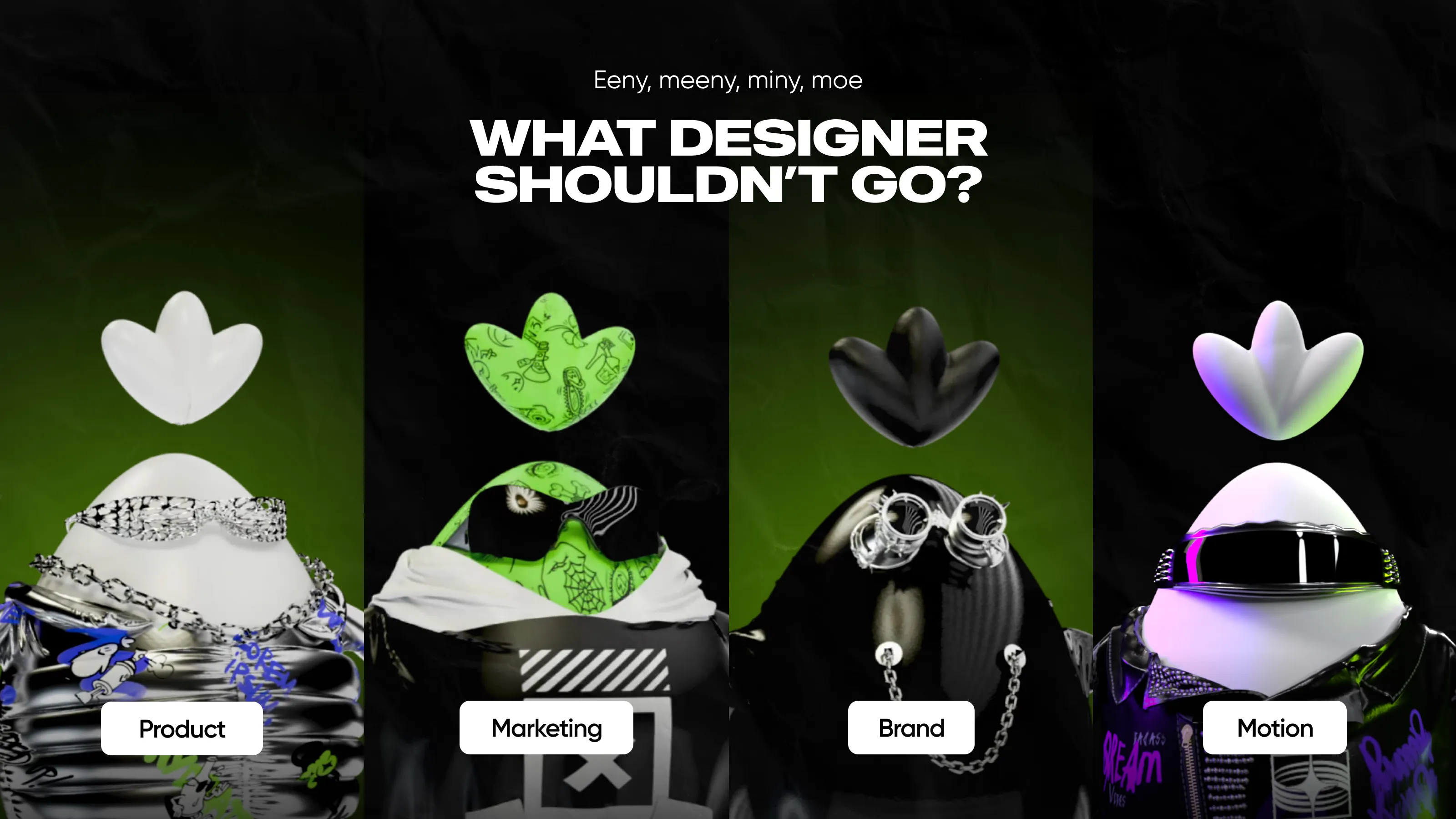
Remember, folks: “designer” is not one role—it’s a category. Throwing random marketing tasks at a UI/UX designer because they already know Figma makes no sense. Yes, they can design something fine, yet they won’t have a strong strategic foundation to make this piece work.
Let’s break down the key design directions without the fluff.
Product vs web vs brand designer
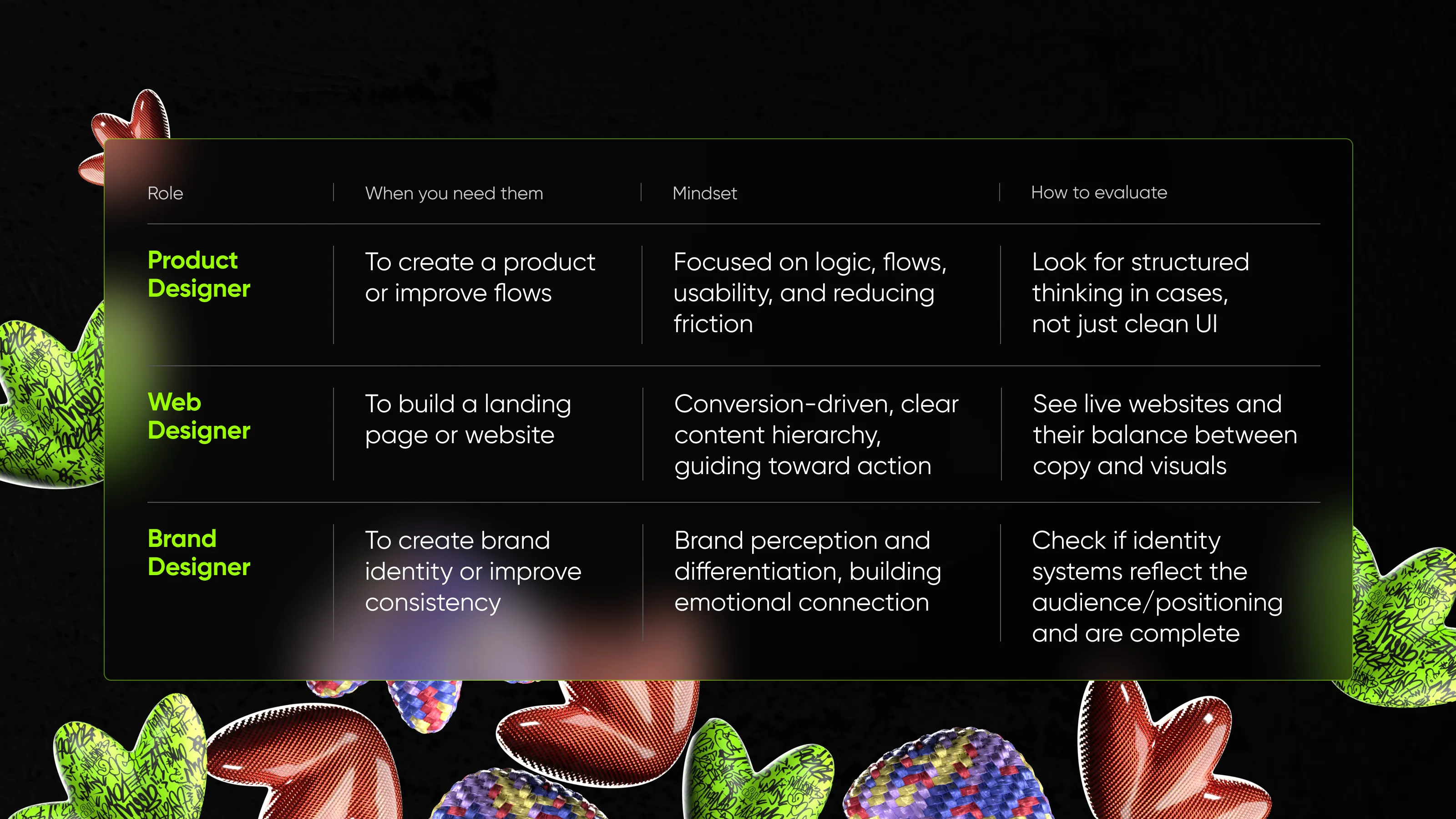
These three champs think in completely different ways and impact different parts of your business. One focuses on how your product works, another on whether people engage with it at all, and the third on how your company is perceived in the long run. Mixing these roles up is where most hiring mistakes start.
Just compare the roles and mindsets:
And more designers who solve more specific tasks
As your brand grows, you might need even more design roles and directions. Each of them solves a specific problem, not “design in general”.
Motion designerscraft product videos, commercials, product & website animations, etc.3D designersbring extra visual differentiation (especially trendy now in the Web3/AI industries).Marketing or SMM designershave more tailored skills for fast content production, campaigns, etc. They understand what formats exist and work in different platforms, and marketing is their love language.
Example of how different design roles work at one project
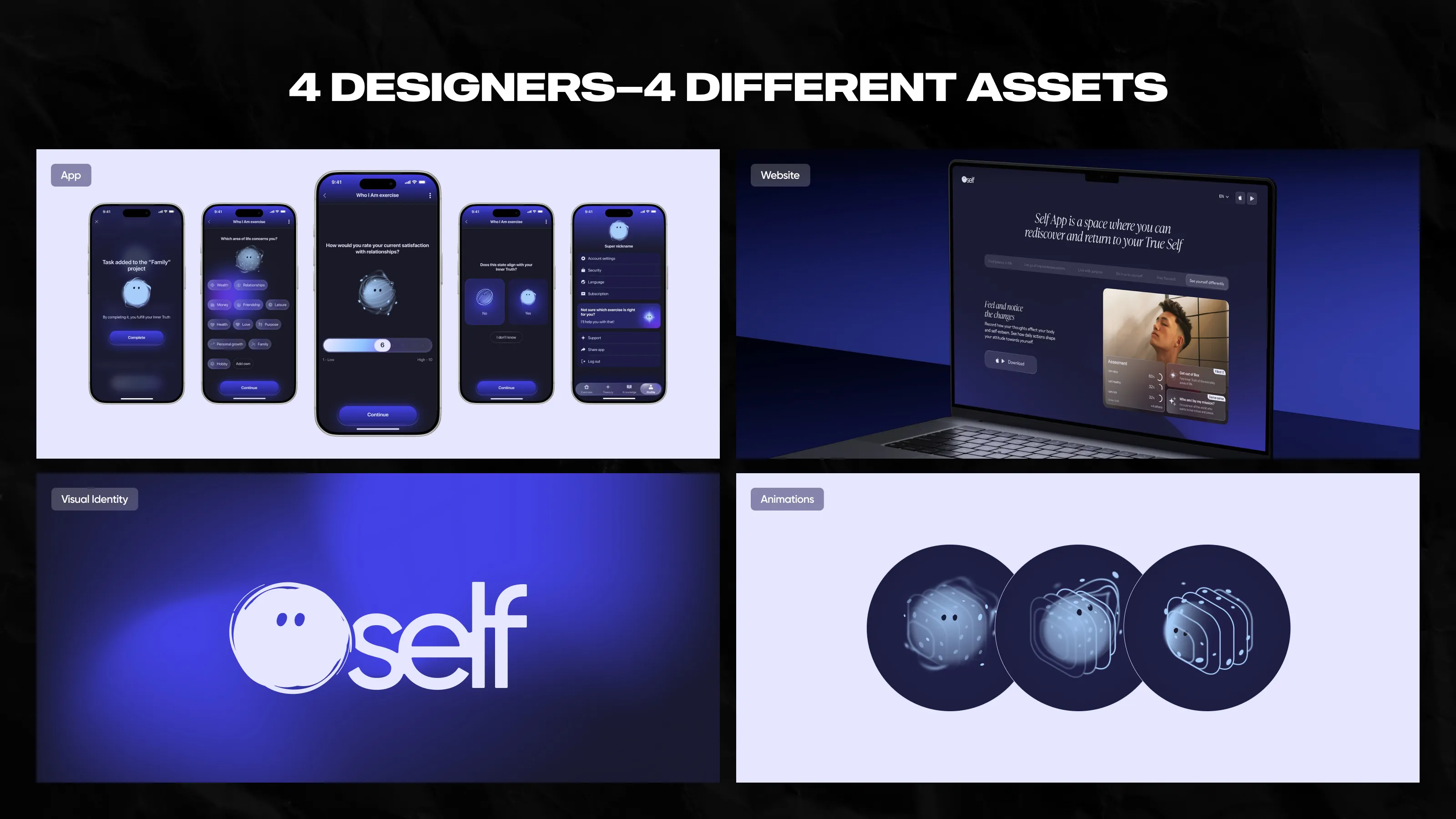
Take Self App—a psychology-inspired app and our 2025 project. When the founder came to us, it was just an idea without a real product yet, so we started with a product designer who turned scattered ideas into a working MVP and defined the core flows.
At the same time, a brand designer built the identity so the product wouldn’t feel generic and could stand out in a crowded mental health space.
As the app was evolving, a motion designer added interactions and micro-animations to make the experience feel more alive and emotionally engaging.
Finally, before launch, a UI/UX designer focused on the website, turning it into a conversion-driven presence that gets people to sign up.
What looked like a small startup project ended up requiring 4 different design roles at different stages. And that’s the point—different problems need different expertise, not one multi-tasking designer.
Why product and marketing live in different universes
Let’s imagine a typical seed-stage startup. You’ve built a solid MVP, and the product works. Now you launch a website and start running traffic.
Suddenly, you see that the customer’s feedback is vague, or users download your app but drop off during the onboarding. You think something is wrong with your app. In truth, your product and marketing just don’t align.
Could be for a bunch of reasons, really. Say marketing comms were overpromising, and the product features didn’t meet users' needs. Or the opposite: your product is actually solid, but your messaging undersells it, so the right users never even get excited enough to try. And this is where you can start digging into symptoms inside the product, while the root cause often sits before the user even gets there.
Key thing to remember: product and marketing operate on different layers of reality.
Product is about truth and rational stuff. Product design answers: “What does the product actually do?”
Marketing is about perception, presenting solutions, and forming needs. Marketing asks: “What do people believe it will do—and why do they need it?”
To combine these realities right, make them work as one system. Your marketing should set the right expectations, but your product must deliver on them. And your design should connect the two—as well as your comms and messaging.
Scenarios when you don't need a designer at all
This is where founders lose money, trying to solve a non-design problem with design. Why does this happen? Because we tend to judge everything by the final layer, aka the visual output: a website or an ad. It looks like design, so we assume it is design.
But what you’re seeing is just the surface. Underneath that website or ad, there’s a whole stack: strategy, messaging, marketing logic, technical setup, content ops. So let’s get real about a few common situations where you actually need another specialist, not a designer.
You don’t have positioning, but want a unique product → you need a strategist
A strategist is the one who answers: “What do we need to be so we can stand out?” Yes, a brand designer can analyze competitors’ visuals to avoid clichés. But that’s just scratching the surface. Real brand strategy goes deeper: audience research, identifying market gaps, defining your angle, and building a brand platform that guides future marketing decisions.
You want to launch ads → you need marketing thinking first
Meaning someone to build the logic: a marketer who understands acquisition and shapes the funnel, and a creative copywriter who defines how you speak and what ideas you push. And only then will you need a designer for the production part (ads, landing pages, or other assets).
You need to update website content → you need a CMS + content manager
If you ping a designer (or worse, a developer) every time you need to change a button label or tweak a paragraph, something’s broken. What you actually need is a solid CMS (content management system) and a setup that lets your team update content fast and on their own.
You need to control the quality of design/creative → you need decision ownership
Checking whether the banner’s size is appropriate for the placement is a designer’s job. But checking if this asset solves the business goal or aligns with the bigger marketing picture isn’t something a regular graphic designer does. That’s where roles like creative director, creative lead, or CMO come in—people who evaluate the overall output.
The cost of hiring the wrong designer
Unfortunately, this story goes beyond “we wasted a salary”. Things here quietly go off the rails—and you have no idea how.
In the same scenario as the seed startup, imagine you hired a product designer for $5–7K/month to move from MVP to a fully functional product and to scale. Over 6 months, that’s ~$30–40K.
Your tasks scale too: now you need decks and the website. You delegate it to the same designer (because who else can make it?), but the final assets don’t wow you. Instead of one person “covering everything”, you end up forcing a specific expertise into areas it wasn’t meant for. Way too much time gets wasted on endless review cycles, subjective feedback, and constant revisions.
And the hidden cost of not hiring the right person can easily run $60–80K+ in lost opportunities: lost leads, poor conversion, and drained budgets spent on weak ads.
A designer is not a Swiss army knife. This goes back to the very first section of this article—working in Figma is not a universal skill set. Someone strong in product design won’t automatically know how to build converting landing pages or think in marketing funnels.
What design direction is prioritized at different startup stages
Design needs change as your startup grows, so roles and hires will change, too. A little relief: you don’t need to build separate teams from the start. Here are the roles you should prioritize based on your startup’s timing.
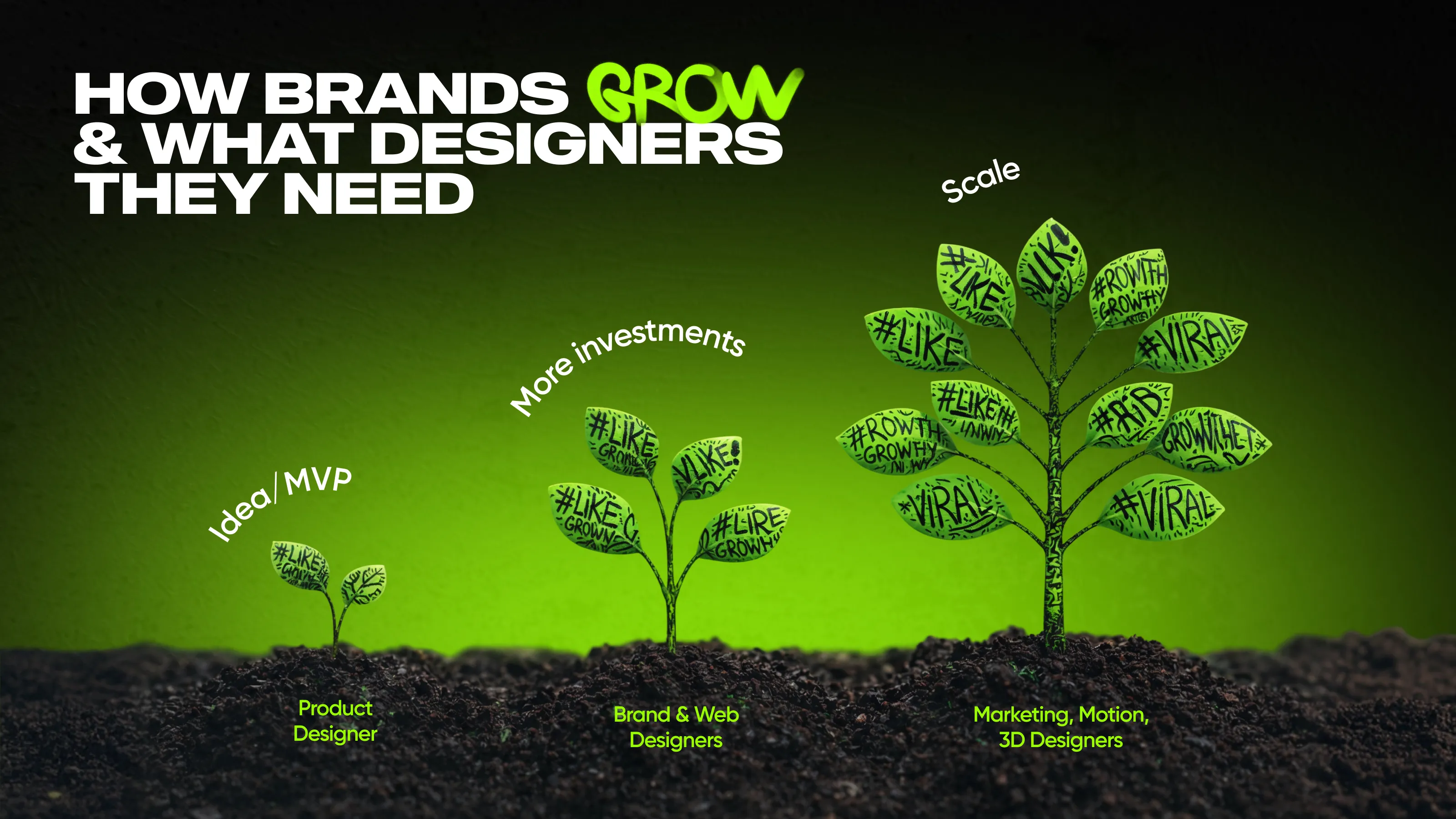
At pre-seed, your only goal is to get something real out there. You need a product designer who can turn an idea into a working MVP and define core flows.
At the seed stage, branding and marketing can no longer wait. You need sharper perception and a website that converts, so brand and web design come into play.
By Series A and beyond, you’re scaling everything. It’s no longer about hiring one more designer—you’re building systems and teams across product, marketing, and brand.
If you want a deeper breakdown of what design assets a startup needs at each stage, we covered it in detail in our guide to branding.
Final thought: who should you hire now?
Before you open another job post, think in categories and what’s up with your company. For example, if you’re struggling because people don’t understand what you do, that’s a clarity and positioning problem, not a product issue.
Then, ask yourself:
- Will this hire’s skillset solve the challenges we’re facing now?
- What is our priority now: clarity, desire, or usability?
- What mindset does this position require?
Otherwise, you might not only hire the wrong designer, but also ask them to solve the wrong problem. Don’t risk building an entire process around the wrong assumption of what “design” is supposed to fix.