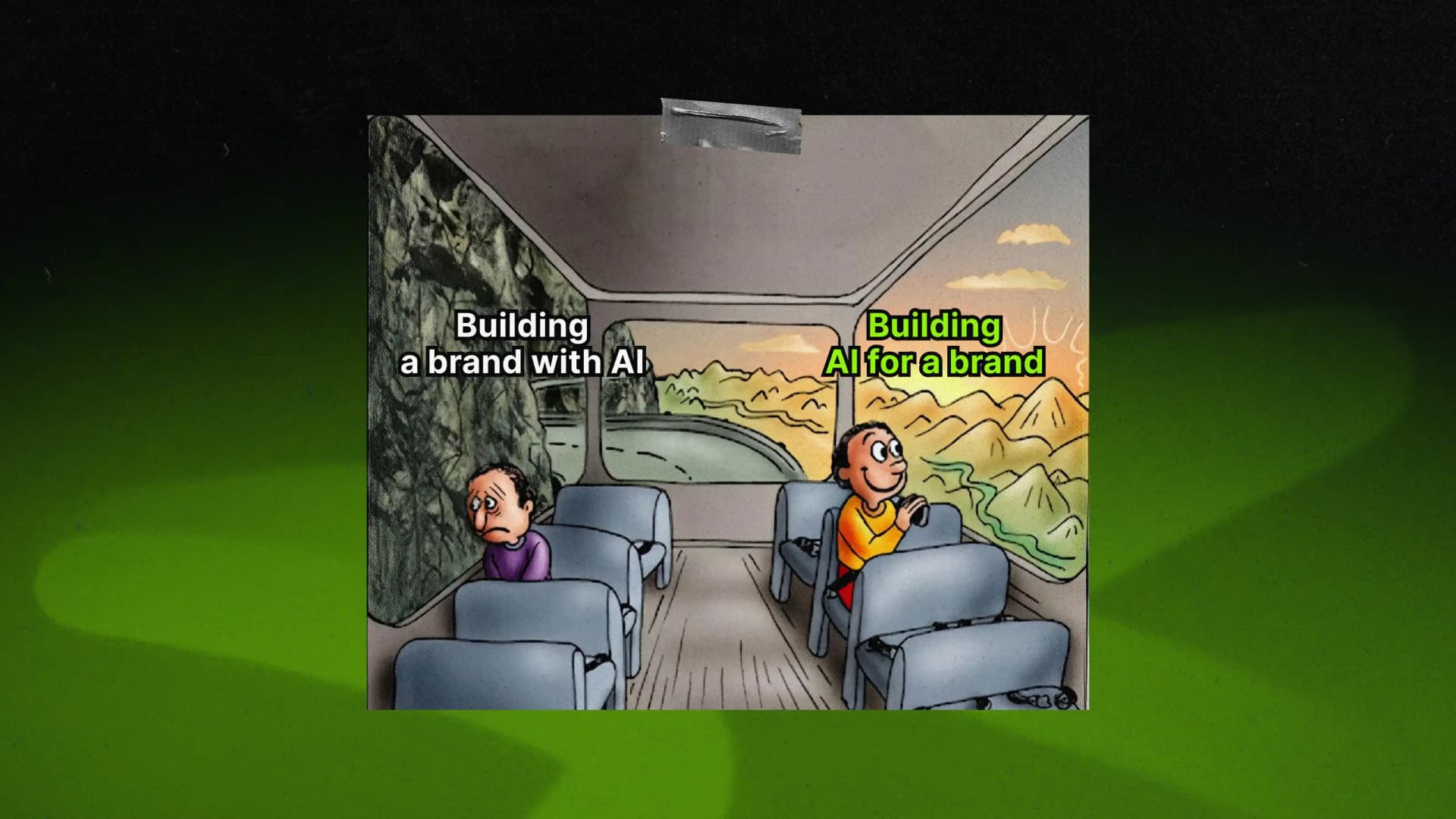
TL;DR
Three months of flat results after a rebrand doesn't mean the brand is broken. It might mean you're measuring the wrong things, didn't actually rebrand—just redesigned, or launched without a clear strategy underneath.
A rebrand is only justified when something real has changed: your positioning, your audience, or your market. And when it is justified, the new brand needs to directly answer the business situation that triggered it—not just look fresher.
Before you brief another agency, write your positioning in one sentence. If you can't, that's your actual problem—and no new logo will fix it.
You launched a new branding, and three months in, something doesn't feel right—conversions are flat, the audience seems indifferent, and you're starting to wonder if the whole thing was a mistake.
So what do you do? Rebrand again? And whose fault is this anyway? Did the agency drop the ball, or did you hand them the wrong brief?
Honestly, the answer could be either. But before you spend another budget on fixing something that might not be broken, let's actually diagnose what happened.
First things first: three months isn't enough to know if it's working
Most founders measure brand performance the way they measure ad performance. A paid campaign can show results in days. Brand doesn't work like that. Recognition, trust, and perceived value are built through repeated contact over time. The first few months after a rebrand are almost always quiet. That's how brand awareness accumulates.
Building measurable brand recognition typically takes 6–12 months of consistent presence, depending on the industry and the level of competition. Three months in, you're still in the warm-up.
If your only metrics are sales and CTR, you're flying blind on brand health. So what should you actually be tracking:
- Unaided recall—when someone thinks of your category, do they think of you?
- Brand perception surveys—how does your audience describe you? Does it match how you want to be described?
- Share of search—is branded search growing over time?
- Qualitative feedback—what are customers saying?
Three months of flat sales don't tell you the brand isn't working. It might tell you the brand needs more time, more consistent presence, or better distribution. These are very different problems with very different solutions.
You might not have rebranded at all—you might have just redesigned
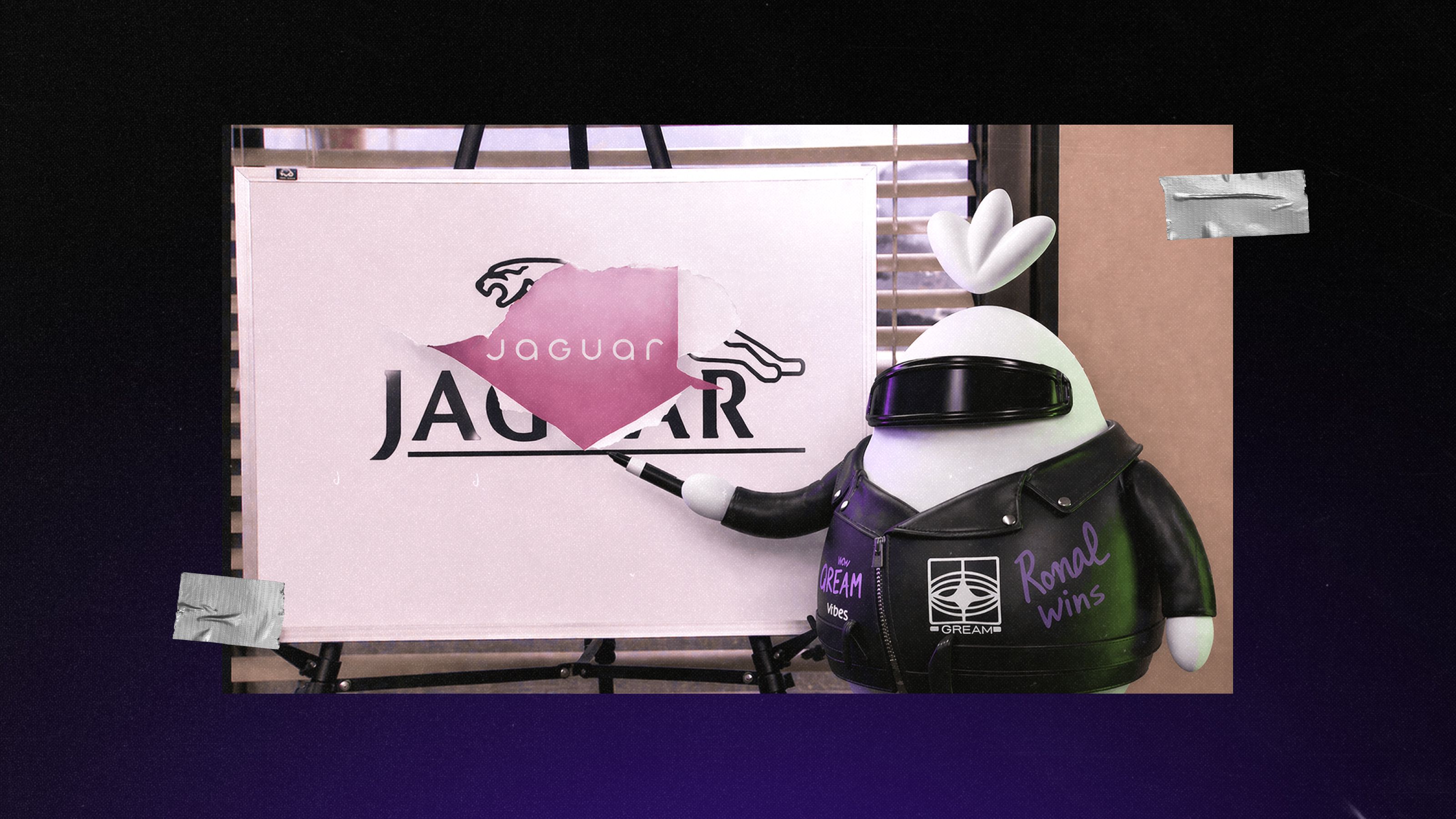
This is where most of the real damage happens. Rebranding and redesigning are not the same thing. A redesign changes how your brand looks. A rebrand changes what your brand means—its positioning, its promise, its place in the market. One is execution. The other is strategy. We explain the difference between these two concepts in our article: “You don’t need a redesign—you need a reason to exist.”
If you briefed an agency on visuals—new logo, new color palette, updated website—without first doing the strategic work, you didn't rebrand. You restyled. And restyling doesn't fix a positioning problem, a messaging problem, or a market perception problem. It just makes the brand look newer while the underlying issues stay exactly where they were.
If your agency presented you with three completely different directions—different tones, different personalities, and different audiences—that's not creative range. That's a signal that the strategy wasn't defined. When positioning is clear, the visual territory narrows significantly. You're not choosing between bold, minimal, and corporate. You're choosing between three executions of the same idea.
When a rebrand is actually justified—and what it needs to answer
There are real, legitimate reasons to rebrand. But they're business reasons—not aesthetic ones. And these reasons are backed with data, not just feelings. A test showing your packaging underperforms competitors is a data point. A gut feeling that the logo “doesn't land” after three months is not. Only one justifies investment. And you already know which one.
Your positioning or audience has shifted. New market, new buyer, new value proposition—the brand needs to reflect that change clearly and specifically. Not vaguely “feel more premium,” but actually communicate the new positioning at every touchpoint. If someone who knew the old brand encounters the new one, they should immediately understand that something meaningful has changed—not just that you updated the visuals.
Back in 2020, Rakuten Viber had grown from a messaging app into a super app—but its brand still looked like “just a messenger.” The old identity no longer reflected its scale, ambition, or market position. We rebranded Viber for Business to match its new positioning: a future-focused leader in the B2B space, with a stronger visual system built to signal innovation, confidence, and category leadership
You've outgrown the old brand. This happens to companies that built their identity early and fast, then grew into something more sophisticated. The old brand served its purpose—it built trust, created recognition, and carried the business through its early years. A good rebrand here doesn't erase it but evolves it. The new identity should feel like a natural next chapter—familiar enough that existing customers don't feel abandoned, distinct enough that it signals real growth. Cutting that thread of continuity is one of the most common and costly rebranding mistakes.
You're entering new markets. Geographic or cultural expansion is one of the most demanding scenarios for a brand. A name, a color, or an image that lands perfectly in one market can be neutral, confusing, or actively off-putting in another. Before taking a brand into a new territory, it needs to be stress-tested: does it translate literally and culturally? Does it stand out in the local competitive landscape or disappear into category conventions that don't exist in your home market? Scalability here isn't just visual. It's strategic.
In each case, the brief to the agency should start with the business situation. The visual outcome is a response to a strategic reality. If that reality isn't defined upfront, the design can't answer it.
And if none of these situations apply, you probably don't need a new identity. You need a clearer strategy and more consistent execution of the brand you already have.
The next rebrand can be worse than the first—if you go in without strategy
You've been burned once, so this time you're more involved, more opinionated, more determined to get it right. But if the problem was strategy—not design—a new design without a new strategy will land you in exactly the same place.
Poorly executed rebrands can trigger immediate sales decline, customer confusion, and long-term loss of brand equity. Tropicana lost 20% in sales after removing familiar packaging cues, while Gap had to reverse its new logo in less than a week.
A rebrand done right isn't primarily a design project. It starts with positioning work: who you're for, what you stand for, how you're different, and what you want people to feel when they encounter you. That requires research—into your market, your competitors, and your audience. And it requires someone in the room who thinks in strategy, not just aesthetics.
When you're looking for an agency for a real rebrand, look for one that has a strategist on the team—not just designers. Someone who can run market research, define positioning, and build a creative brief that's tight enough that there's only one right visual direction, not three conflicting ones. The design should feel inevitable once the strategy is clear.
If an agency jumps straight to moodboards without asking hard questions about your business—that's a red flag.
What to do right now, before you commit to anything
Before briefing anyone, do this:
Get real feedback. Not “What do you think of the new look?” but “What does this brand stand for?”, “Who do you think it's for?”, “How is it different from competitors?” Run it with existing customers, lost leads, and people who don't know you. The gaps between their answers and your intentions are where the actual problem lives.
Write your positioning in one sentence. Who you're for, what you do, and why you're different. If you can't write it, or if five people on your team write five different versions, that's your diagnosis. No design work until this is resolved.
Positioning is defined by a formula: for [target] who [need], your business is [category] that [differentiator] because [reason to believe]. Here's what it looks like in Qream
Audit consistency before you audit aesthetics. How does the brand show up across every touchpoint—social, email, packaging, sales conversations, and customer support? Inconsistency kills brand perception faster than a weak logo. A strong identity applied inconsistently reads as no identity at all.
Painful isn't the same as broken
Most brands that feel broken after three months aren't broken. They're either unmeasured, under-distributed, or built on a strategic foundation that was never solid to begin with.
A new logo won't fix unclear positioning. A new color palette won't fix a misaligned promise. And another rebrand without the strategy work up front will just cost more money to arrive at the same problem, with fresher visuals.
If something feels off, that's worth investigating. But you should investigate the right thing.
Written by

Qream co-founder | Design and product direction
Leads Qream's creative and product direction, connecting brand strategy, experience design, and business goals. Reviews content where design strategy, UX/UI, customer experience, and brand execution are central.