TL;DR
The longer you've been in business, the more you have to prove it's still true today. Heritage reads as unquestionable credibility to someone who lived through it with you. To a new buyer, the same signals—the founding year, the unchanged logo, the frozen messages—can be read as a company that stopped investing. Not in the product. In itself.
Imagine that right now, a procurement specialist is compiling an Excel spreadsheet that already includes 19 potential supplier companies.
As part of their research, they visit their websites to determine which ones appear to be serious contenders and which ones seem risky. One of those companies is yours.
You built it over decades. You have the capability, the certifications, the track record. Your existing clients know your value—some of them have worked with you for fifteen years. But this buyer has never heard of you. And what they see when they land on your site is not what you know yourself to be. It is a first impression formed in seconds—a brand perception judgment made from signals you may not have updated in years.
The biggest disconnect I see in this industry is rarely about product quality. It is almost always between the quality of the business and the quality of its presentation. Before a prospect speaks with your sales team, visits your facility, or meets your engineers—they've already formed an opinion. And that opinion was formed on a website.
Not everyone sees an outdated website as a sign of a successful business.
The channel that decides
According to Gartner's 2023 marketing survey, when B2B buyers were asked which digital supplier interactions they engaged during a purchase decision, a supplier's website ranked as the top channel—ahead of social media, direct search, and interactive tools like product configurators or price calculators.
I think about this every time a client tells me their website "isn't really how we get business." They're usually right—their existing clients don't come through the website. But that's exactly the point. The website is the only version of your company that works when you're not in the room. It is the version that exists for everyone who hasn't met you yet.
And that version is often telling the wrong story. Many of these companies have world-class engineering, decades of expertise, global customers, and highly sophisticated operations. Yet their digital presence makes them look ten times smaller than they actually are. The disconnect isn't in what they do. It's in the gap between who they are and how they're perceived.
A procurement professional put it plainly in a 2025 thread on r/procurement: "Now I'm spending entire days googling random companies, trying to figure out if their websites look professional enough. My Excel sheet is chaotic—40+ potential suppliers but I can't tell which ones are actually manufacturers vs middlemen."
What strikes me about that description isn't the chaos—it's the method. This person isn't evaluating technical specs. They're running a credibility triage, and your website is either passing it or it isn't. The visual shortcut, the gut-level read—it is happening at your company's door every time a new buyer looks you up.
The question is: what do they find?
The thing you're proudest of
There is a logic most manufacturing founders operate by, and it is not wrong—it is just incomplete.
The logic: we have thirty years of proof. We have long-term clients who trust us. We built something real and everyone who matters knows it. The website is not perfect, but our clients know us. The work speaks for itself.
This holds true—for the clients who have been with you for a decade. They know your capability. They have seen it. No logo refresh changes that relationship. But logic has its limits. It works perfectly well as long as your current relationship lasts.
The buyer in that procurement department has no relationship with you. No decade of experience with your quality. Just a browser tab and forty-three names in a spreadsheet. For them, the brand is the only signal they have.
When heritage becomes a trap
This is where pride in longevity— legitimate, earned, real—could be a liability. Not because the heritage is wrong. Because heritage, when it is the only thing showing, reads differently to a stranger than it reads to someone who lived through it with you.
History is an asset when it signals accumulated expertise. History becomes a liability when it signals resistance to change. The best manufacturing companies communicate: "We've spent 30 years mastering this industry—and we're building the future of it." The weaker ones communicate: "We've been doing things the same way for 30 years." Those are two completely different messages. It's not the number that matters. It's the direction.
The track record is real. The pride is earned, but a potential buyer can only read what you show them.
One voice from a 2024 r/manufacturing thread captures the internal logic precisely: "An old website just means the factory isn't relying on the website to sell products. Most of the best factories have a relatively small number of customers that they have long term relationships with."
Accurate. And also a description of a company that has stopped growing its surface area. A company that only sells to people who already know it has quietly closed a door it may not realize is closed. That model works—until a key client consolidates, changes procurement leadership, or gets acquired. Until the industry shifts and the next generation of buyers has never heard of you. Until you want to grow into a new market where your reputation simply does not reach.
In first meetings, I hear the same phrases again and again: "We're an industry leader." "We're trusted by the biggest players in the market." "We've been solving this problem for decades." Then I open the website and none of that is visible. The website talks about products. The leadership talks about expertise, innovation, reliability, scale, and trust. There's often a huge gap between the story the company tells internally and the story the market sees externally. Our job is usually not to invent a new story. It's to reveal the real one.
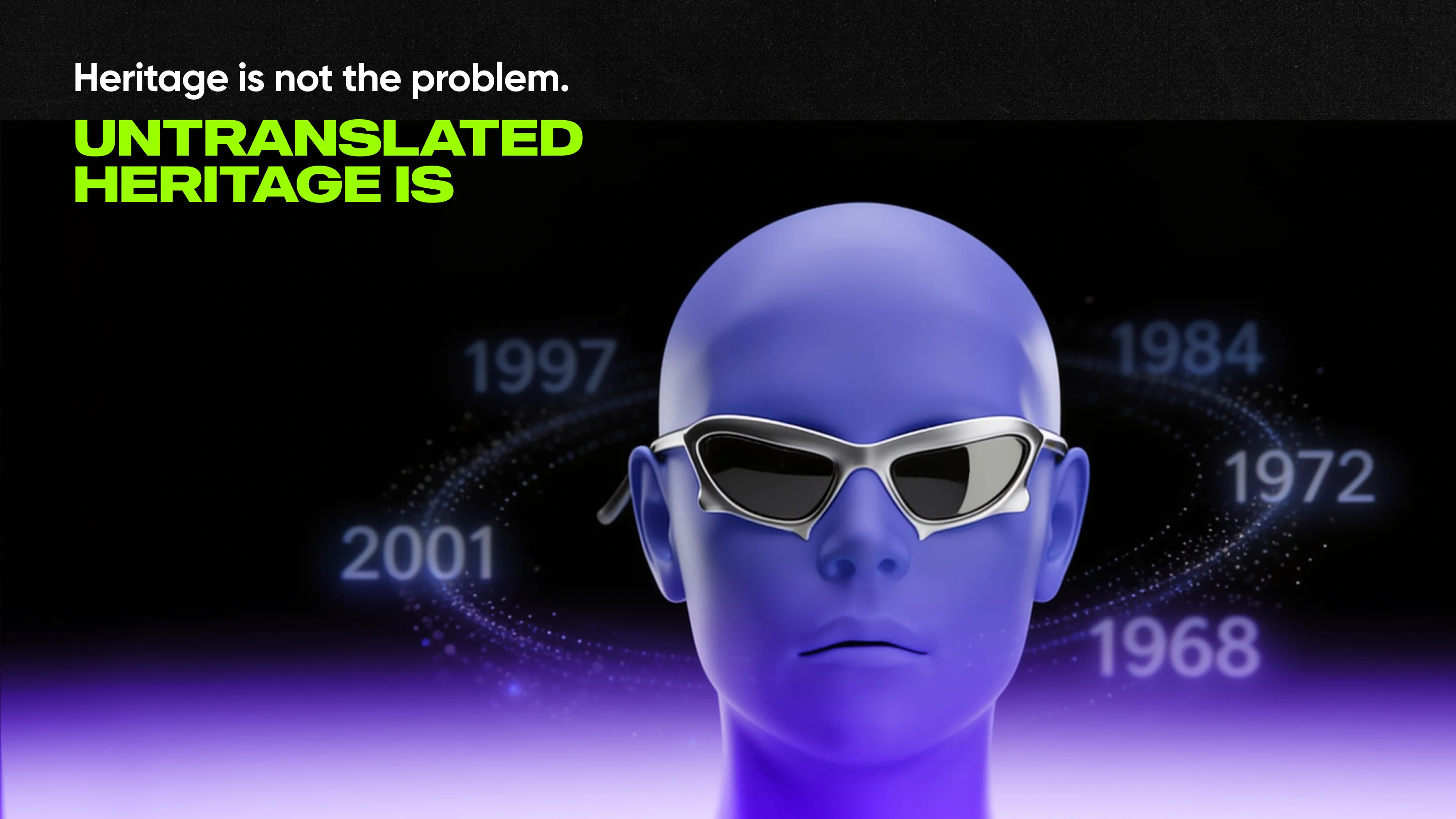
Heritage is not the problem. Untranslated heritage is.
Gaps speak too
The absence of recent work is its own signal. A buyer scanning a supplier site is looking for proof of the present, not credentials of the past.
What year is the most recent project they can find? What do the photos show—old equipment, or current capability? Does the language reflect how the industry talks now, or how it talked a decade ago?
When I open a manufacturing company's website for the first time, I'm not looking at the design. I'm reading the signals. A case study from 2016. A team page with people who left years ago. A "news" section with the last post dated three years back. An "industries we serve" list that doesn't match what the company actually does today.
Each of these is not a design problem. Each one is a trust signal. And when there is no tailored proposal, no direct conversation—a new buyer has nothing else to go on. What the site shows is the whole picture. And if that picture hasn't moved in years, it's harder to make a positive impression.
This gap doesn't exist in isolation. Learn more about why industrial brands fail online.
The invisible loss
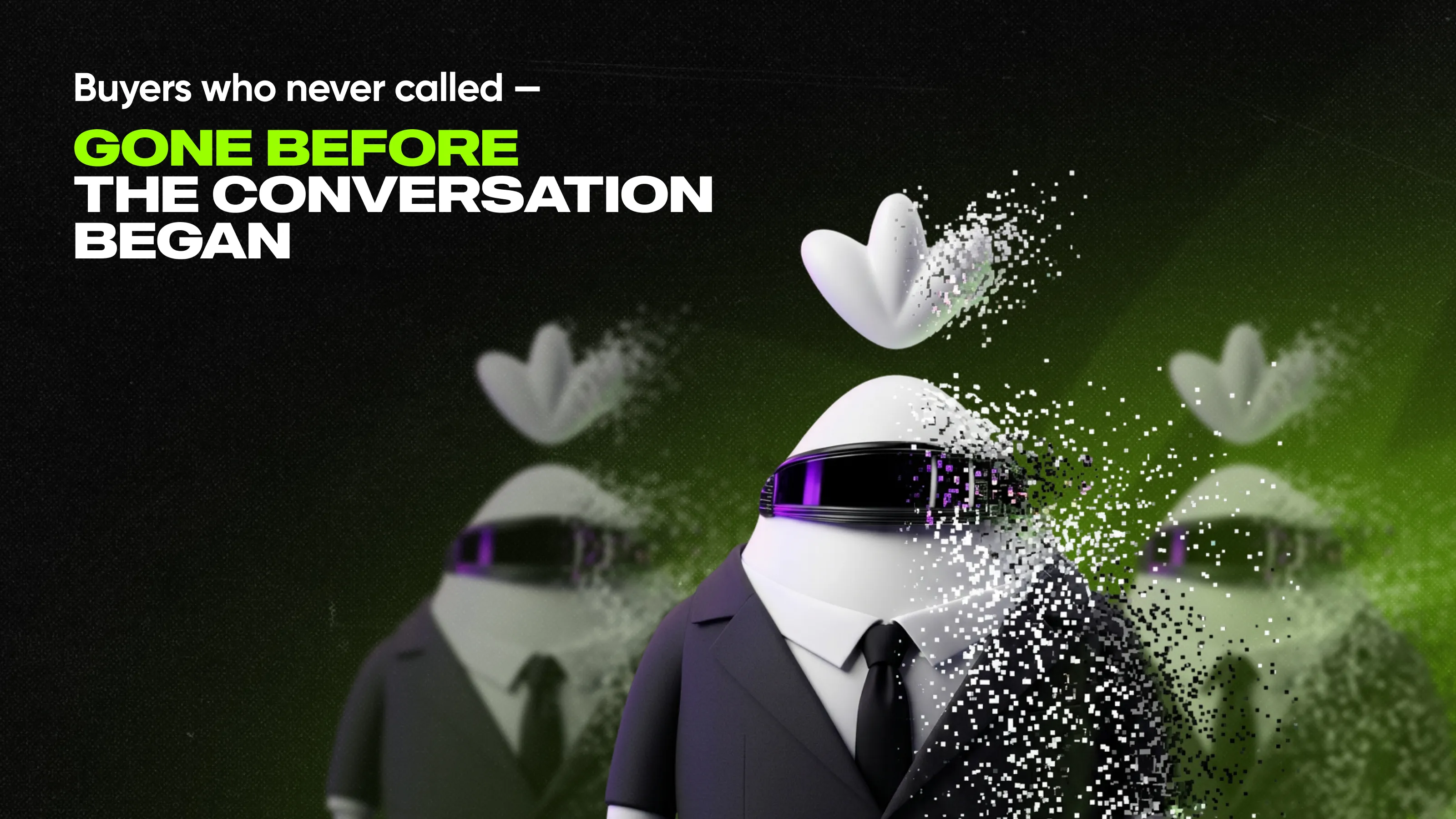
Another buyer, in a 2025 r/b2bmarketing thread: "But new prospects? They're gone before you even know they showed up. [...] These signal more than bad taste—they suggest a lack of attention to detail." And then: straight to a competitor that simply looks more legit.
Gone before you even knew they arrived. The scale of this is not small. A manufacturing business generating millions in annual revenue, running on a thirty-year-old website—that company is paying a tax on every new relationship it could be building. The tax shows up as slower growth, lower deal sizes with new clients, a pricing ceiling that will not move, the constant sense that despite everything built, the company keeps having to prove itself from scratch in every new room.
"Manufacturing businesses generate millions of dollars of revenue and they still have a one pager website from 30 years ago with a weird design," observed by user @hakantasli on X in 2025.
That disconnect has a price. It shows up as deals that go to a competitor who looks more established. As pricing pressure from buyers who assumed you were smaller than you are. As meetings that never got scheduled because someone decided, from a website alone, that you weren't worth the call.
What makes this particularly hard to trace is that nobody tells you. People rarely say: "We didn't choose you because your website looked outdated." What actually happens is they subconsciously trust someone else more. The stronger brand enters the conversation with momentum. The weaker brand enters with skepticism. And skepticism is expensive.
And it is not only about direct sales. The same dynamic plays out when you're competing for a larger account, a distribution partnership, an investor conversation, or top engineering talent. In each of these rooms, someone is forming a judgment before you've had a chance to speak. The brand either opens that door or makes it heavier to push.
Most companies never see the opportunities they lost because of perception. They only see the ones they won despite it.
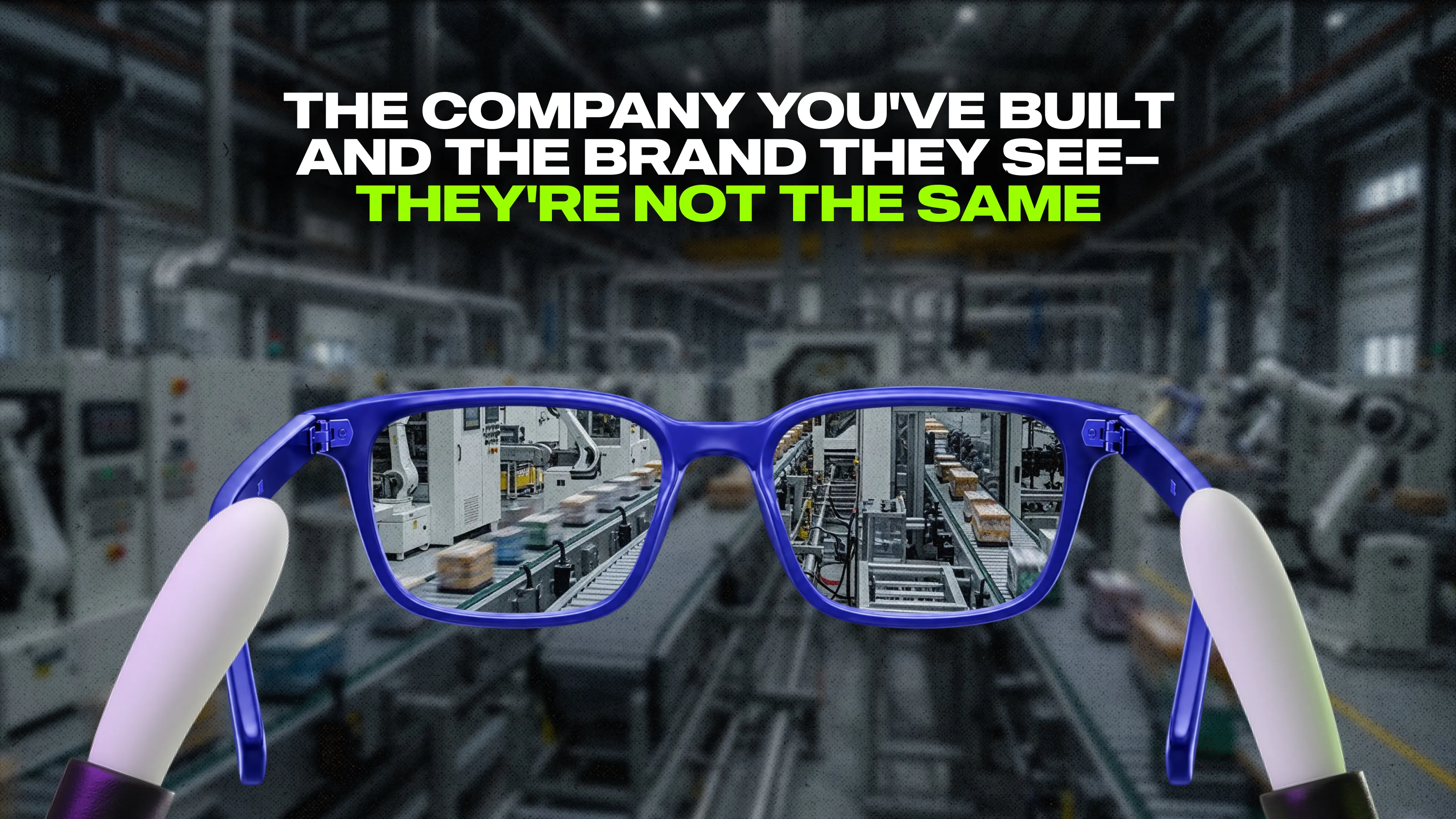
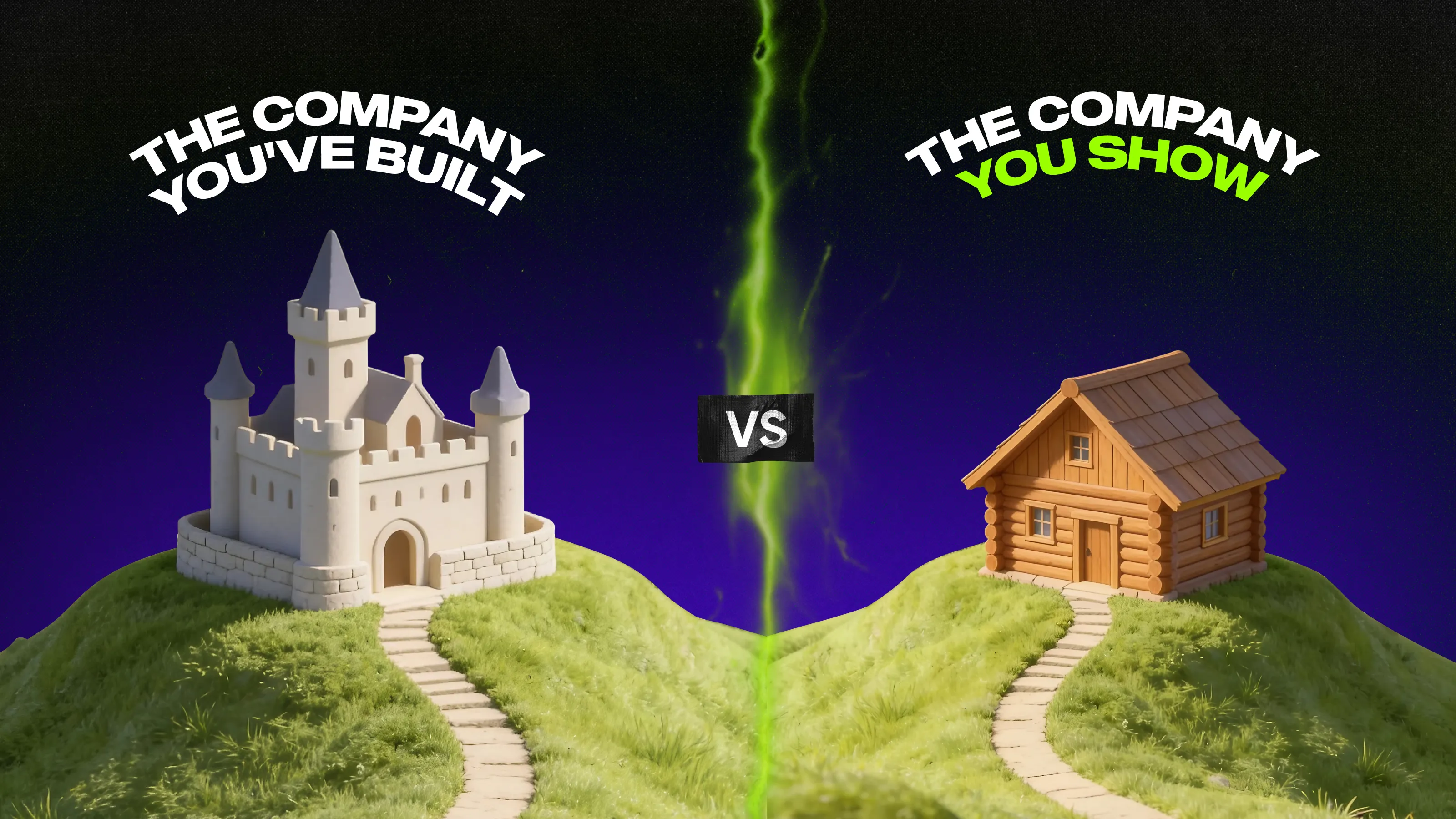
The company you've built vs. the company you show
Most companies that recognize this problem reach for the same solution: a new website. It is the most visible fix, the easiest thing to point at.
But a new website is a possible output. The real decision sits upstream from any design choice—in what the brand is supposed to represent.
Not the company you were when you started. Not the company your existing clients know. The company you are today—with its current scale, current capabilities, current positioning, current ambitions.
A company that has grown from forty to two hundred people over two decades has changed fundamentally. The work it takes on, the clients it serves, the problems it solves—all of it has evolved. If the brand still reflects the version from the beginning, it is not a design problem. It is an accuracy problem. The brand is saying something that is no longer true about you.
When I raise this with manufacturing CEOs, the first reaction is rarely disagreement. It is usually a different question: will we lose what already works?
That is a fair question. These founders have spent years building trust with customers, employees, distributors, and partners. The real concern is rarely design. It's a risk. What they're really asking is whether changing how the company looks will unsettle the relationships that have made it successful.
When the brand finally catches up
Some manufacturing companies do not wait to find out what the disconnect costs them. They close it first.
iBase-t, a manufacturing software company for discrete manufacturing, completed a companywide rebrand in 2023 to reflect its shift toward a cloud-native platform. In the same fiscal year: revenue up 38% year over year, license bookings up 20%, annual subscription revenue up sevenfold. Worth noting: the brand did not work alone—iBase-t was executing well across the business that year. But when three metrics move simultaneously in the year the brand finally catches up to the company, that is not something to look past.
The challenge is that the brand isn't capturing the full magnitude of the business. What impressed me most, working with companies like Triol, wasn't the gap itself—almost every established company has one. What impressed me was the scale of the opportunity hidden behind it. The company had global operations, advanced engineering capabilities, significant industry expertise, and a strong track record. But the external perception didn't fully communicate that level of sophistication. And that's often where the biggest growth possibilities exist. Not in changing who you are. In making your market finally understand who you already are.
For a deeper look at what this kind of transformation looks like in practice, see how Qream approached this with Triol.
The risk is not transformation
But results like these don't happen by accident. A brand transformation that works is grounded in a clear understanding of what the company has actually become—and a deliberate process of translating that into something the market can read. Without that foundation, the same move that builds credibility can destroy it.
ETX Capital—operating since 1965—rebranded as OvalX in pursuit of a more modern name. Six months later, the company went bankrupt. The rebrand was not the only factor—companies in financial services face structural pressures that go beyond brand. But the timing tells its own story. The new identity reflected a desire to appear transformed, not an actual transformation. And for a company of that type, in that market, with that level of scrutiny, the gap between signal and substance was one it could not afford.
A successful transformation doesn't erase trust. It amplifies it. The goal is not to become a different company. The goal is to make the market finally see the company you've already become. The risk is transformation without substance.
Your website is like your company's ID—and ID needs renewing every so often, too. Are you keeping track of this and seeing only positive progress?
If yes—the signal is accurate. The brand is doing its job.
If there is hesitation in that answer—the hesitation is worth paying attention to. Not because the logo is old. Because a brand that lags behind the company it represents has a cost, and that cost is paid in every room where someone who does not know you yet is deciding whether to call.
The moment that changes things is usually not a rebranding conversation. It is when leadership realizes they are no longer competing only on product quality. They are competing on credibility. The market changed. Buyers changed. Procurement changed. Talent changed. The companies winning today are not always the ones with the best products. They are often the ones that communicate value most clearly.
The shift happens when leadership stops seeing brand as a marketing question and starts seeing it for what it actually affects: sales conversations, recruitment, investor confidence, distribution partnerships, pricing power. Once those connections become visible, the conversation changes completely. At that point branding stops being a marketing expense. It becomes business infrastructure.

Does your brand represent the company you have built—or the company you were when you built it?
If the distance is real, it is worth a conversation. See how Qream approaches brand transformation for manufacturing companies.
Written by

Qream co-founder | Business growth and strategy
Leads Qream's business development and commercial strategy, bringing experience across sales, customer support, and complex digital projects. Reviews topics around project scoping, agency engagement, strategic partnerships, and growth.