Distinct branding for distinct products
Don’t disappear into SaaS sameness. We build a sharp visual identity that makes your product recognizable and ready for various B2B touchpoints.


B2B SaaS website design that makes complex products easy to choose
Qream is a SaaS website design agency that helps B2B teams build distinctive brands and websites that move enterprise buyers toward a demo or trial.
B2B SaaS web design comes with challenges when the business grows
SaaS companies barely stand still. New features land, the ICP shifts—and the brand can’t keep up with a company that always changes.

Drag When every SaaS calls itself an “AI-powered platform” and promises to “transform your workflow,” it’s easy to disappear into a sea of polished-but-empty claims.

You launched selling one feature to one audience. Now you deal with larger accounts or a more demanding market, but the brand still looks like the earlier version of the business.

Security, integrations, and customer outcomes help enterprise buyers feel confident. That proof is often scattered across the site or saved for a later conversation.

A strong SaaS website should help different audiences find the proof without digging—whether it’s an enterprise buyer, technical evaluator, or end user.

Open Product Hunt launches: most SaaS startups use the same visual patterns. Text-heavy pages, Sora typography, or soft blue-to-purple gradients won’t make you special.
SaaS website design services for tech that wants to stand out
Your product is more than a list of features. As a SaaS branding agency, we bring brand, website, video production, and marketing support together to help users get your SaaS faster.
Don’t disappear into SaaS sameness. We build a sharp visual identity that makes your product recognizable and ready for various B2B touchpoints.
If users need a sales call to get it, the website isn’t doing enough. We turn complex products into clear stories, intuitive journeys, and pages that answer all questions in advance.

You have seconds to catch users’ attention. From brand to product videos, we explain complicated features through content people understand and remember.

Flexible CMS components, campaign assets, banners, ads, and ongoing design support give your team what it needs to move fast.
B2B SaaS website design for safety-critical tech
Valerann builds AI-powered traffic intelligence software for transport operators and government agencies—so trust and clarity aren’t optional. But their website wasn’t keeping up: an inconsistent & fragmented look made the brand feel less cohesive than the technology behind it.
We rebuilt the website experience around clarity, using a Corporate Editorial design system, product video, and a responsive UI. In just 2 months, we designed and developed all pages in Webflow, giving Valerann’s team a flexible CMS they could manage independently.
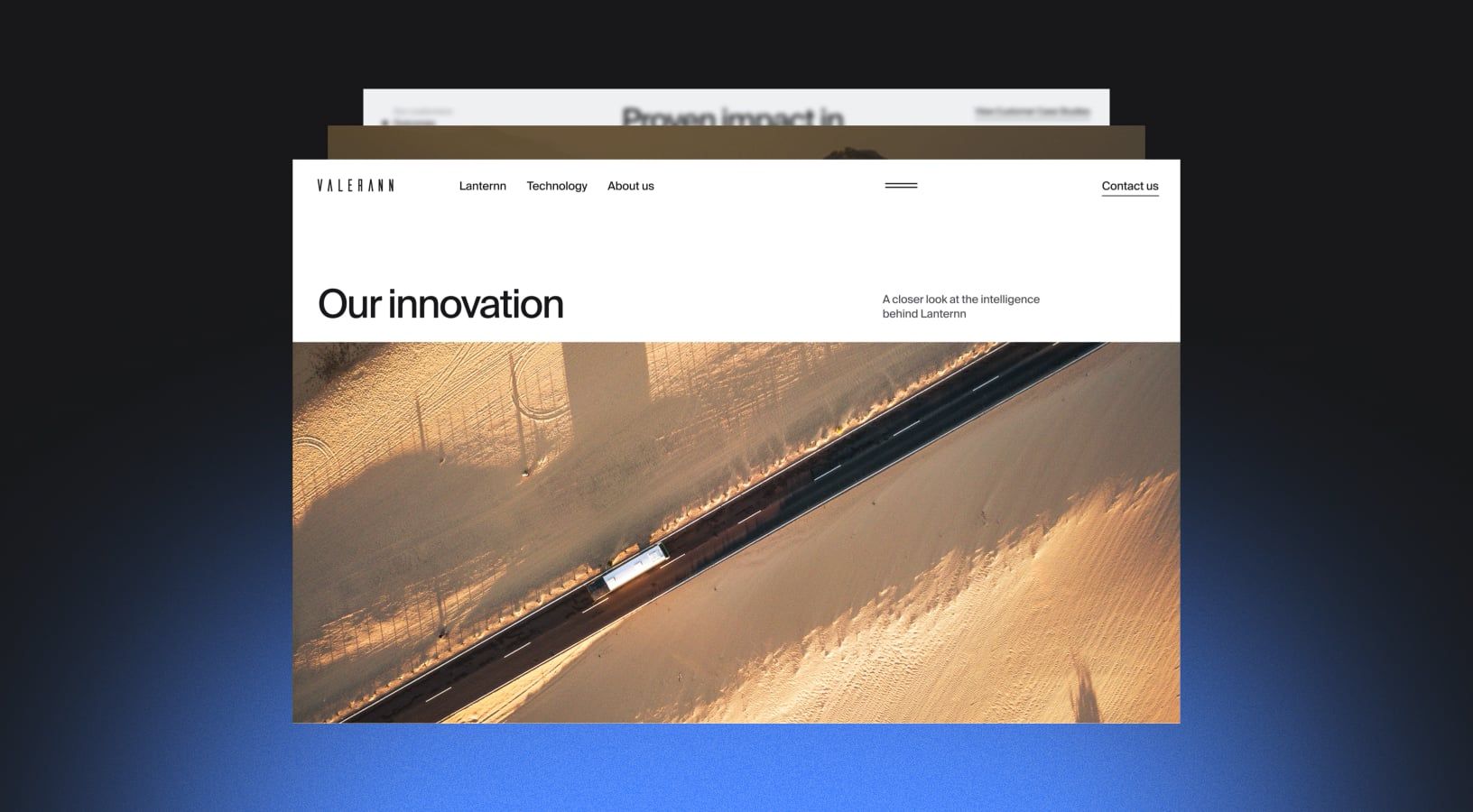
A website that brings Valerann’s technology, brand, and real-world impact into one visual system.
35K
Impressions on the website after relaunch
2
Months to cover UI/UX, motion, and dev
9
Website pages in the scope
How a SaaS website design company cooks: processes explained
A good website doesn’t happen with a random reference. This flow allows us to find a way to reach the right audience, build the strongest visual direction, and ensure every design move has a reason behind it.
We dig into your product, audience, market, and existing brand to see what’s working and what’s missing. This gives us the context to make the right decisions.
We find the angle that makes your brand worth remembering—positioning, story, visual elements—then wrap it into a creative direction.
We turn the direction into a visual world people can associate with your brand—from typography and imagery to motion and layouts.
We develop a scalable marketing site with reusable components, CMS flexibility, and the structure your team needs to keep things moving after launch.
What companies ask before choosing a SaaS website design agency
The cost of SaaS website design depends on the scope, complexity, number of pages, brand work involved, integrations, CMS requirements, and level of strategic support. A core B2B marketing site usually costs between $10,000 and $25,000. A more complex B2B website can cost up to $60,000, depending on the sitemap and technical work behind it. Enterprise B2B websites include deeper work & architecture, so prices start from $60,000 to $150,000+.
A SaaS website redesign timeline depends on scope, level of branding and positioning work, content requirements, and development complexity. A small website refresh might take around 2–3 months, including content work, design, and development. A project that includes updating page architecture and site navigation, a new visual direction, or custom development takes 6 months or more.
A SaaS website should clearly explain what the product does, who it’s for, why it’s different, and what proof supports those claims. Depending on the sales motion, it also needs product storytelling, use cases, integrations, security information, customer evidence, pricing or trial paths, and clear routes to a demo or conversation. The key is making the information available when different buyers need it.
Good SaaS website design makes a complex product easier to understand without looking generic. It combines distinctive visual direction, intuitive information architecture, product storytelling, relevant proof, and buyer journeys that reflect how people evaluate the product. It should also give the marketing team a system they can keep using as the company evolves.
For deeper identity work, Qream also works as a branding agency for SaaS companies, giving a stronger point of view—and the brand customers remember.
Look for a SaaS website design agency that can show relevant work and explain the thinking behind it. Check whether they understand the difference between a marketing website and the product itself, know how to present complex features, and can connect design and content into one coherent system. Ask how they handle stakeholder alignment, CMS requirements, and future pages after launch.


