TL;DR
AI has a real, useful place in branding, but not in the creative core. At Qream, we use AI to speed up research, testing, and technical grunt work. We keep it out of logo design, campaign ideas, and anything meant to make a brand stand out. The moment AI touches the “big idea,” the work starts looking like everyone else’s.
Type a prompt, get a logo. Feels like magic, until you realize every other brand in your category did the exact same thing. AI can move fast, sound confident, and produce something “good enough” in seconds, but branding was never about speed alone. Rather about being the one thing your competitors aren’t. So where does AI belong in that process, and where does it quietly start working against you? Here’s how we draw that line at Qream.
The hype says AI can brand your business. It can’t—not alone.
Every few months, another AI tool shows up promising to bury branding for good. You type in a description, get a logo, and walk away happy. Drop in a competitor’s website link, and you get “unique” positioning. The temptation is understandable, especially when the team is already stuck in fast-paced production mode. But this approach is flawed at its core.
The idea sounds logical: branding is supposedly just a file with a logo, a color palette, a folder of guidelines. If that were true, AI branding would have solved branding 3 years ago already.
But branding is built on people and decisions. And AI is not capable of making decisions. Its job is to produce an average of everything it has already seen. That’s the exact opposite of what a brand exists for in the first place.
So AI in branding isn’t a replacement for the process, but a component within it. Used correctly, it removes the routine work from stages that would otherwise take too long without it: research, verification, technical assembly.
AI is a source of inspiration and a way to test a hypothesis, not a finished solution. The human remains the foundation of the brand.
Where AI actually enters the branding process
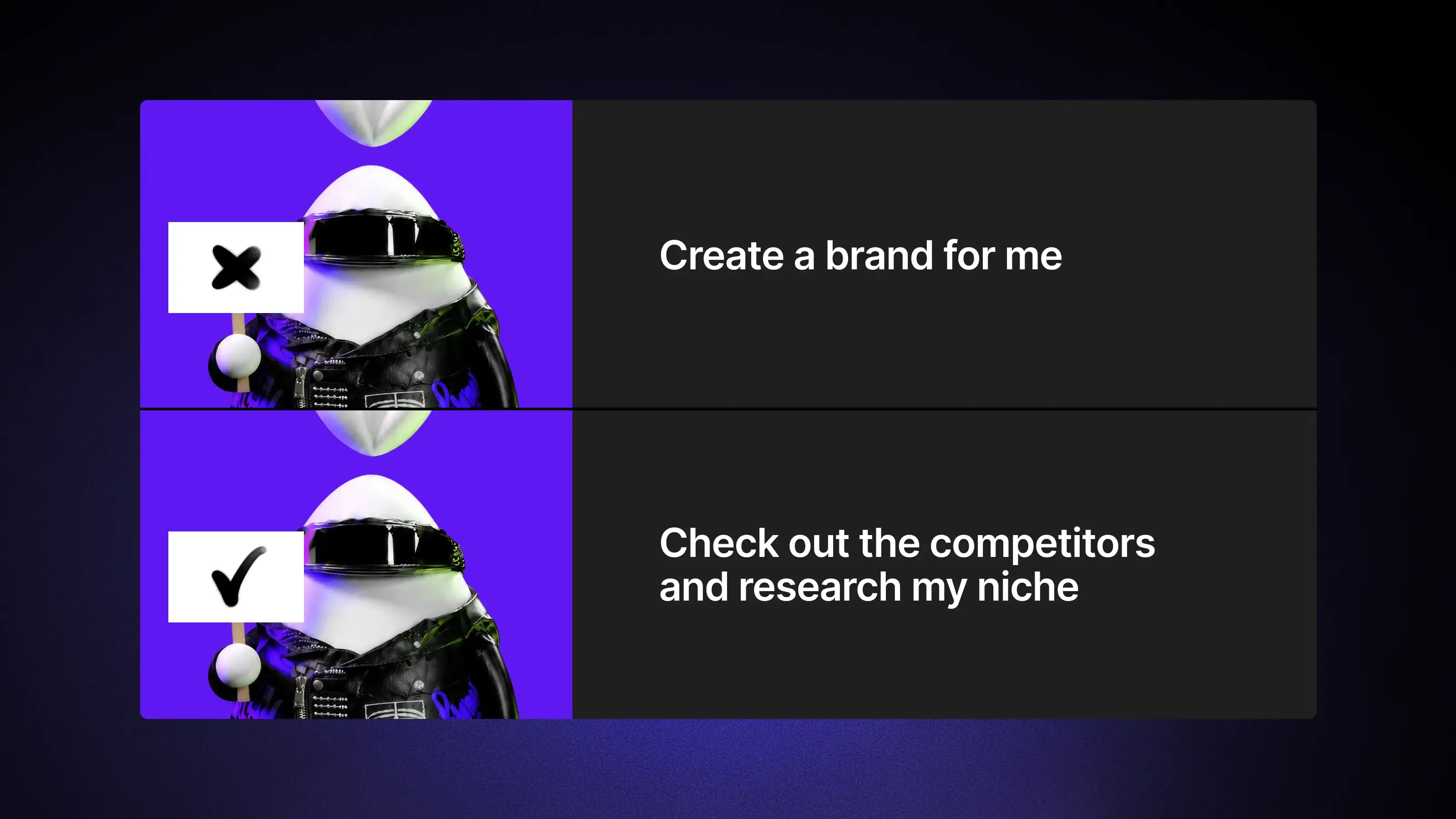
At Qream, AI gets called in where speed and precision matter, including early-stage AI use in brand strategy work—helping summarize research before a strategist maps out findings, gaps, opportunities—and commits to a direction. and commits to a direction. The idea itself, in its raw form, always belongs to people. Sofia Lev, who heads brand design at the agency, puts it bluntly:
“You can’t trust AI with any core creative work—logos, illustrations, the brand’s central idea. By default, it spits out something templated and obvious, and that instantly kills the design’s value. What we do bring it in for is analysis: studying competitors, digging up insights, checking a presentation or brand book for typos.”
So AI isn’t cut out of the process, but never handed authorship. Here’s where it earns its keep:
Competitor research and analysis
Overall, research starts with manually pulling promises, positioning, and visual cues from competitors’ sites, socials, ads, reviews, and wherever else they show up (stuff AI can’t see on its own). Once that’s gathered, AI helps spot patterns: the same logos, the empty-calorie taglines, the colors every startup in the space has already grabbed—pointing toward where the differentiation is.
Technical quality control
AI helps double-check the small stuff before the finish line: a mismatched font on the next page, a logo used in the wrong context, a gap in the guidelines that only surfaces once the client tries to apply them—an extra pass on top of the designer’s own final check.
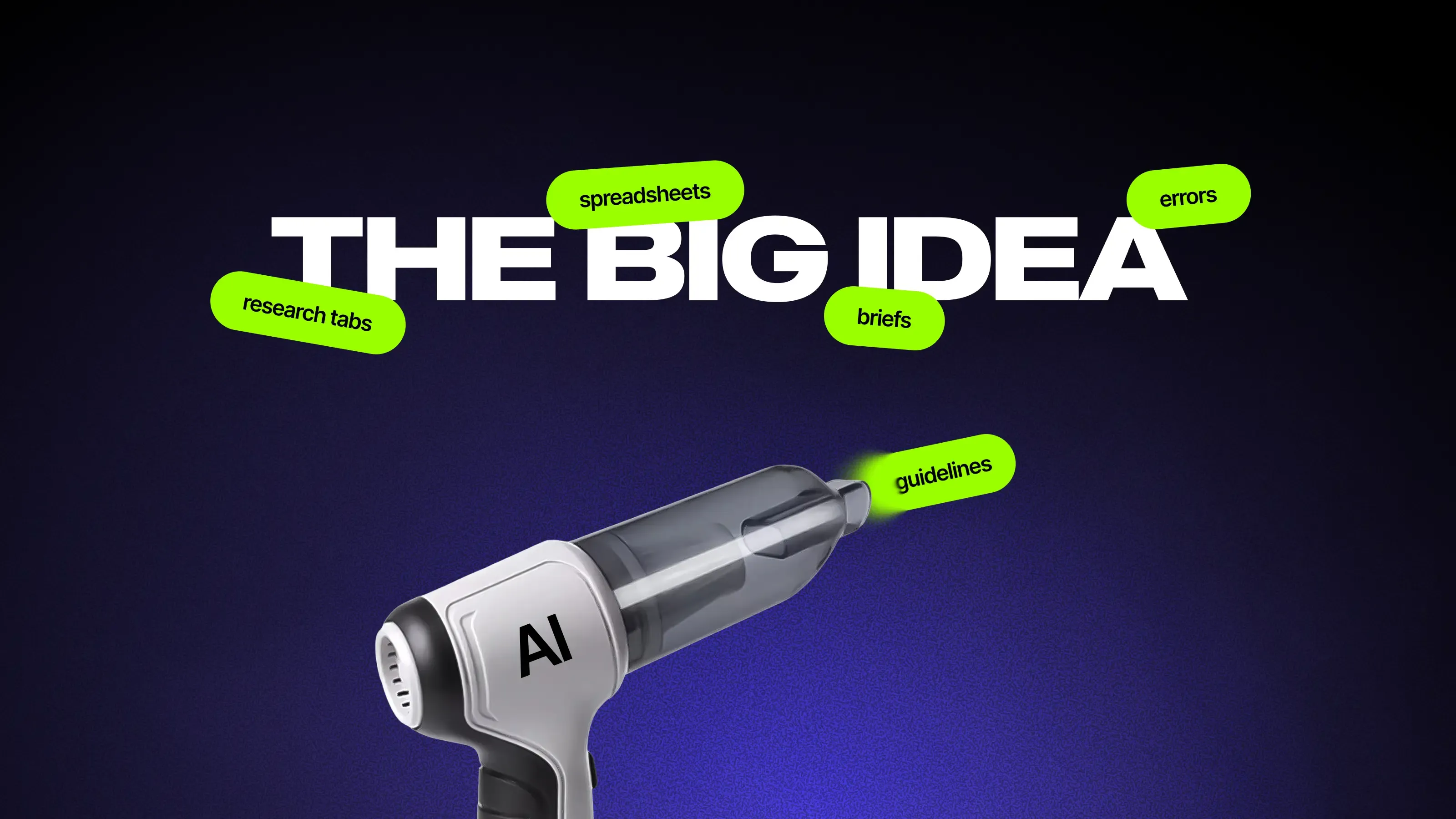
None of these steps touch the idea itself. AI clears the space around it.
Where AI produces generic junk—and the one step that stays human, always
Ask AI to sketch a logo or throw together a campaign idea, and in seconds you’ll get something that looks decent. But in today’s reality, that’s not something you can call an advantage. Here’s what Sofia mentions:
“Creative work—that’s the one step we’ll never hand off to AI. Especially when the client wants to stand out, be bold, be unlike anyone else. AI is capable of killing originality and reducing everything to what everyone else is already doing.”
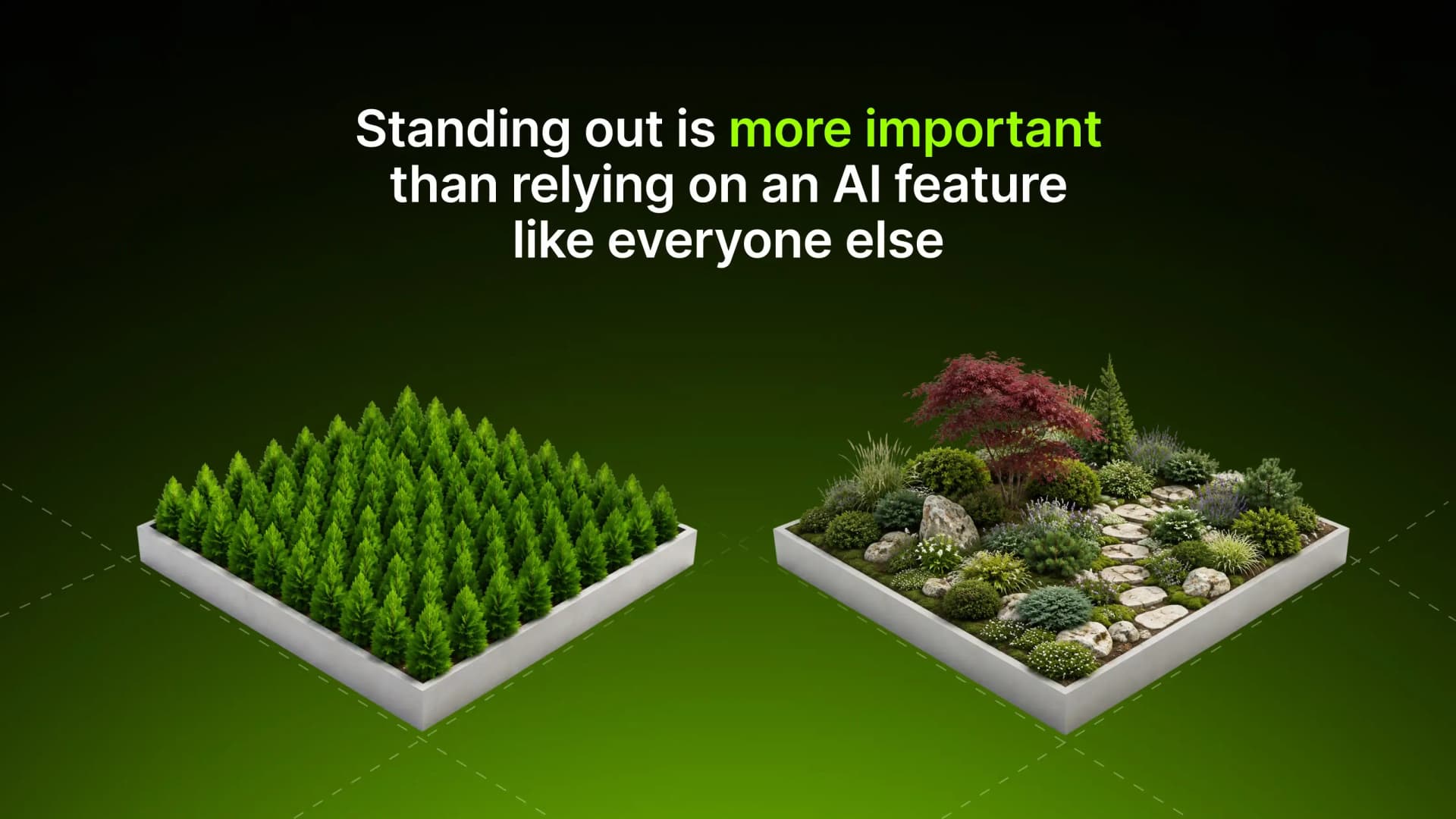
And here’s the real danger of AI in branding: it’s too good at making something “fine.” And fine is the number one enemy of a brand that’s supposed to be memorable. Feed 2 competitors the same prompt, and they’ll get 2 versions of the same idea: the same composition, “safe” color logic, and a reflex to smooth over anything unusual.
And this hits hardest exactly where branding matters most. When a business is trying to stand out from the competition, the last thing it needs is branding that blends into the market average. Take Creem’s rebrand: fintech is packed with the same visual shorthand—logos, cold corporate palettes, zero personality. Dodging those clichés took a lot more than a smart prompt.
We kept the brand’s triangular logo but softened it with a texture inspired by ice cream. A full mascot system brought it to life—a scoop of ice cream with a cone-shaped hat that also works as a speech bubble, able to express anything from panic to joy, and even melt on the 404 page. Every element was designed to carry that same personality, keeping the brand consistent and recognizable everywhere.
How to use AI without the work looking AI-made
If AI is part of the process at all, the question isn’t “whether to allow it” but “how to keep the result from looking like AI made it.” Here’s Sofia’s answer:
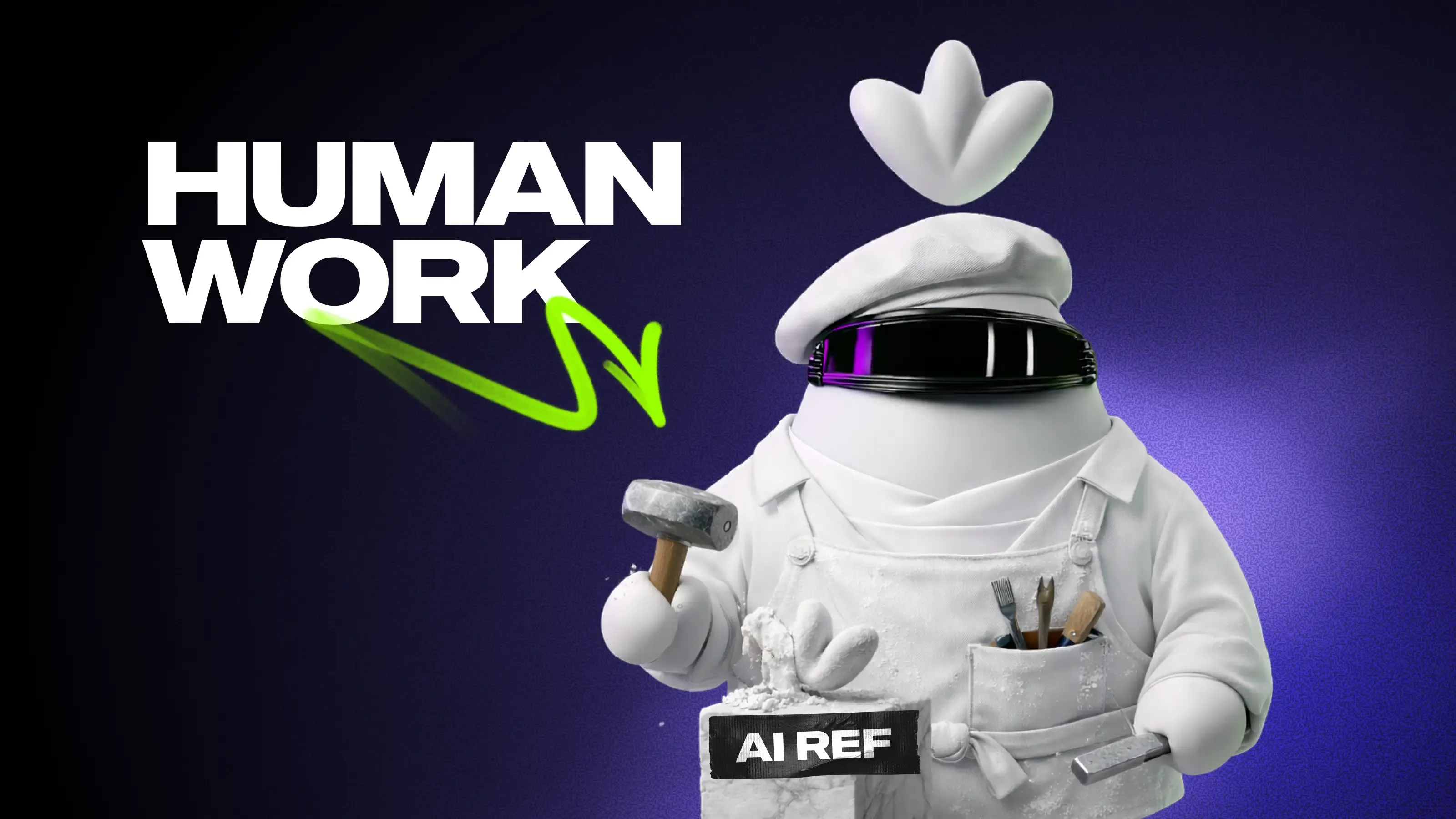
“AI gives us the base, the first, obvious version. For us, that’s a reference point for what not to do. Everything after that is done by hand, in Photoshop or Figma: placing the logo correctly on the product, cleaning up AI artifacts, manually filling in details. Without knowing the software, you simply won’t get a clean result.”
In other words, what AI produces is a draft. The gap between the raw AI image and the finished brand asset gets closed by hand, by people. They know the tools well enough to spot what’s wrong with the AI version and fix it.
That’s why “using AI” and “outsourcing the work to AI” are not the same thing at all. Anyone can generate a base image in a couple of seconds. But spotting which 10 details in it are off—an artifact in the corner, lighting that doesn’t match the product shot, proportions that will look sloppy at full size—takes the same design instinct that AI simply doesn’t have.
The takeaway
AI has carved out its place in branding wherever there’s a technical component to the work: research, double quality checks, the technical grind of 3D and animation. But the moment it touches what makes a brand recognizable, the result comes out as a soulless attempt to average everything out. And that runs directly against the whole reason branding exists.
Simple rule: if a stage calls for searching, it’s worth bringing in AI. If a stage is about creating something original, the human is the only generator. And often the smartest way to use AI’s first draft isn’t as a starting point, but as a list of everything to avoid.
There’s one constant baked into AI’s nature: a model trained on everything that already exists will always gravitate toward the center. Branding plays the opposite game. And the only ones who can play that game are the people who really understand the client's ambition and what they’re asking for. AI, at best, can help them get there a little faster.
Want AI-assisted branding that doesn’t look AI-made? Let’s talk.

FAQ
Keep AI out of the creative core—logos, illustrations, campaign concepts—and limit it to research and technical quality control. Even then, AI only works with what a strategist or designer feeds it: comparing competitor data you’ve already gathered, or catching technical slips—a mismatched font, a logo used in the wrong context—before final delivery.
Not a usable one. AI can generate something that looks plausible in seconds, but it defaults to templated, “safe” choices because it’s built to average out everything it’s already seen. A logo or identity meant to make a brand stand out needs a human decision at its core. AI can only offer a rough starting point, never the final creative call.
Not full tasks so much as steps within them: comparing and summarizing research you’ve already gathered, technical quality checks like spotting inconsistent fonts or gaps in brand guidelines, and production-heavy work like 3D mockups and animation. AI doesn’t go out and find things on its own—it works with what you feed it. These are the routine, analytical steps, not the ones that define how a brand looks or feels.
Because AI models are trained on everything that already exists, they naturally gravitate toward the center of that data—the most common, most typical version of any given input. Feed 2 competitors the same prompt, and you’ll likely get 2 versions of the same idea with identical composition and color logic. That’s the opposite of what branding is supposed to do.