You hired an agency. They came in hot—big promises, impressive decks, words like transformation and visual ecosystem. Six weeks and $15K later, you got a new logo, a brand book, and a Loom video of a designer explaining why they chose that particular shade of blue.
Your positioning stayed untouched. The emotion you create? Didn’t tell you about that. Your board’s opinion of the rebrand investment? Let’s not go there.
Sound familiar? We’ll say the uncomfortable truth nobody in this industry wants to speak out: most agencies hide a simple visual identity behind transformation. And it’s a massive, expensive difference.
The brand transformation most agencies sell is a scam
The design industry has built a very profitable machine around the aesthetics of change. And we have the guts to say it as an agency.
A new wordmark or color palette is treated as a cure-all for marketing diseases. It does look like value, though. Things like “bold typography” give stakeholders something to point at in a board meeting and agencies something gorgeous for their Behance portfolio.
Agencies sell the dream: a rebrand that boosts recognition, creates emotional resonance, and makes you win the market. Sounds good, right? And then we see something like this:
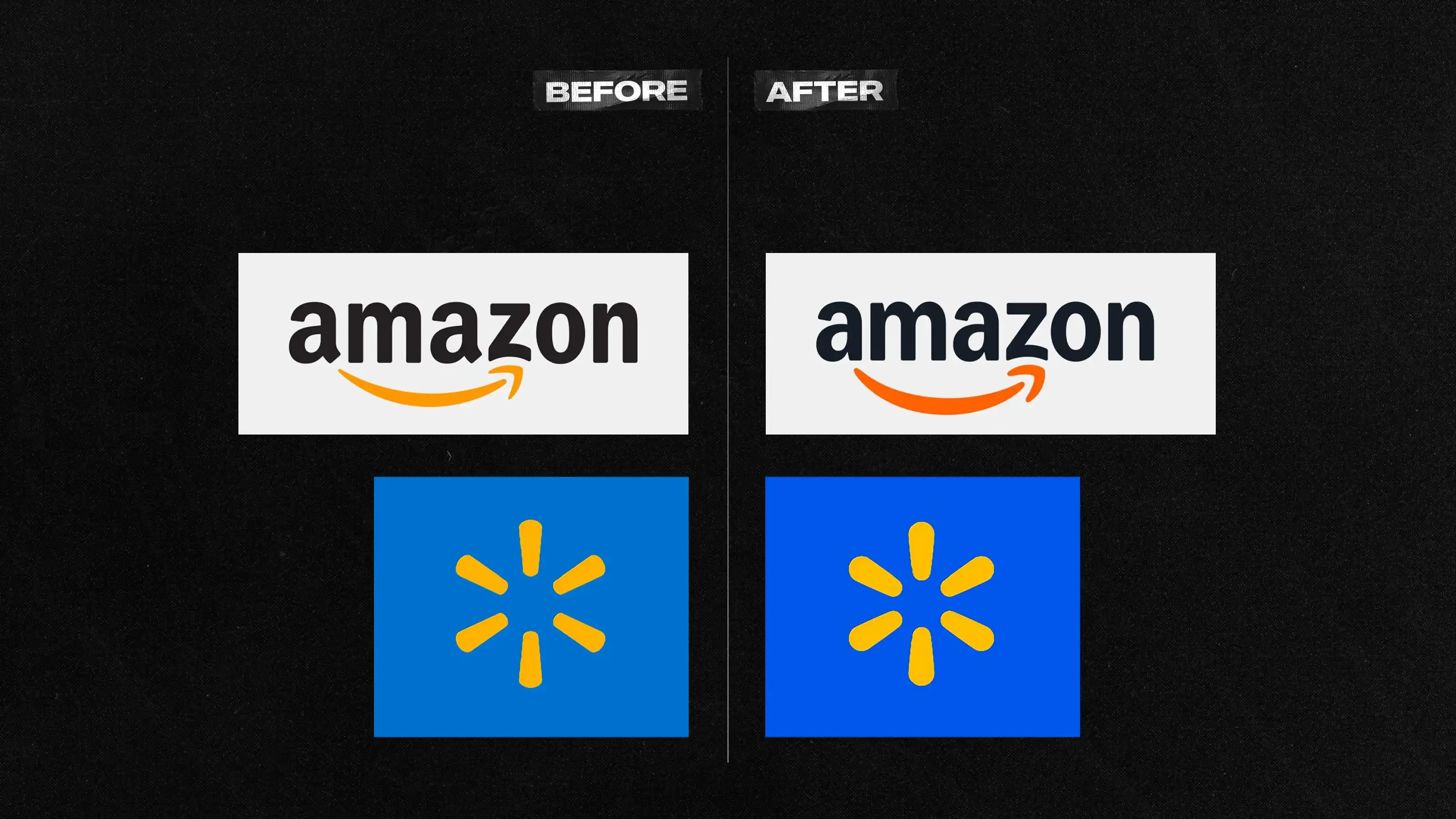
Amazon’s and Walmart’s rebrand in 2025 didn’t really make a difference. It’s a perfect example of corporations spending enormous money on a redesign that users barely notice.
The misalignment runs deep on both sides. Founders often think branding creates demand, so they invest in a visual refresh instead of fixing weak positioning or broken funnels. Agencies take that brief, run with it, and deliver exactly what was asked for. Everyone’s technically doing their job, but nothing moves.
Add to that the expectation that a rebrand will produce miracles in 30 days, and disappointment is basically guaranteed. There are no shortcuts. Any agency promising you top-of-market positioning six weeks after a logo drop wants your money, not your success.
The structural problem is that agencies get paid for deliverables—for things they make, not results those things produce. Their success metric is your approval of the final presentation. And you hoped for a conversion rate or Q3 revenue boost.
A better setup is to treat the first engagement after branding as a pilot. Sign on for a scoped strategy/marketing project before committing to a long-term retainer. It lets you see how they think strategically, not just how they design.
Why beautiful but pointless branding keeps happening
Actually, it’s a structural issue that has roots on both sides. The starting point—why you need branding—is usually misinterpreted.
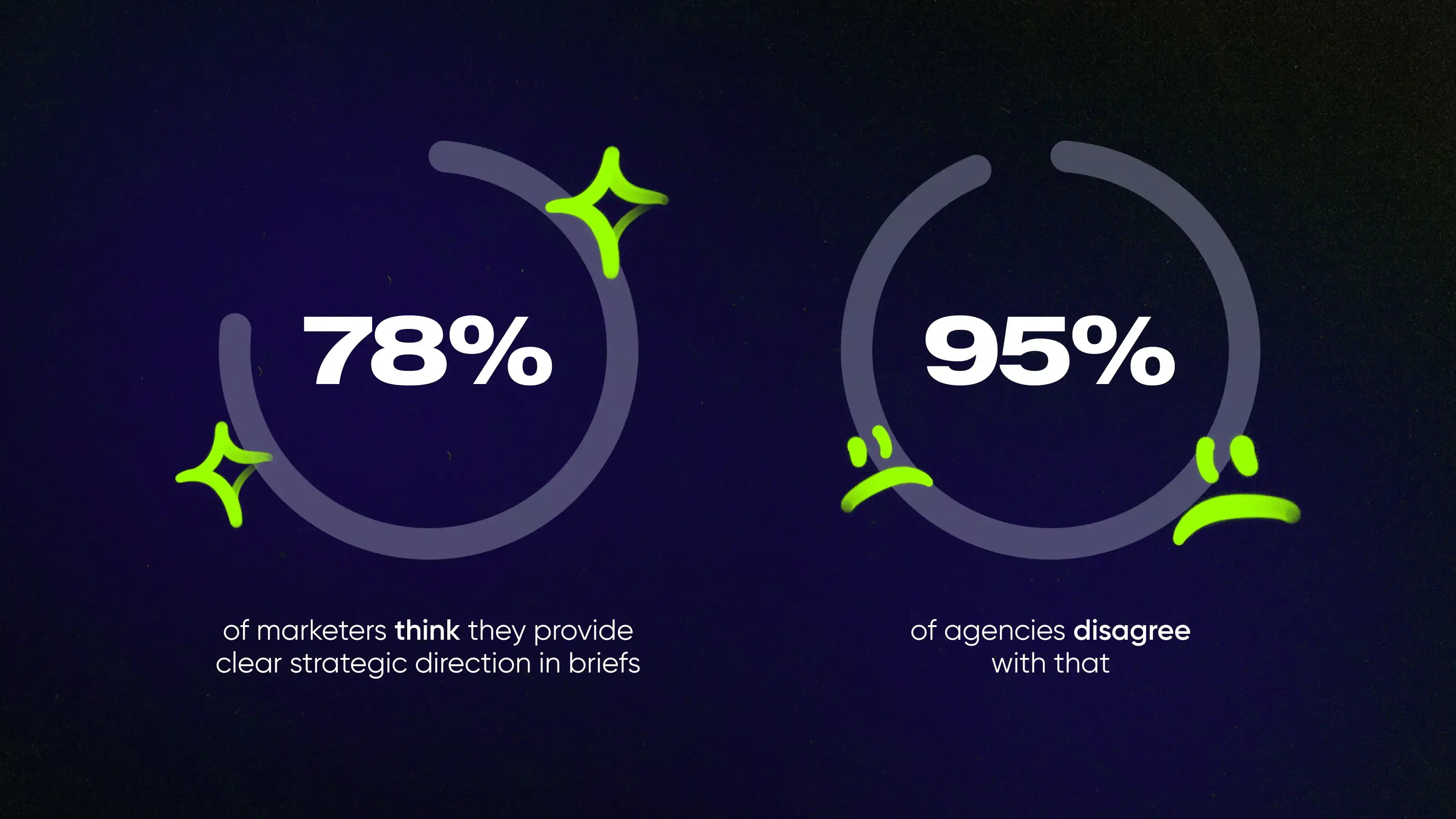
Marketers and agencies speak of different goals and outcomes. The Better Brief Global Report found that 80% of creative agencies feel marketers have a poor or limited understanding of what they actually need. Both parties walk into the room with different definitions of success.
After 60 branding projects at Qream, we’ve seen 4 reasons why mediocre branding keeps repeating.
Teams diagnose the wrong problem
Most engagements start with a brief that says: “we need a new website” or “our logo feels dated.” The problem is that these are symptoms. The actual disease—why leads aren’t converting, why enterprise clients don’t take you seriously, or why users don’t have a strong association with what you do—goes unexamined.
Some agencies take the brief at face value because challenging it means a longer, harder, less profitable project. Your real “why” always hides in data and feedback nobody took time to look at.
Companies optimize for approval, not adoption
A brand that wins internal approval and a brand that changes behavior in the market are often completely different things. Agencies are trained to read the room, present options that feel safe to sign on, and iterate toward agreement. But consensus branding is average branding—and average branding moves nobody.
This one’s on both sides: ask yourself, every time you make a brand decision, whether you choose it because it’s actually right or because it’s easier and won’t start a fight in the room.
The work stops at the handoff
Real transformation has to live inside the business. It has to change how you position yourself in the market, what brand enemy you’re fighting, what promises you make, etc. A simple guideline with logo variations and color combos doesn’t do that. An agency that disappears after the final delivery doesn’t do that either.
Identity is a starting point, not a strategy. What you need after a rebrand is a launch plan with clear next steps. For example, if you rebranded to increase awareness, what comms are you running? How differently will you show up on social and in ads? That’s the next step most agencies skip.
There’s no accountability built in
When was the last time your agency proposed tracking whether the rebrand improved anything? Did they suggest metrics? Did they schedule a 90-day check-in? Or did they send the final invoice and open a bottle of champagne?
Even something as basic as tracking consistency—whether your team is implementing the new visual language correctly—is usually left to chance.
What transformation requires (and why it’s uncomfortable)
Real brand transformation is operationally painful. It means having the conversation about why your current positioning isn’t working—and sometimes that answer implicates decisions leadership made and doesn’t want to revisit. It means your brand might need to exclude people it’s currently trying to please, and that feels terrifying until it starts working.
What transforms a brand is an honest diagnosis of the gap between how you see yourself and how the market sees you—and then systematic, unglamorous work to close it. Across every touchpoint, not just the visual ones.
This work is slower and requires more access and trust. Yeah, sometimes it means we tell you something you don’t want to hear. But it’s the only way that actually works.
Brand transformation in practice
A little backstory: a client from the automotive industry came to us. They buy broken vehicles for cash, so their name did exactly what it said: cash for cars. Functional but forgettable.
What it lacked was emotional connection. And we saw a real opportunity: shift the brand from logic to feeling. First, we crafted a brand strategy by researching the market, mapping the gaps, and identifying an angle nobody else owned.
The emotional part became the direction. The name turned into Bittersweet.cars. The whole identity tapped into the nostalgia of old cars, the bittersweetness of saying goodbye to something that held memories.
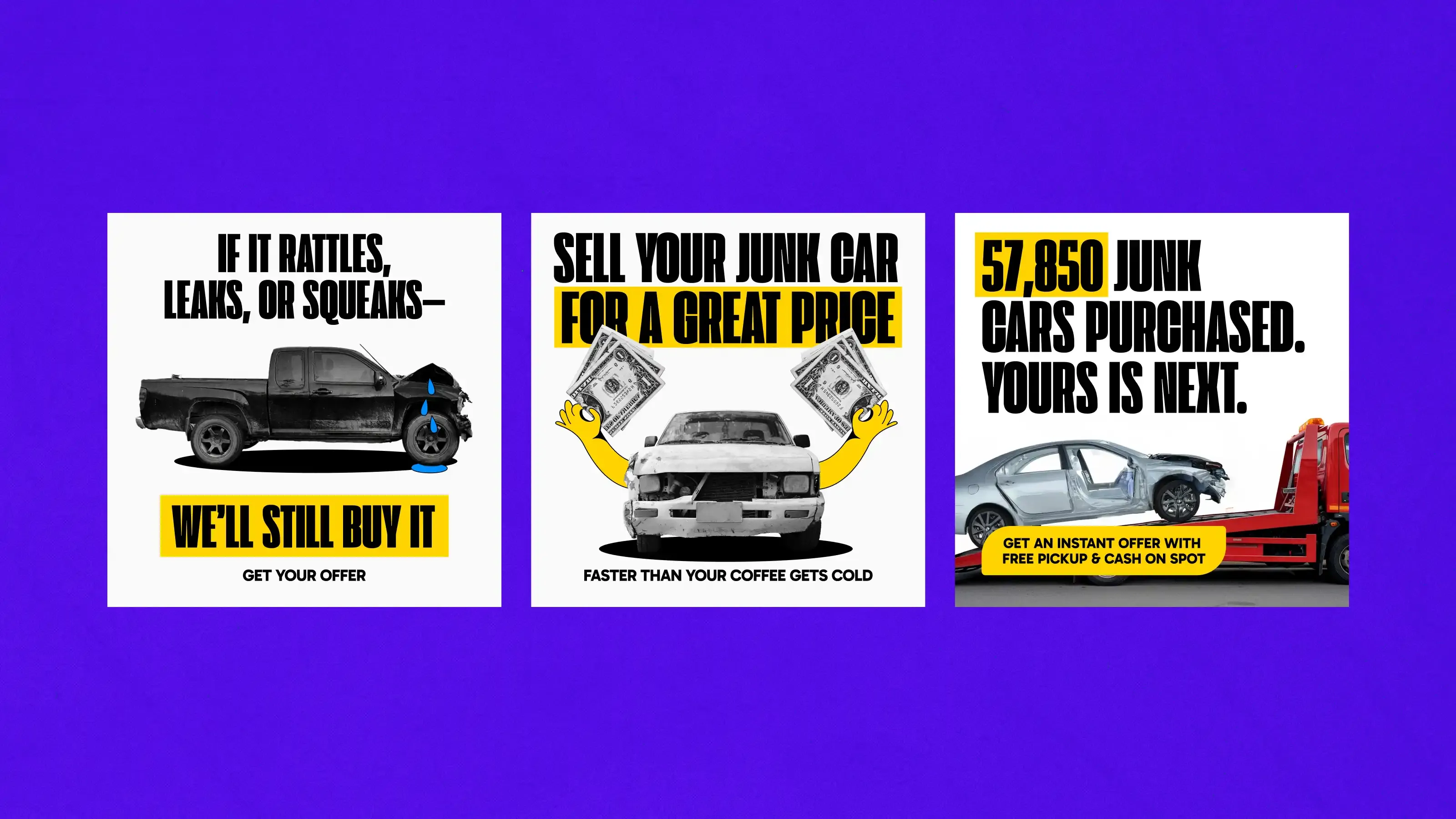
And we didn’t say goodbye to the client on that. We implemented the new style across the website, created training materials for the sales team—conversation blueprints, customer profiles, tone of voice—a full navigation system to keep operations on course.
Then we moved to a long-term, data-backed marketing strategy with measurable outcomes for each phase. Content plans, campaigns, and video commercials were planned for future periods so that, when the brand launched, it had everything it needed.
That’s what we mean by a creative partner—and it’s a fundamentally different relationship than hiring an agency for a project.
In the Bittersweet.cars case, the client came in knowing they needed “something better than the previous logo.” They didn’t think they needed an emotional repositioning built around nostalgia and irony. That part came from the Qream’s approach—digging into the market, audience, and cultural territory nobody else had claimed.
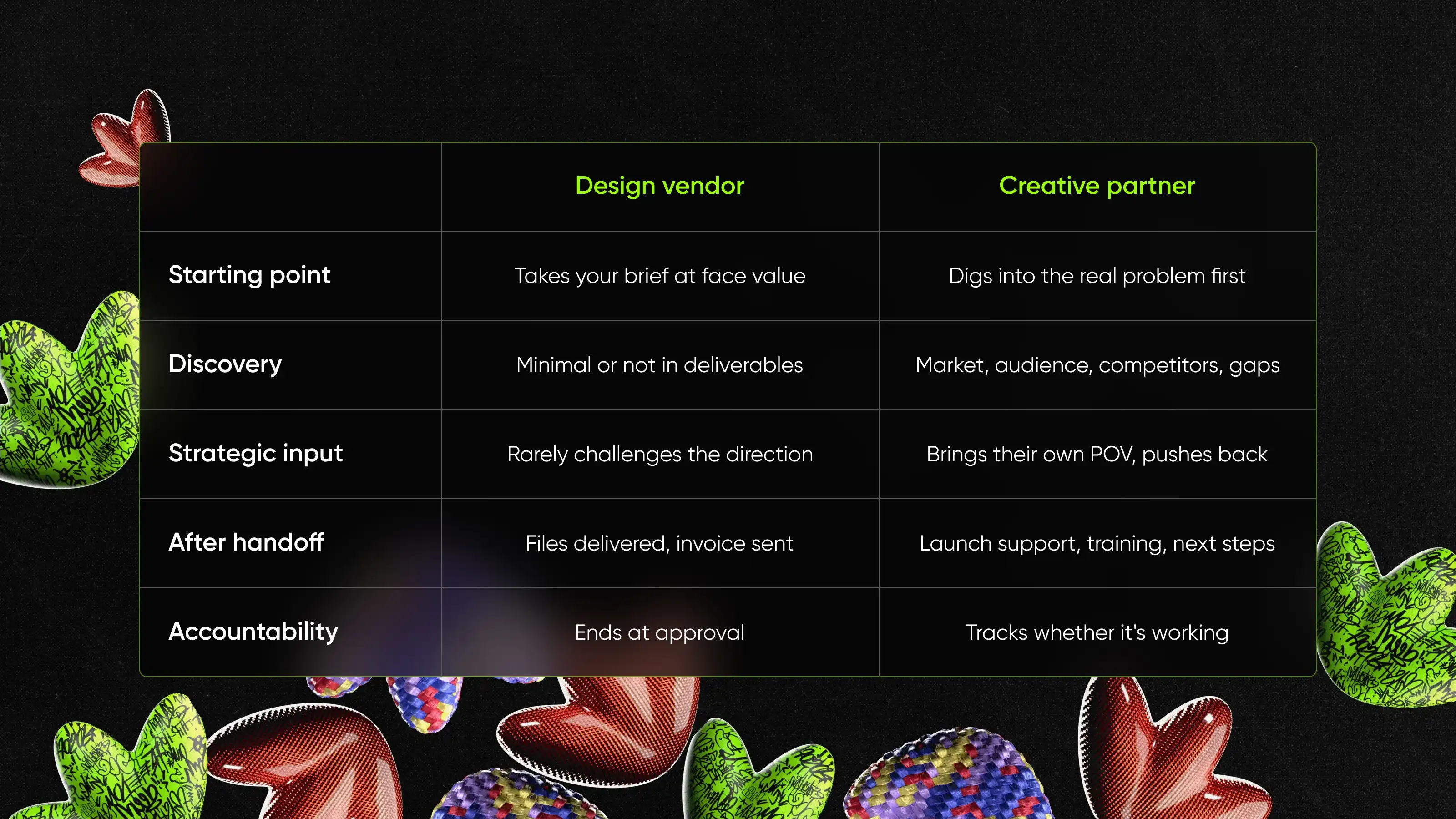
The key difference is that a vendor would take your brief and deliver what was scoped. A creative partner starts by questioning the brief itself, challenging assumptions that seem obvious, and sometimes pushing back on the direction you were certain about.
Let’s summarize it by comparing both sides:
What to look for in an agency before you commit to branding
A lot of the frustration many Reddit users talk about on r/branding comes down to one mismatch: they hired a vendor and expected a partner. Here are the questions that help you separate one from the other:
“How will you explore what we need to change?”
Transformation without customer and market insights is just decoration. Any agency doing real work wants to get inside your buyer’s head before they pick a typeface. If the first conversation jumps straight to moodboards, that's your answer.
“If we have a vision, will you follow it?”
A good partner will run their own research regardless. They’ll validate your instincts or respectfully challenge them, not just execute whatever you hand them.
“What is your role after delivery?”
Is there a handoff plan, training, or adoption support? If the work ends when the files land in your Google Drive, that’s not a transformation partner—that’s a vendor.
“Can we speak to your previous client six months after the engagement ended?”
Testimonials on the agency’s website are good, but a real conversation, after the honeymoon is over, matters. Any agency confident in its outcomes will say yes without hesitation.
How did you measure success on projects before?
Qualitative or quantitative—doesn’t matter. What’s cool is whether previous clients stayed in touch and actually shared outcomes.
Why does your list of deliverables look like this?
Push them to justify every line item. If they can’t explain why your brand needs a suggested mascot, a motion identity, or a custom icon set—that's a gap. Every deliverable should have a strategic reason.
Transformation is a business decision, so treat it like one
A rebrand on its own doesn’t do anything. It’s a foundation, and what you build on top of it—in marketing and comms—is where the actual transformation happens.
Real brand transformation shows up in pipeline movement, pricing power, talent quality, retention, and how long it takes a new prospect to go from skeptical to convinced. And it doesn’t come right away after handoff. The most important work happens in strategy sessions, uncomfortable conversations, and feedback loops that run long after the final file is delivered.
What to do instead: find a partner, not a vendor. Build a plan that extends the transformation into your marketing and comms. And hold the agency accountable for results that appear outside their portfolio.