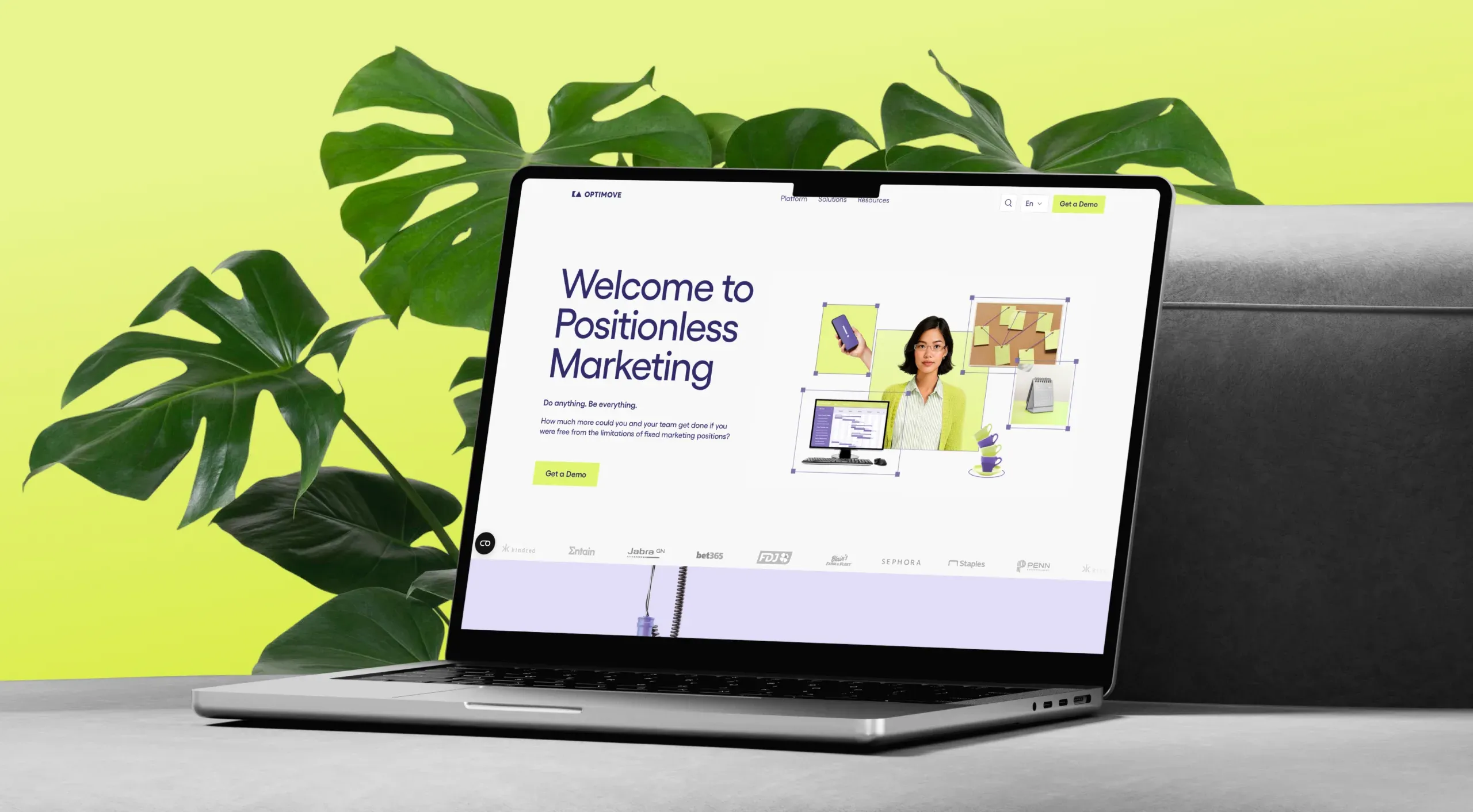
Turning an overloaded platform site into a system that scales for Optimove
Who's the client
Optimove is an AI-powered customer marketing platform. It helps brands collect customer data, decode behavior, and run personalized campaigns across every channel—automating journeys, lifting retention, and squeezing more value out of every customer relationship.
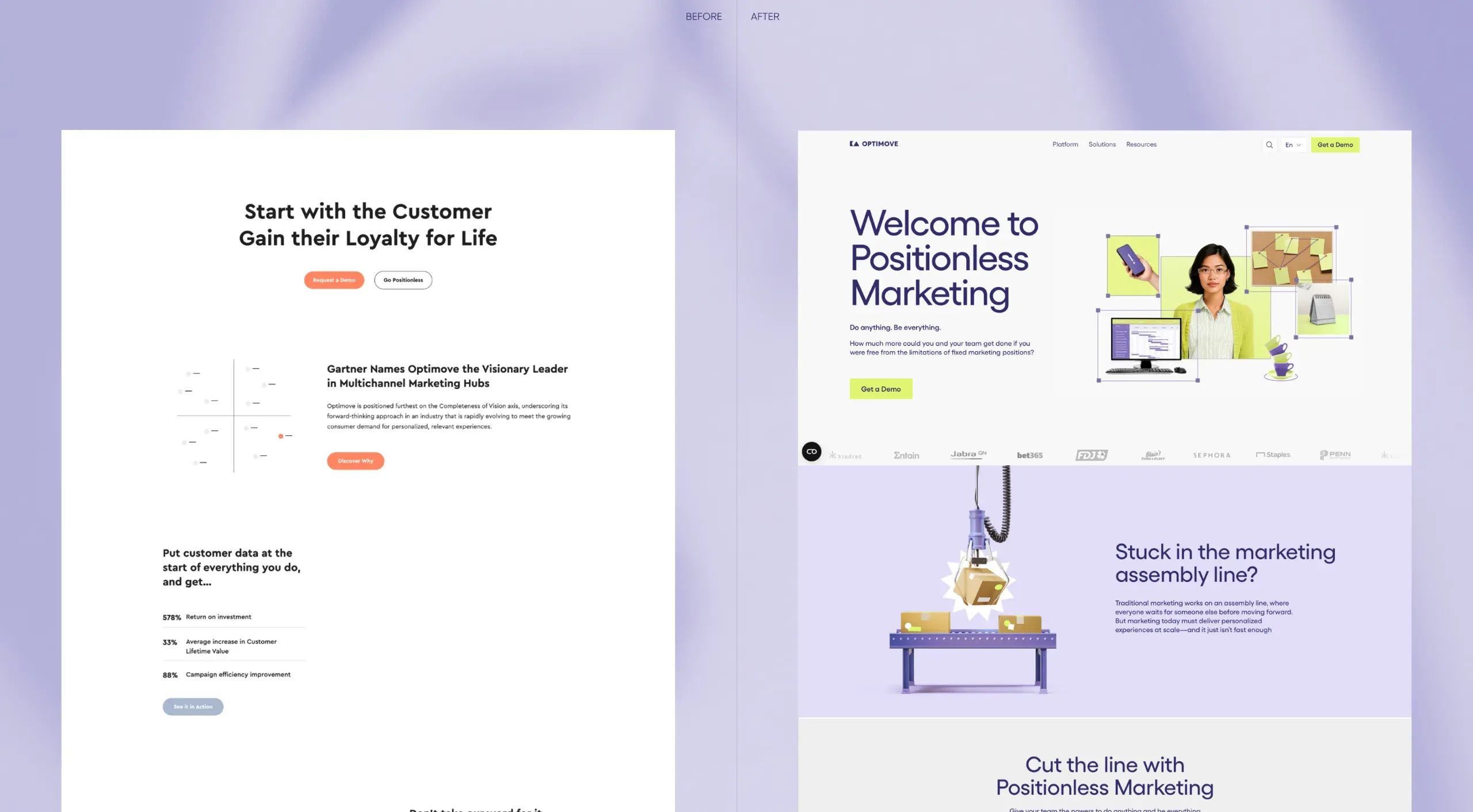
By the time Optimove came to us, their site had outgrown itself: a product line that kept expanding, and a UX that hadn't kept pace with either.
The challenge: balancing design creativity with the CMS requirements
Optimove needed a website their own team could edit without calling a developer for every change. That ruled out bespoke layouts and heavy animation—every section had to work as a reusable, swappable block. Design creativity had to live inside that constraint, not fight it.
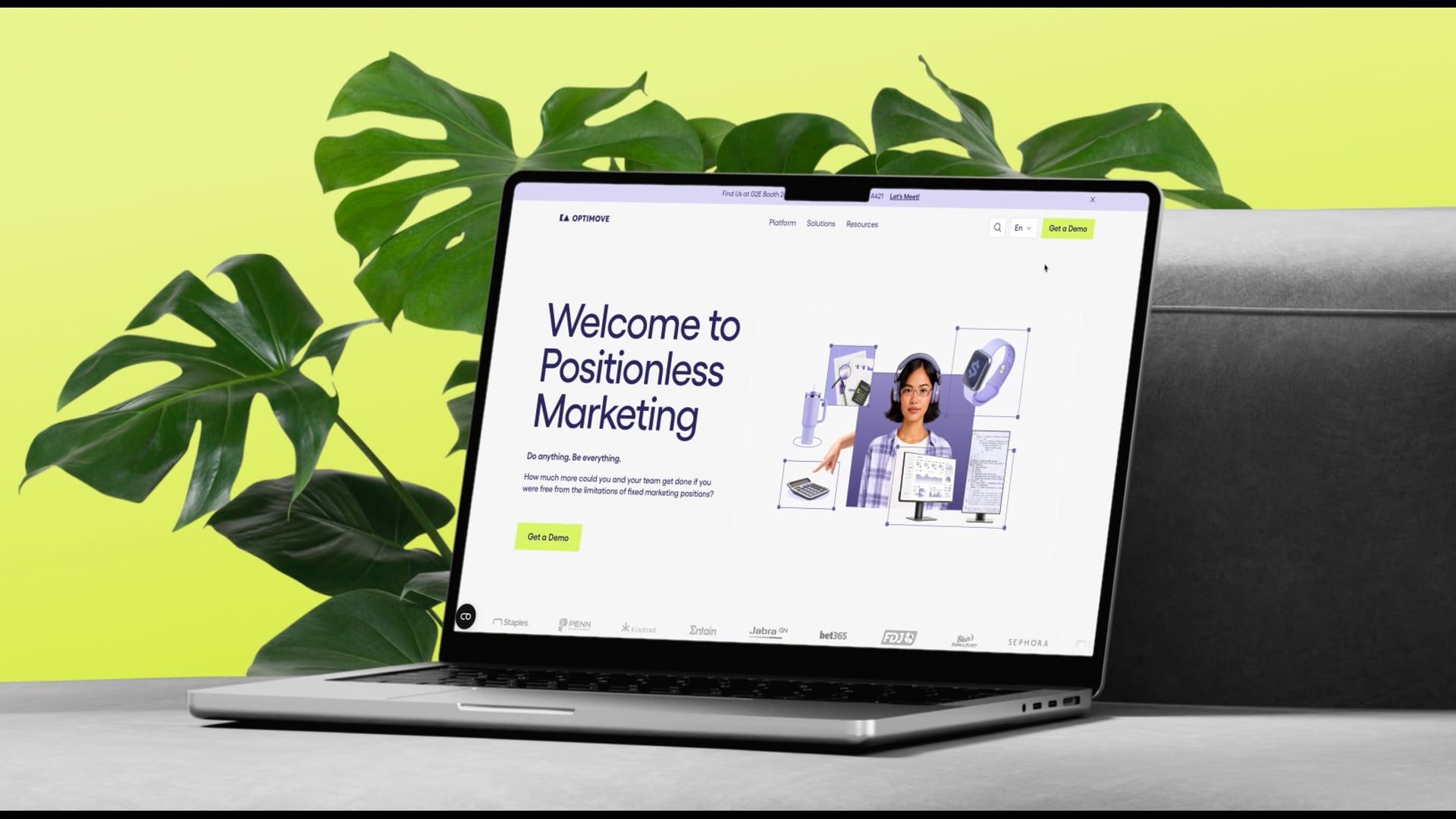
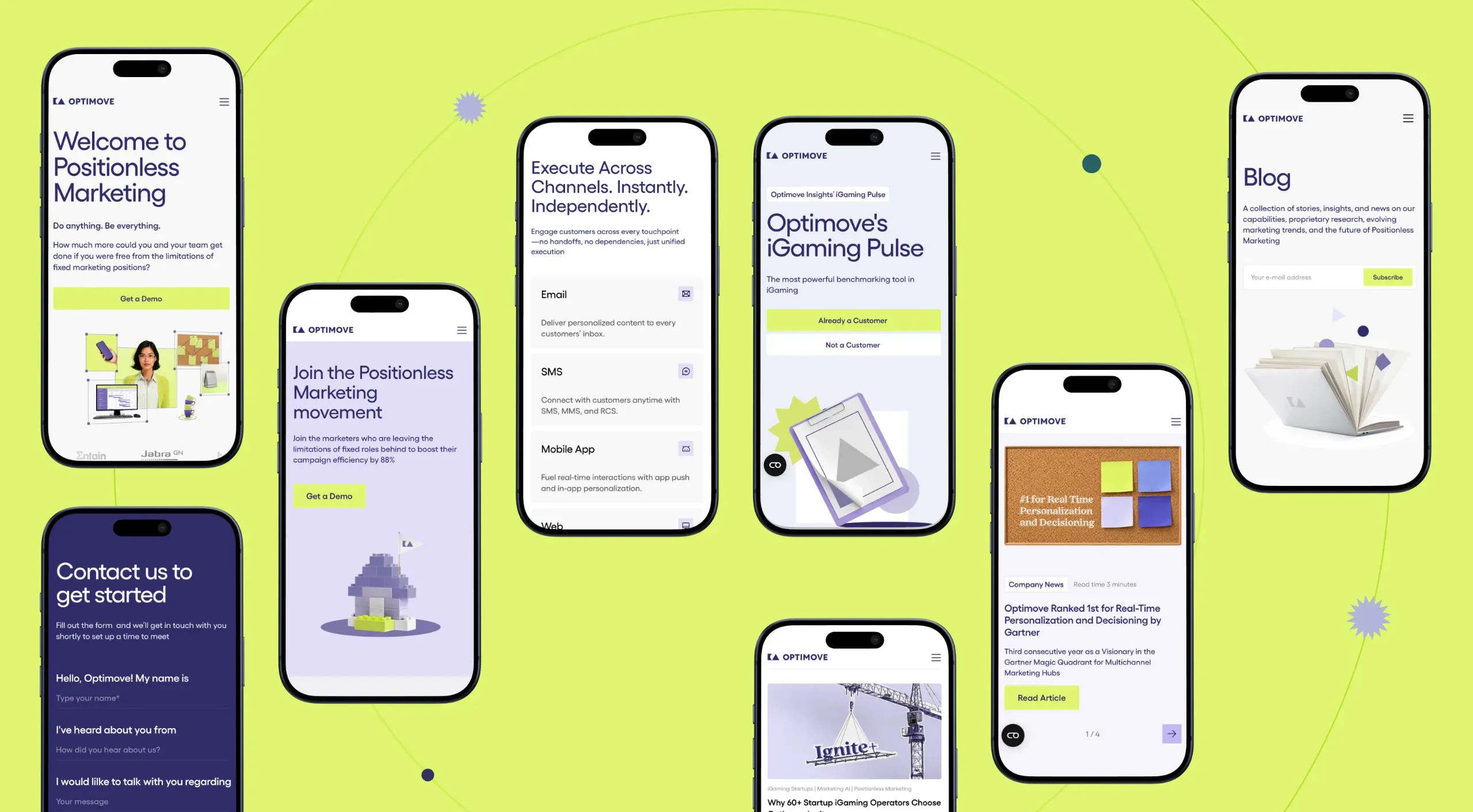
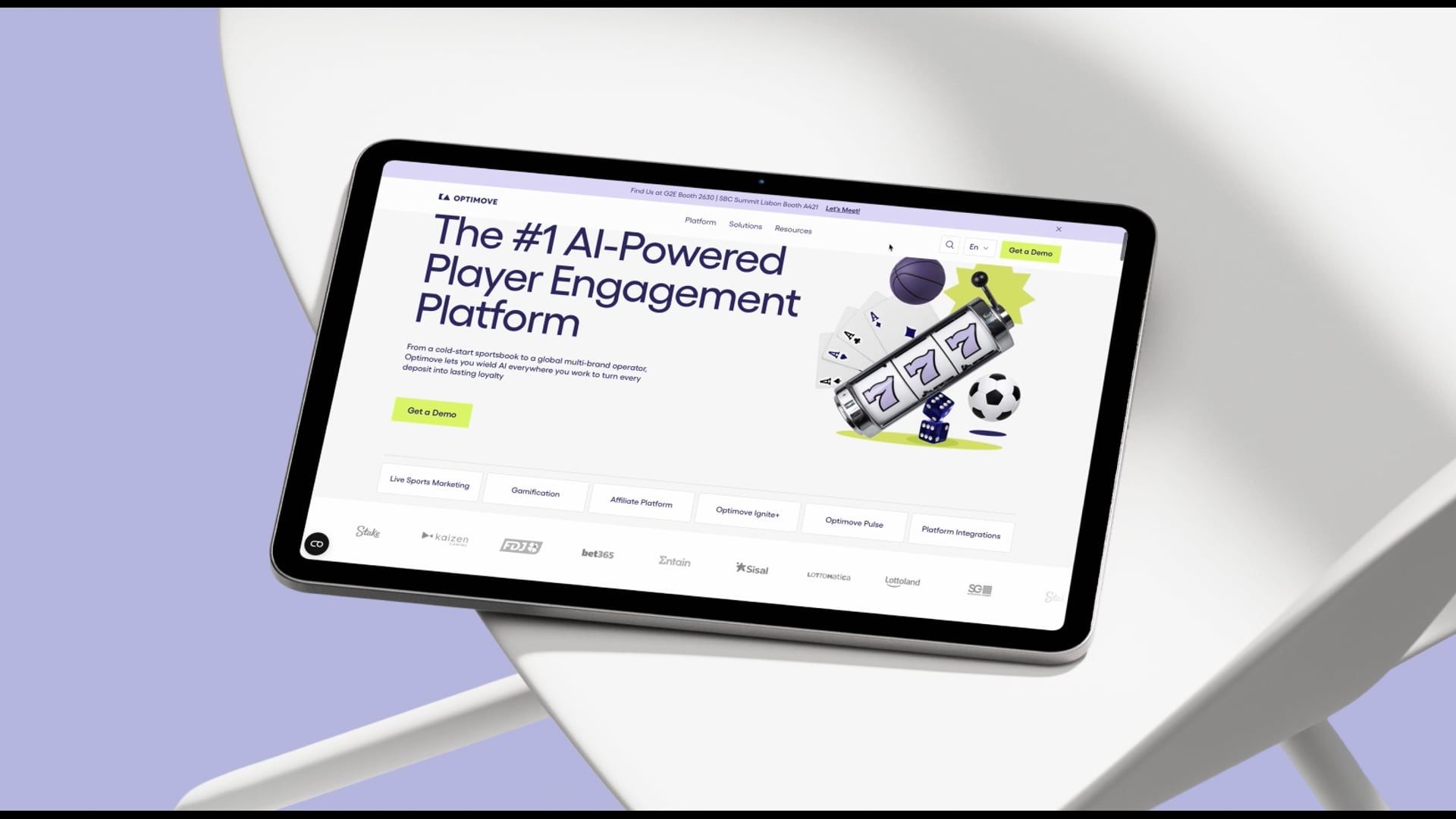
We built navigation that matches the size of the platform
Optimove's old site buried itself in its own depth. Three tabs—Products, Industries, and Resources—each hiding a maze underneath. We replaced it with a mega menu built around visual entry points, so visitors could see where they were going before they clicked.
Resources got the same treatment. With blog content, guides, and assets stacked without any way to sort through them, we added search and category filtering—a structure built for how people actually look for content, not how it happened to be uploaded.
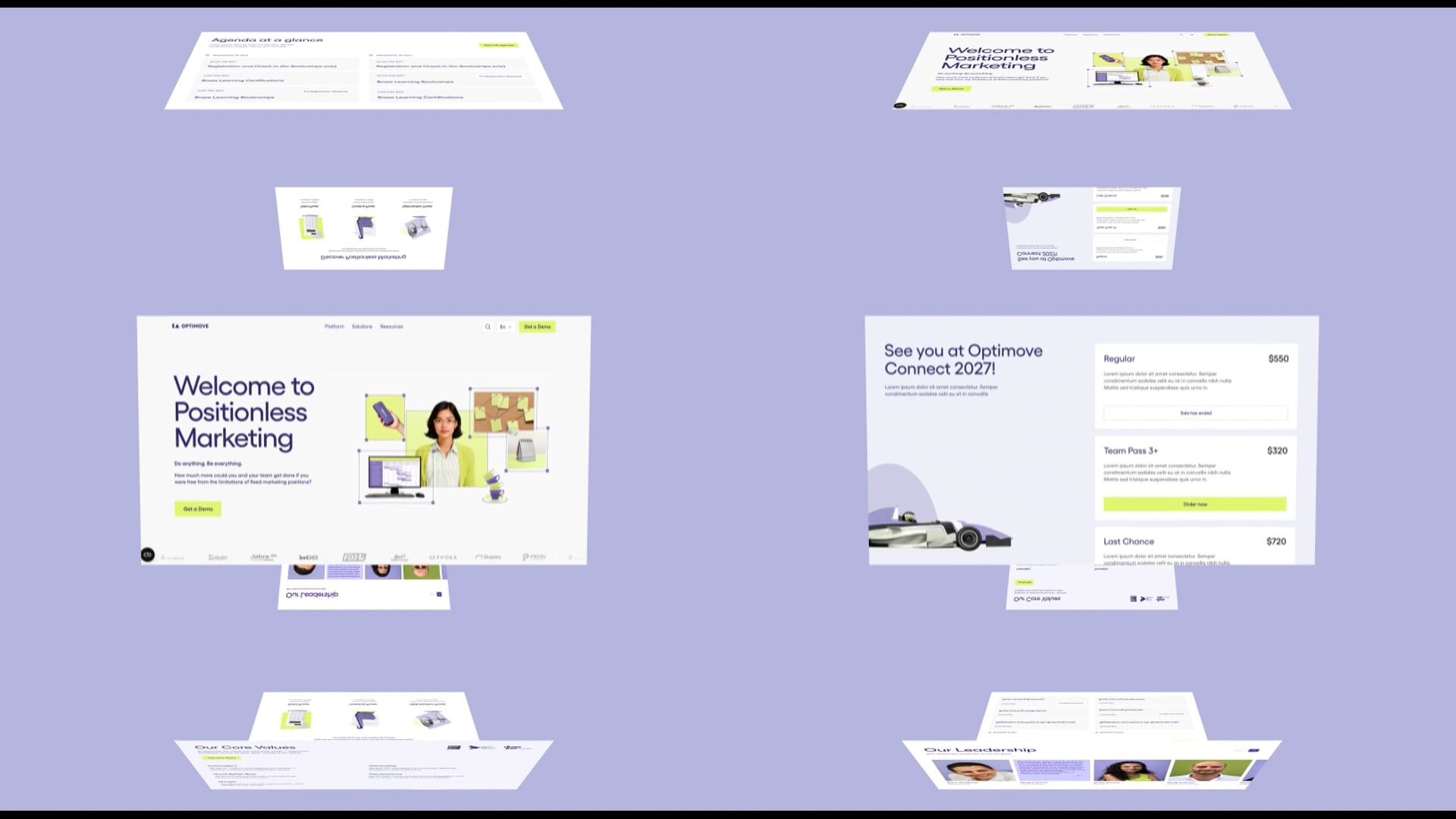
We proposed a component system designed to outlast the launch
With animation and custom layouts off the table, the real design problem was different: build a system flexible enough that Optimove's team could keep assembling new pages from existing pieces long after we handed it off.
Every section shipped as its own reusable component. Where the brief allowed it, we added scroll-triggered animation and small hover interactions—enough motion to keep pages from feeling static, without adding weight the CMS couldn't carry. It worked well enough that when Optimove came back later asking for new pages built purely from existing blocks, the system held up without redesign.
What we solved: a translation pipeline that could keep up with daily edits
Publishing in Portuguese and Spanish across nearly 1,000 pages needed infrastructure. When Localazy's reprocessing model made routine edits take hours, we moved the entire translation workflow to Strapi's AI Translation—cutting turnaround from hours to something close to real time and giving Optimove's team a CMS they could actually edit day to day.
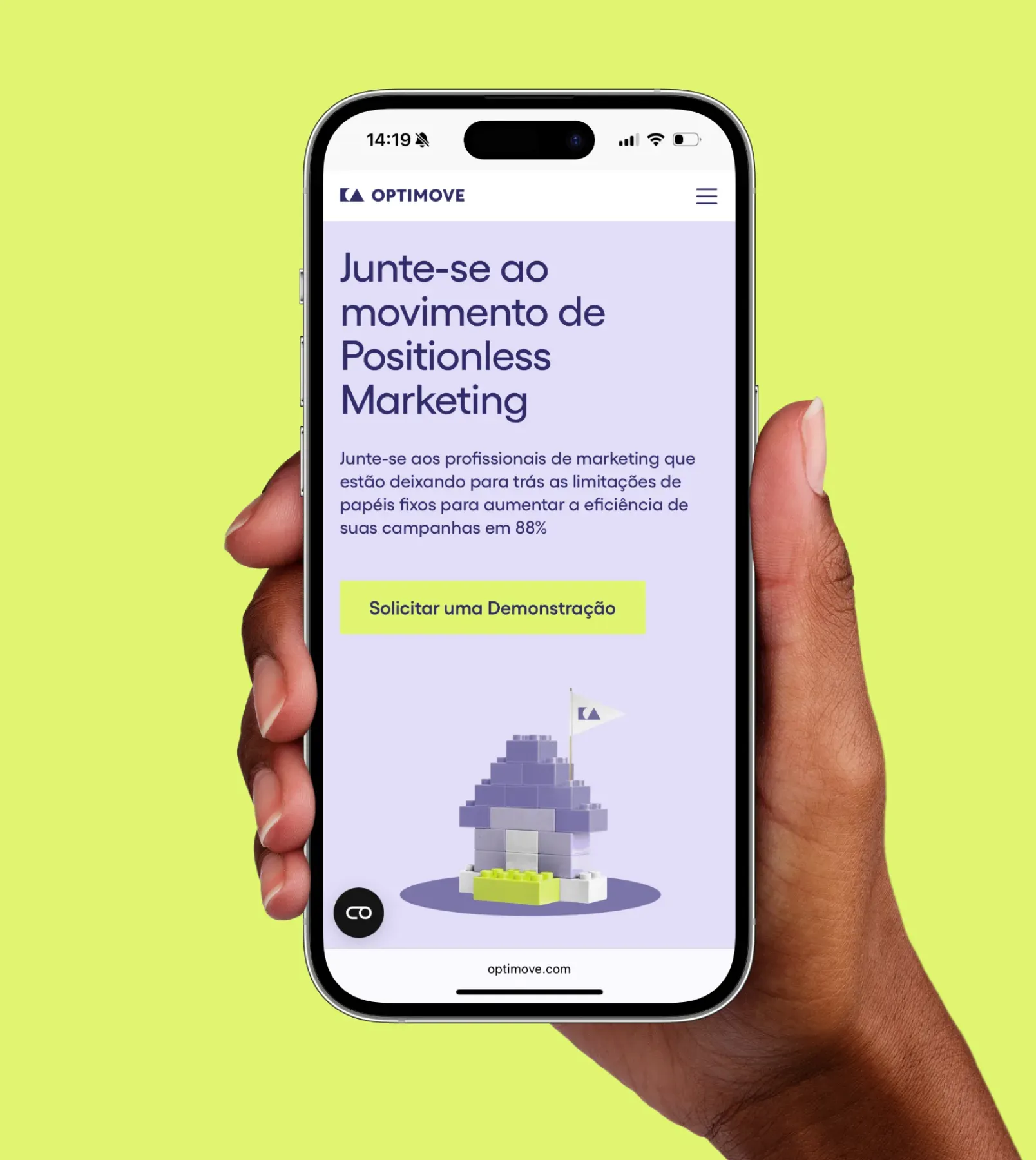
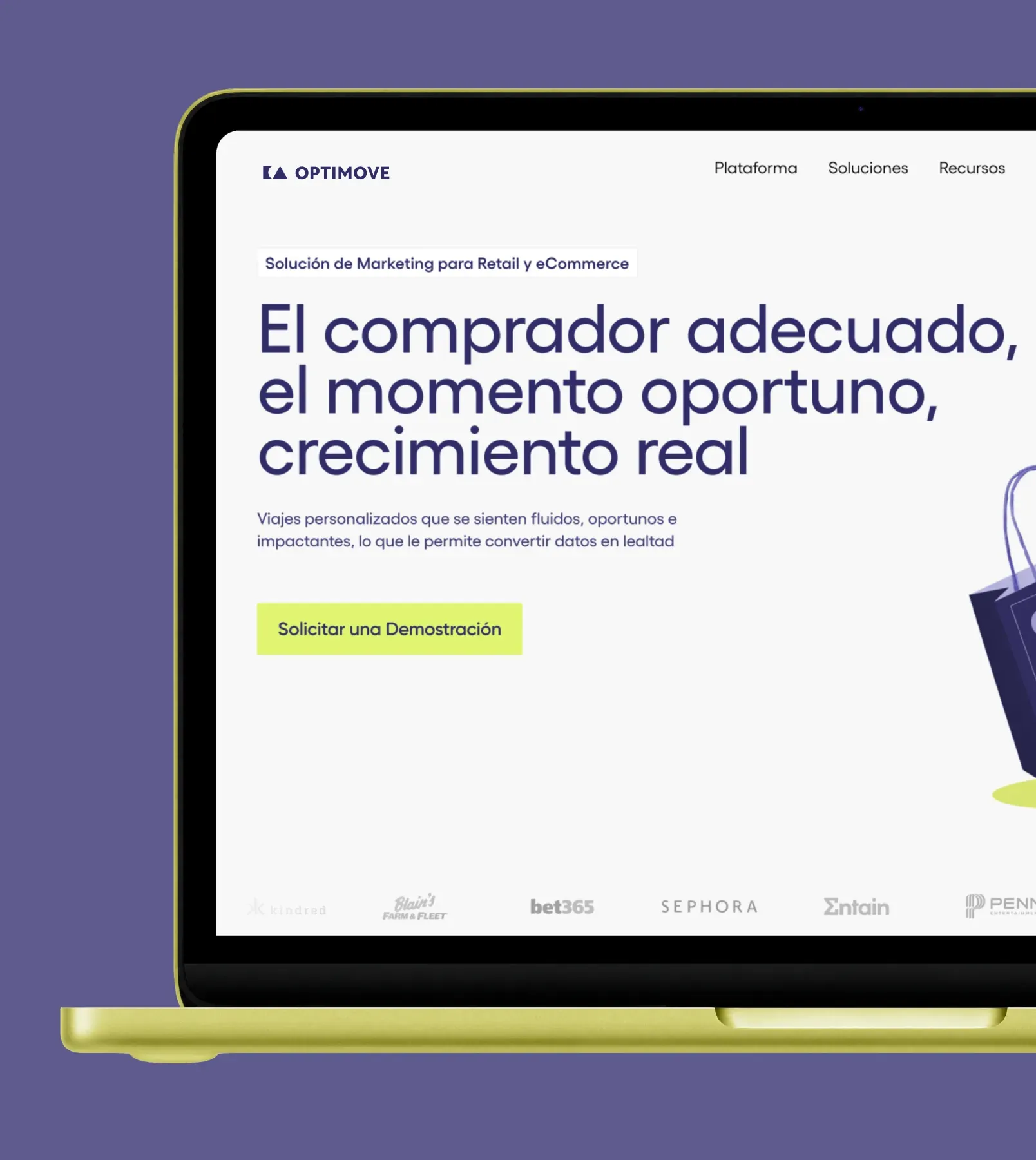
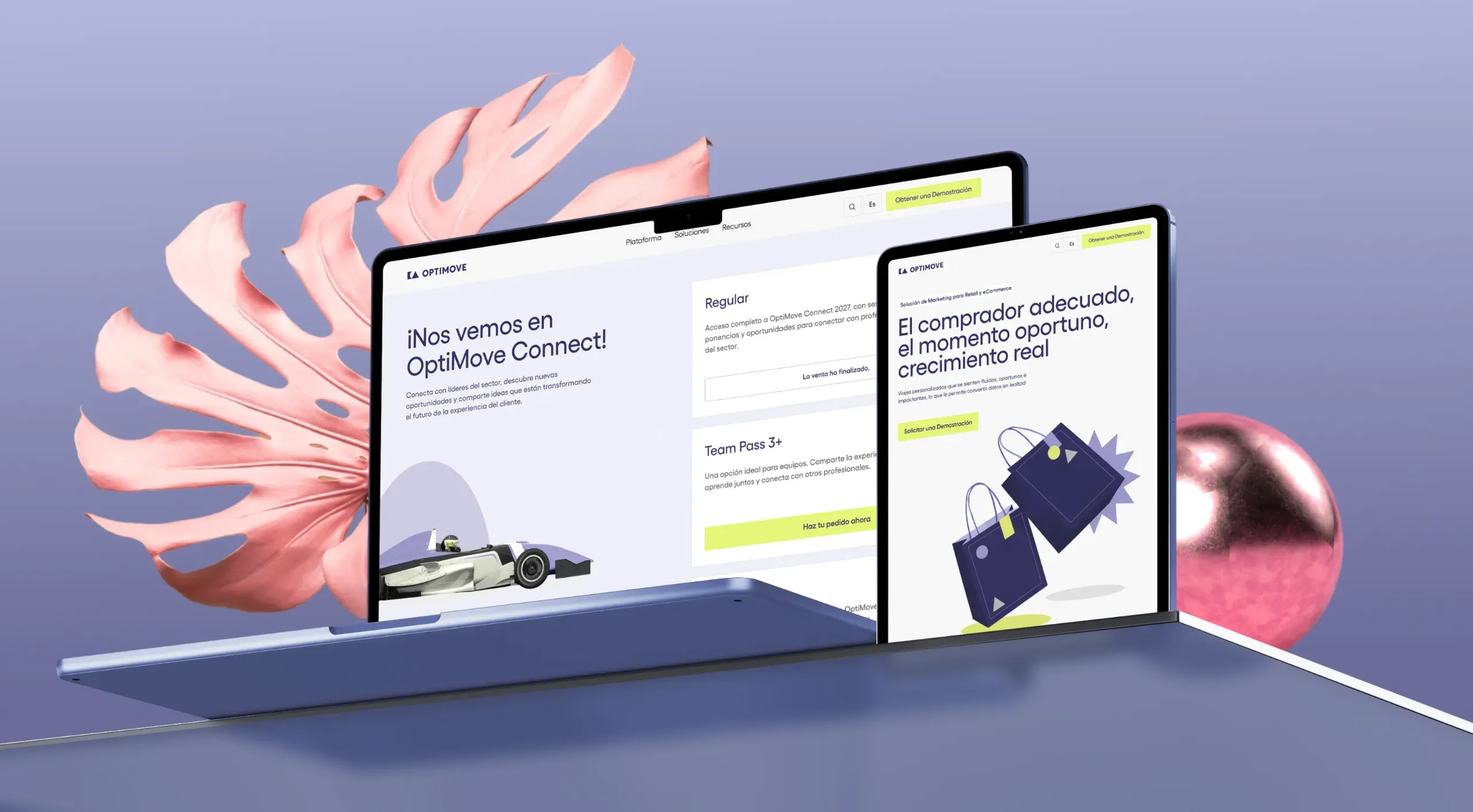
Easy-to-edit website with reusable blocks
pages were redesigned
blog posts were migrated
webpages were launched