Building a digital experience for a next-gen Ukrainian interceptor drone


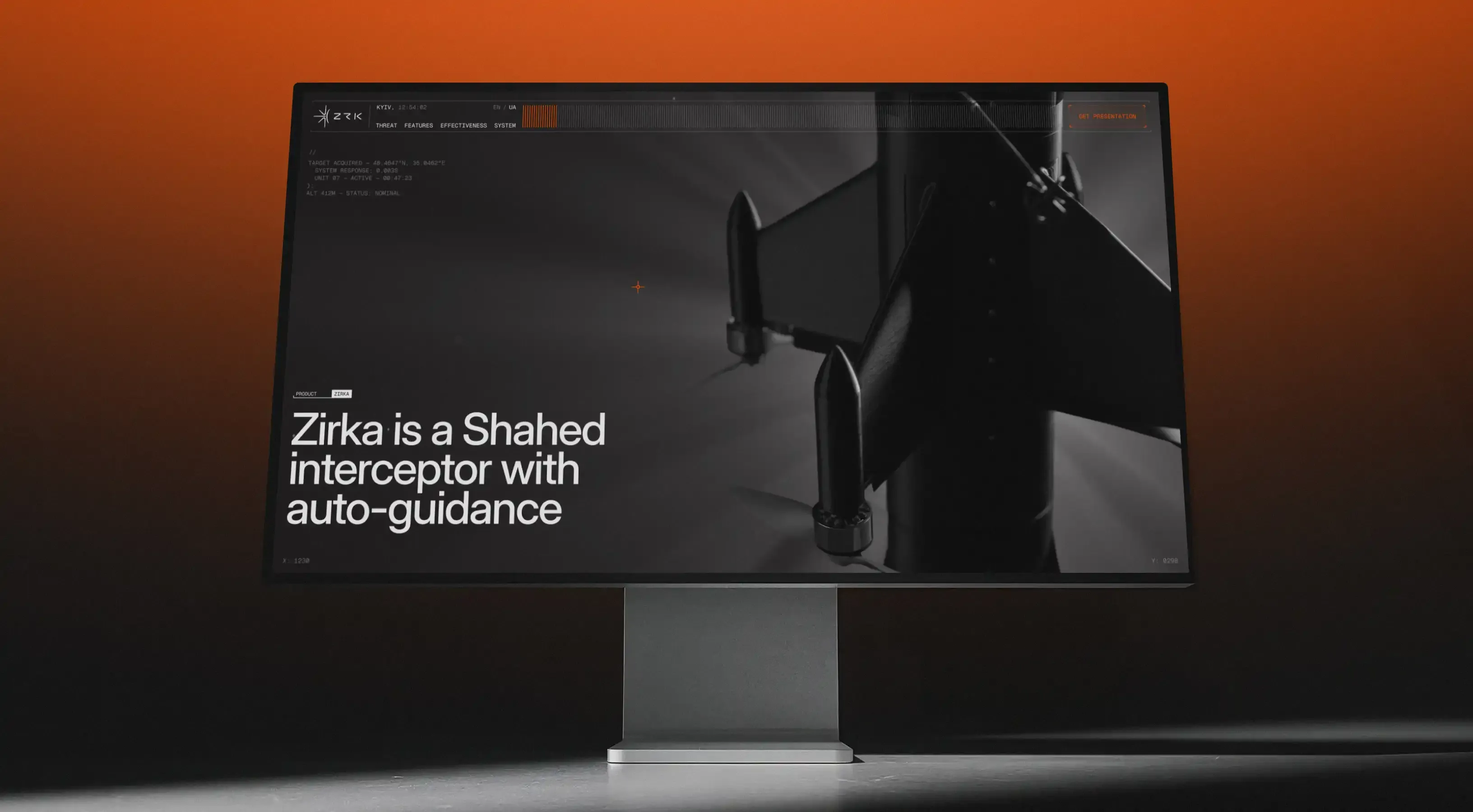
The “star” product of the Ukrainian army
ZIRKA is a Ukrainian interceptor drone designed to counter Shahed-type strike UAVs. Its key capability is automatically detecting and tracking targets, reducing the role of human input at the most critical stages: detection, approach, and engagement.
Qream’s challenge was to highlight the product’s key advantages, the global scale of the threat posed by russian strike UAVs, and the interceptor’s role within the broader air defense system. The website had to speak to defense stakeholders in Europe and NATO countries, private defense investors, and Ukrainian military representatives at once.
Fresh vision behind interceptor presentation
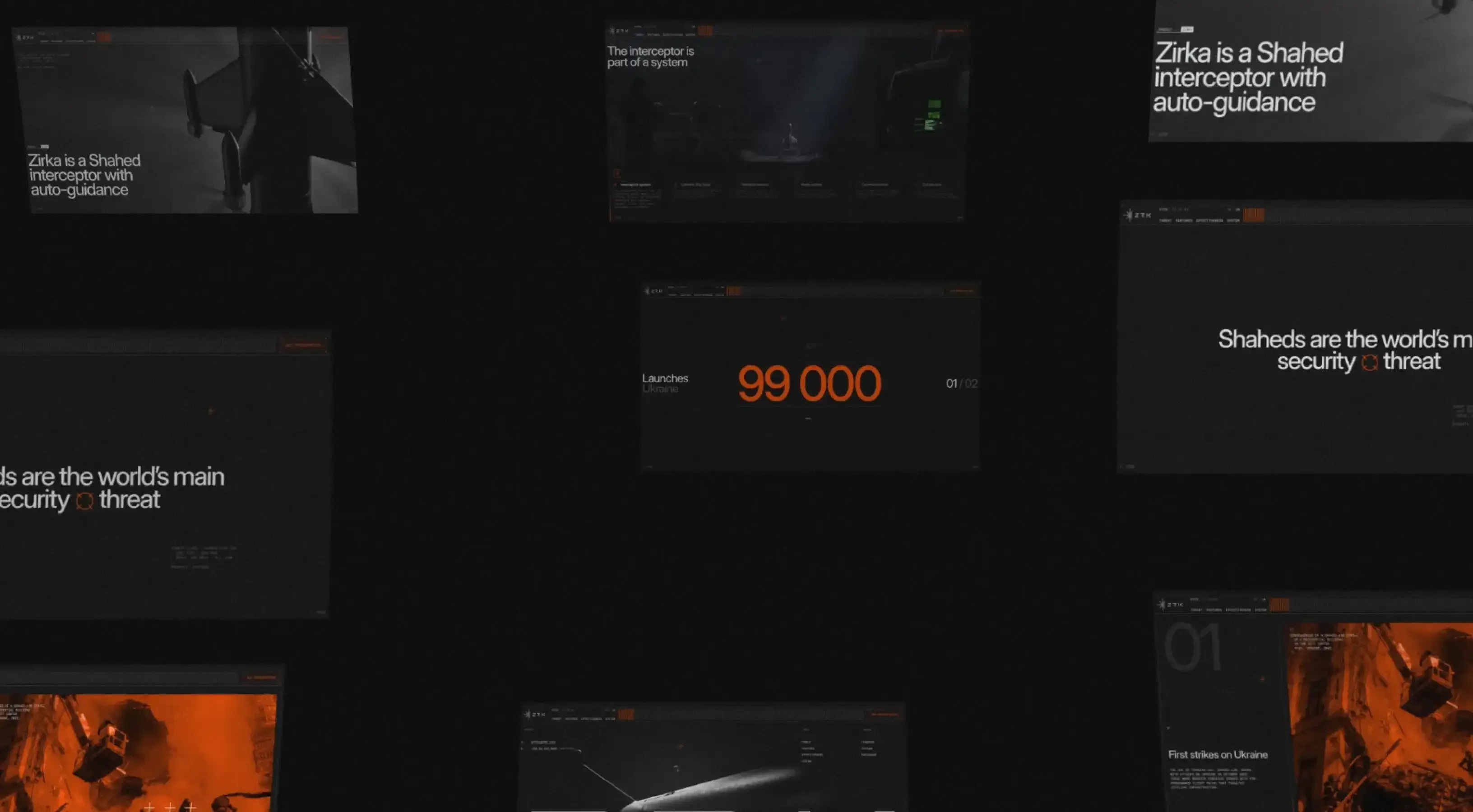
Most miltech websites are the same: corporate layouts, static visuals, technical documentation. They look more like a press release or an online catalog than a product built around advanced technology.
We wanted to break that pattern and create an immersive digital experience that shows the power of Zirka. Instead of simply explaining how the drone works, we built a visual environment that lets users feel the technology before reading the details.
Qream is one of the few Ukrainian teams that can build world-class websites. That's exactly what we came for—and exactly what we got.

Head of comms at Noctis LLC
Combining Zirka’s identity with the new UI
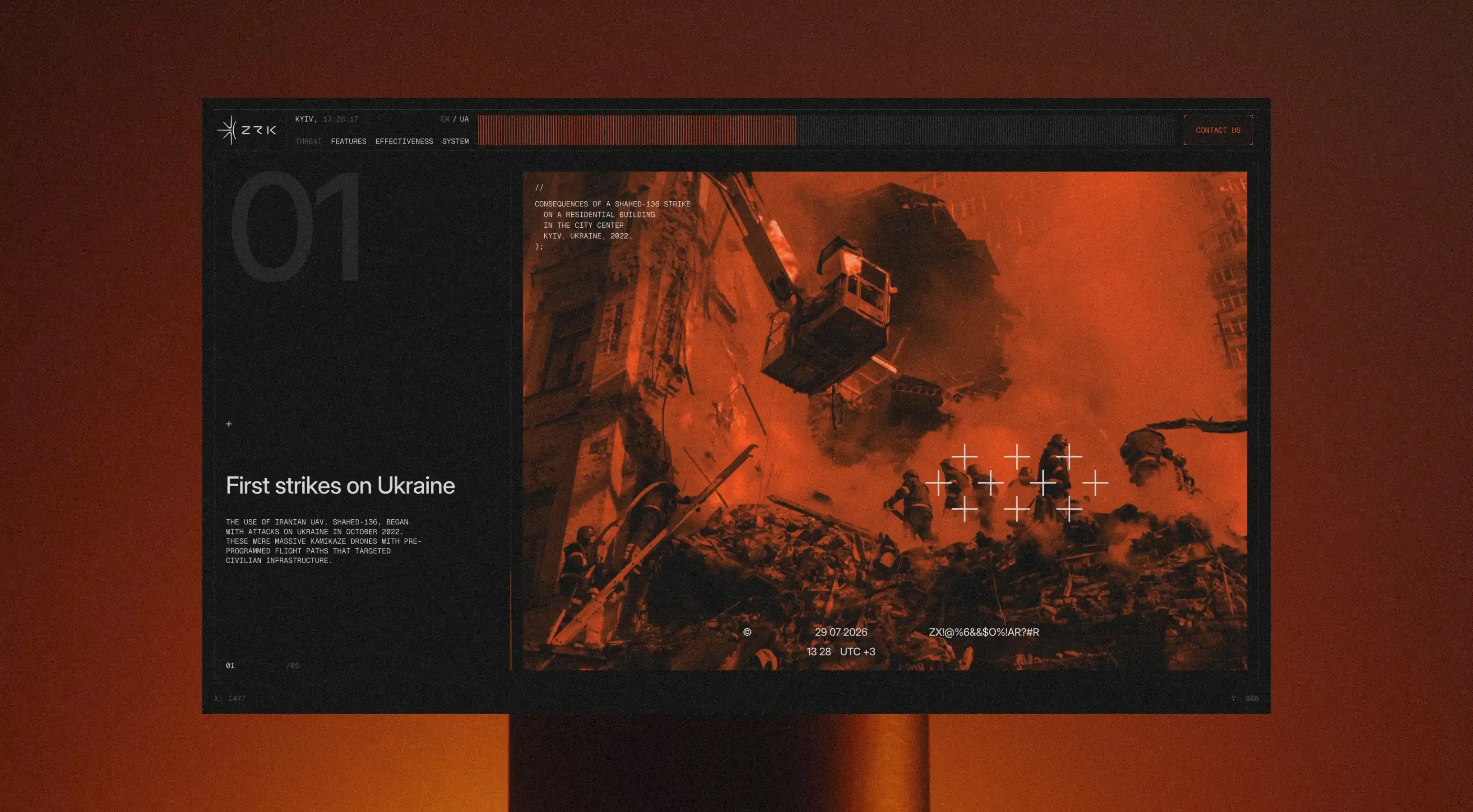
We started with the existing visual language: the logo, signature orange color, and typography. We didn’t aim to redesign the brand, but to amplify its military-tech character on the site.
For imagery, we created a fresh visual treatment inspired by modern military interfaces. We introduced an orange overlay effect that transformed regular photography into something more recognizable.
The hero section: turning a drone into a symbol
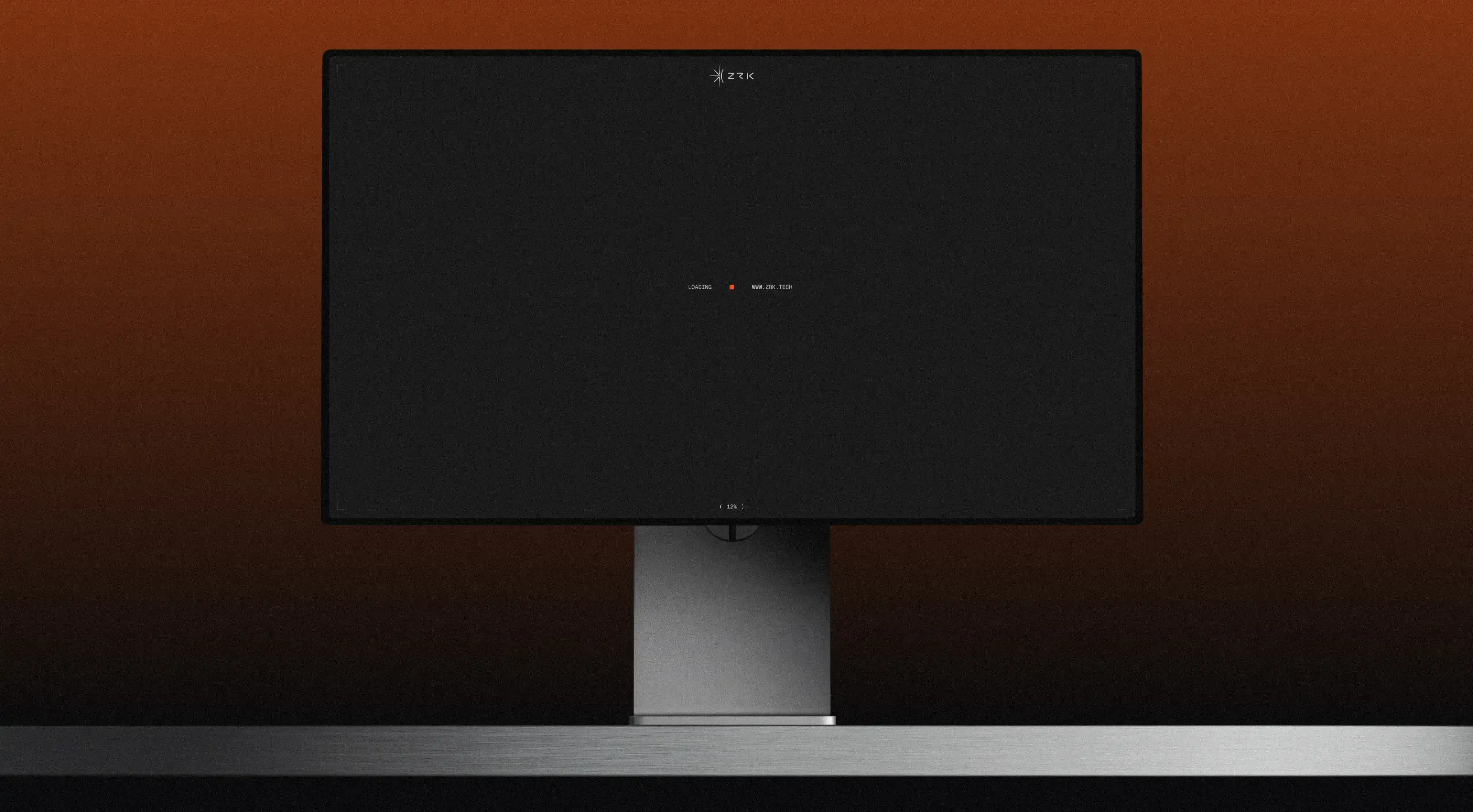
The first point of contact with Zirka became a lifelike experience. We skipped a standard product shot and placed a 3D model of the interceptor drone inside a dark environment—the exact night conditions where it works.
The main visual idea was built around contrast: the darkness represents the threat, while Zirka becomes the point of light cutting through it. We created a god-ray effect around the drone and highlighted the silhouette, making it feel more powerful and real.
Breaking down features through visual metaphors
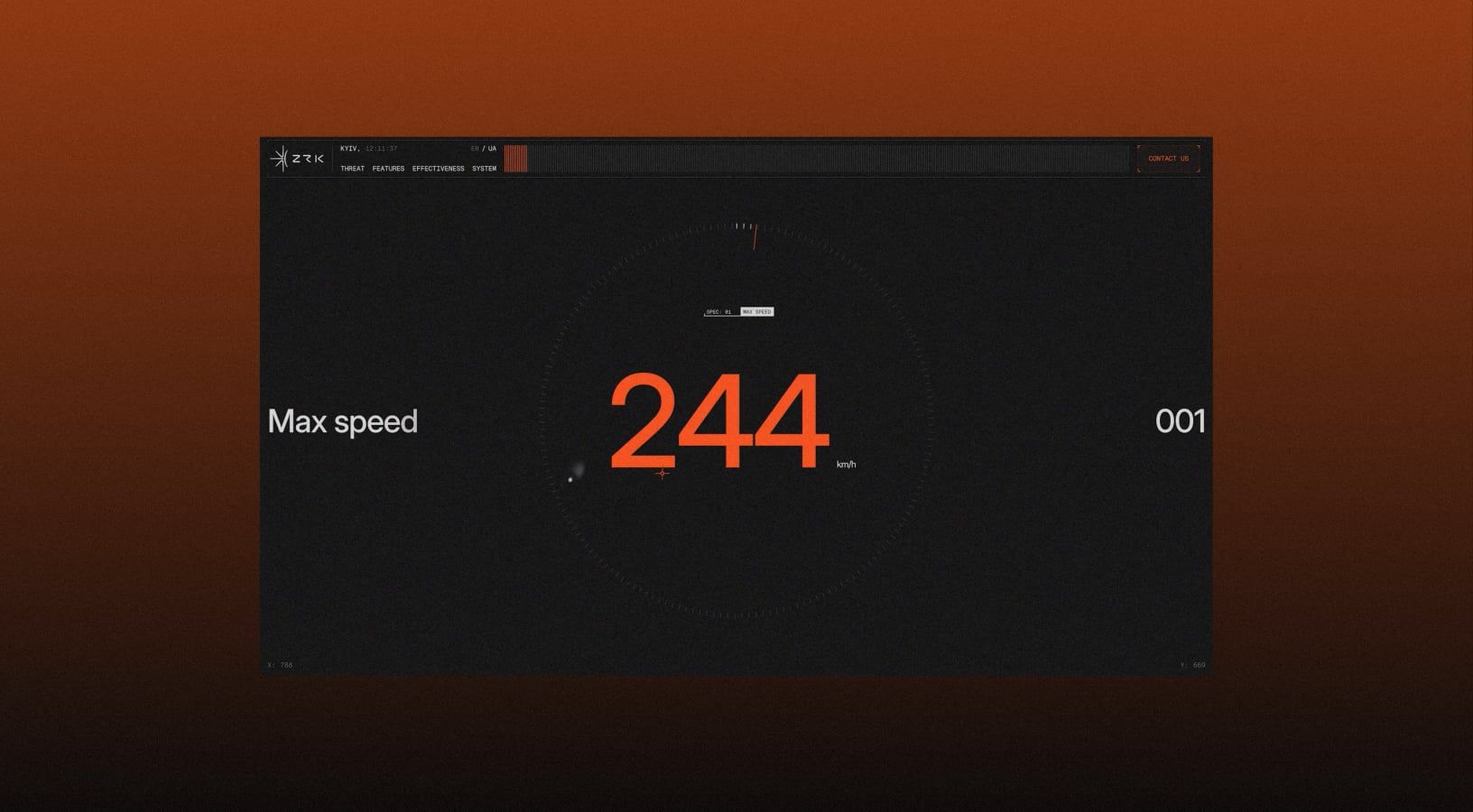
Presenting technical specifications as a simple feature list is too average. Instead, we turned them into an interactive system built around military-inspired visual metaphors.
Each capability is presented through a different element: targeting systems, radius indicators, navigation references, etc. The section feels less like reading documentation and more like exploring a mission interface.
More 3D, more impact
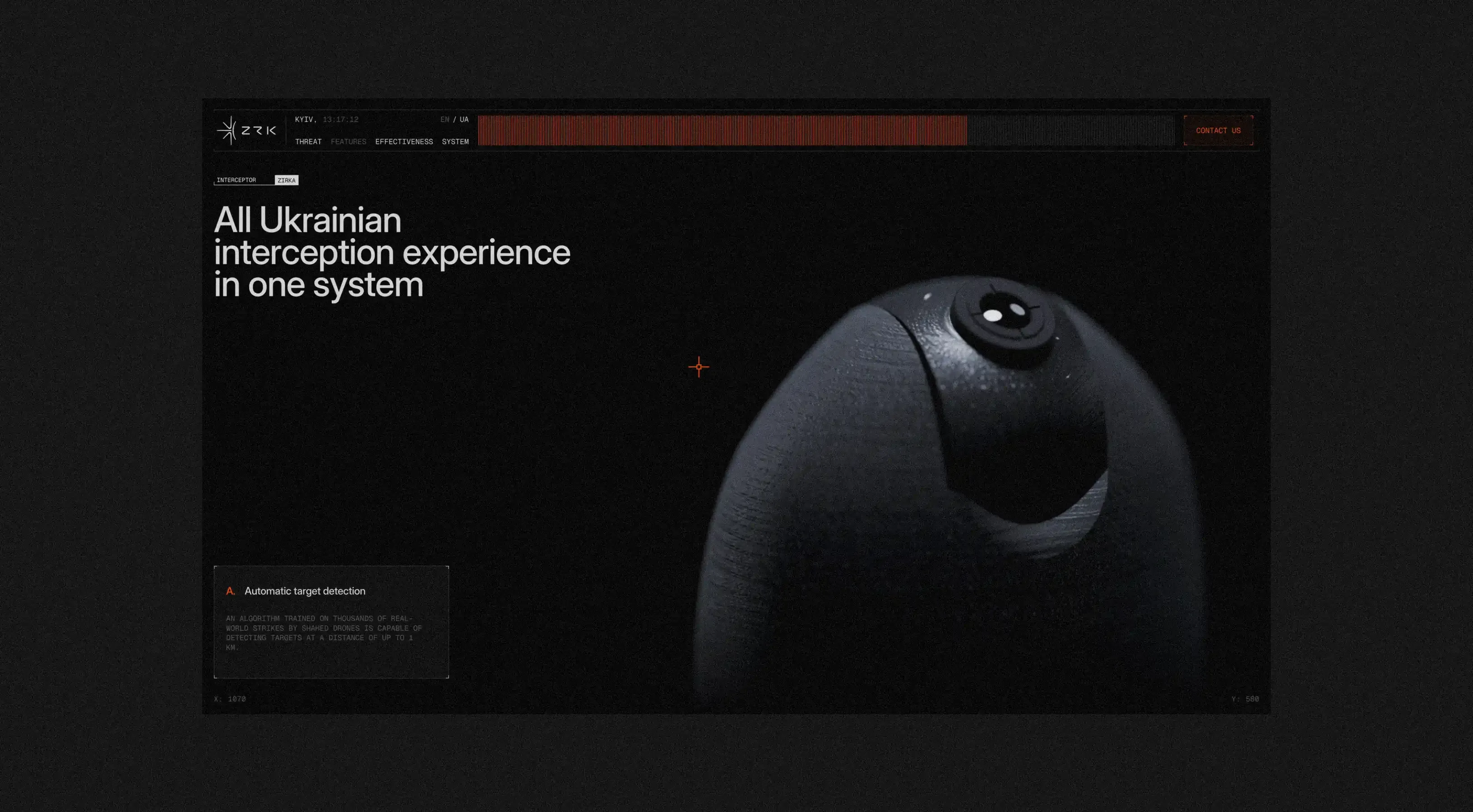
One of the site’s most impactful elements is the 3D specifications section. We created a cinematic scene focused on movement and technology.
The camera moves along the drone while light gradually reveals its structure and engineering details.
The drone as part of a larger system
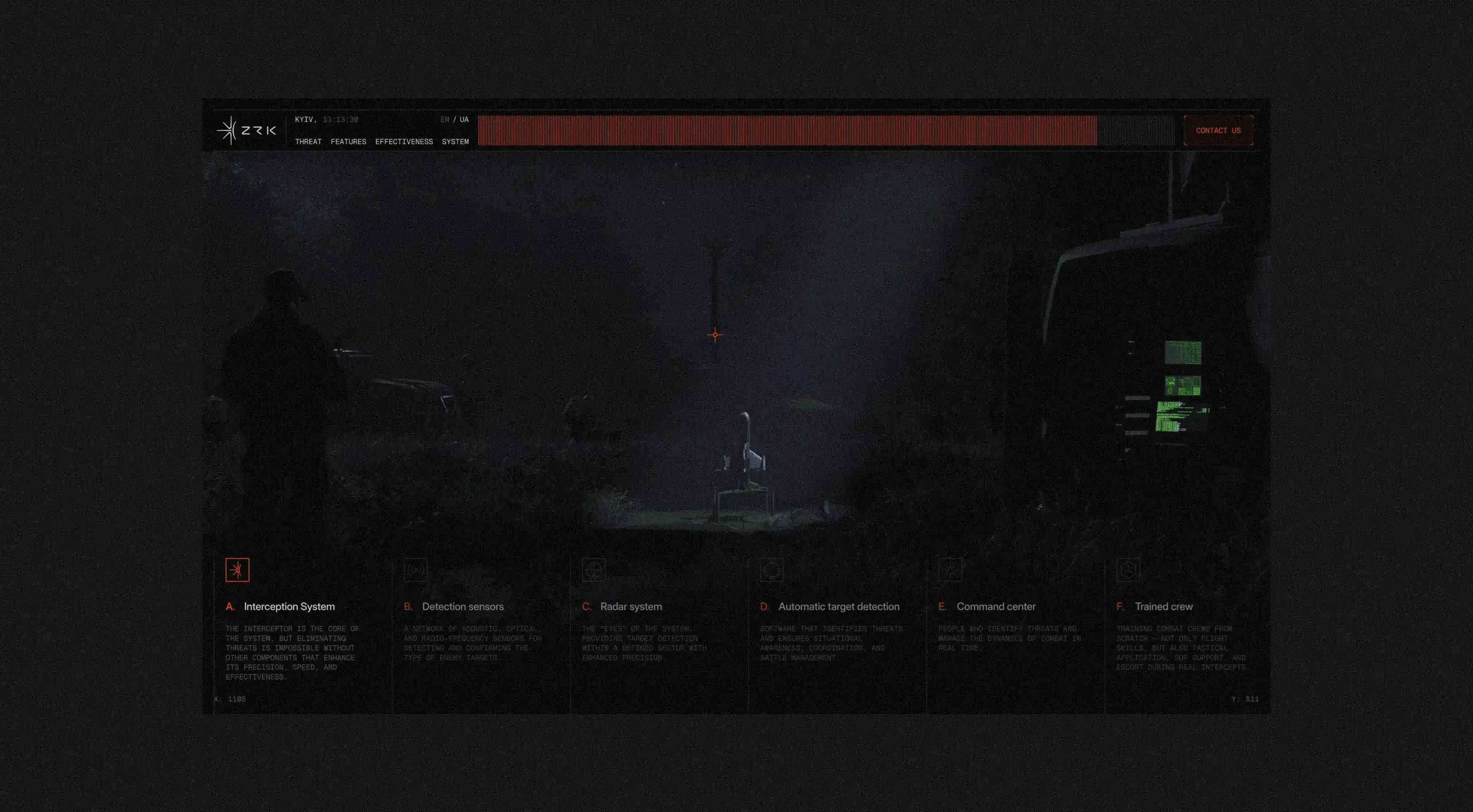
A dedicated section explains ZIRKA’s role within the aerial target interception system. We created an interactive scene where users can explore different elements of the system and understand how they function.
By switching between cards, users activate new scenarios that change the scene’s lighting and focus, making technical information easier to understand.
Developed in Webflow beyond expectations
Creating this level of interaction inside Webflow came with limitations. We had tight budget constraints, an aggressive timeline, and a product that required a lot of custom work.
The biggest challenge was balancing performance with visual ambition. We pushed Webflow beyond a typical website setup, combining 3D, animations, and interactions into one experience that could communicate Zirka’s value.
Scope in numbers
6
Q-team members involves
2
Website localizations (EN & UA)
1
Website for a next-gen Ukrainian product
Recognition:
FWA, 2026
CSS DA, 2026