TL;DR
To choose a web design company, define your scope (design, development, or full-service) before you look at portfolios, shortlist 3–5 agencies using AI search tools and referrals—not just directories—ask about their process and past results, and pick a design agency that fits your project’s actual scope, whether that’s a lean team or a larger one, unless your project genuinely needs one of the extremes.
Choosing a web design agency is one of those decisions most teams make once every few years, which is why it goes sideways so often. You’re stuck comparing portfolios you can’t fully judge, promises you can’t verify, and price tags that make zero sense. This guide walks you through how to find good candidates in 2026, what to ask them, how to read their work, and which red flags mean it’s time to keep looking.
How to choose a web design agency: your 2026 search checklist
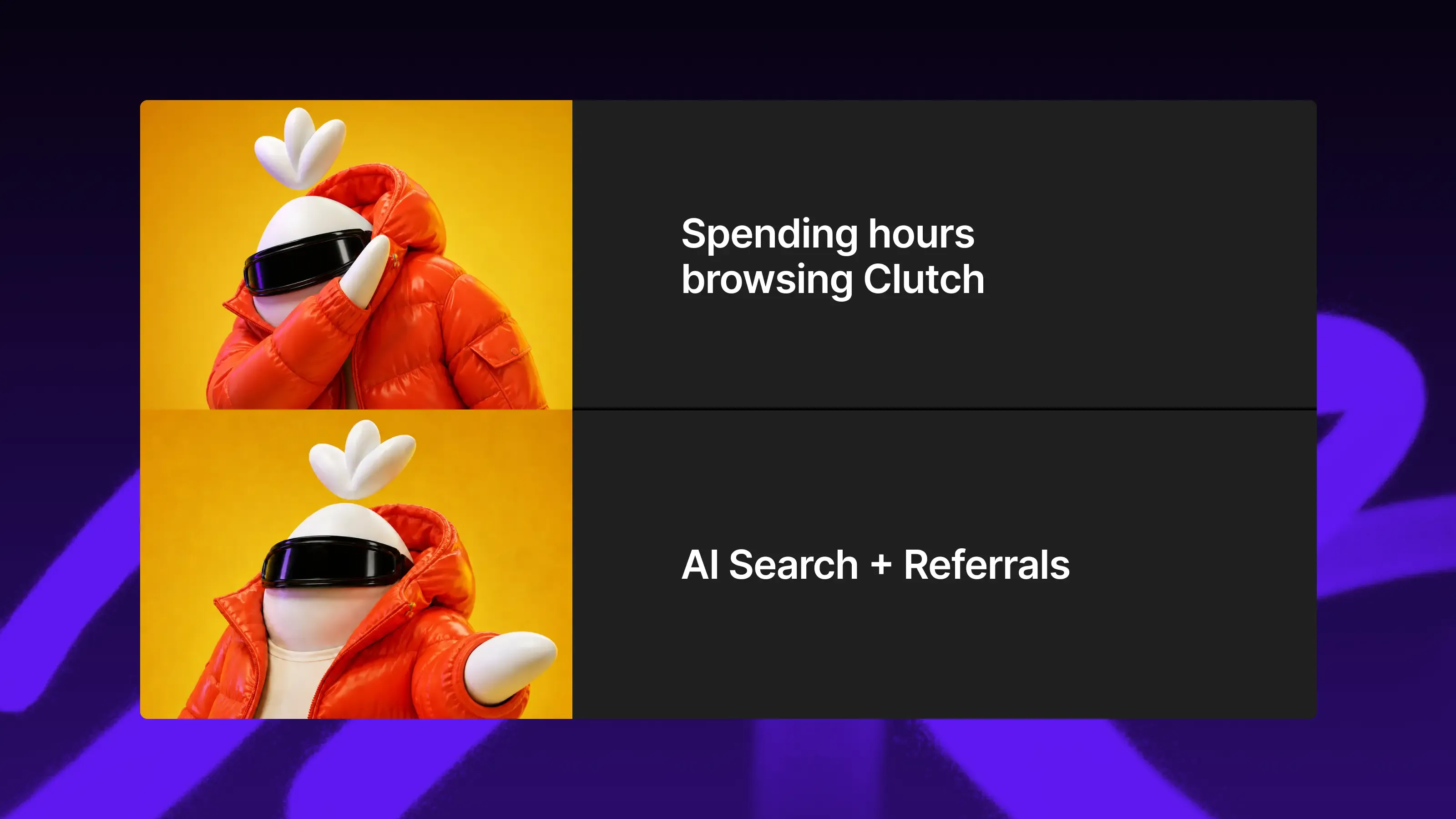
“Check Clutch, try Clutch.” Clutch, Clutch, and Clutch again. That’s been the standard advice for years, and it never really went out of style. And honestly, part of that still holds up: you can gauge an agency’s size, skim some reviews. But lean on it alone, and you’re boxing yourself in. Relying only on Clutch is like choosing an apartment based on its closet alone—ignoring the kitchen, the layout, the location, everything else that actually matters.
3 things matter more right now:
- AI search. Ask ChatGPT or Perplexity something like “best B2B web design agency for SaaS.” You’ll get results pulled from case studies, press mentions, and real project work.
- Referrals from people who've been through it. Ask around. A recommendation from a founder or marketer who actually worked with an agency for 7 months tells you more than any rating with a million stars.
- Directories for verification, not discovery. Once your shortlist is ready, use directories to cross-check reviews and confirm the agency actually does what it says.
The simple move: build your shortlist through AI search and referrals first, then check it against a directory before you reach out to anyone.
Decide what you actually need (design vs dev vs full-service)
Before you look at a single agency’s portfolio, stop and give yourself an honest answer: what do you actually need under the label “web design”? That one decision filters out more clutter than anything else, right from the start.
Design only. You already have your own dev team or a separate build partner. You need visuals, UX, and files ready to hand off.
Development only. The mockups already exist (from an in-house designer or a previous agency), and you need someone to turn them into a working site.
Everything at once (design + development). You need one partner to carry the project from idea to launch: technical build, integrations, and often the CMS setup too.
If you don’t have a technical team of your own, go with “everything at once”—the safest default. It removes that handoff moment between designers and developers, where things most often break and stall.
Questions to ask a web design company
Shortlist ready? Then the first conversation should be nothing like “tell us about yourselves.” Here are the questions worth asking a web design company to find out if they’re actually the partner you’re looking for:
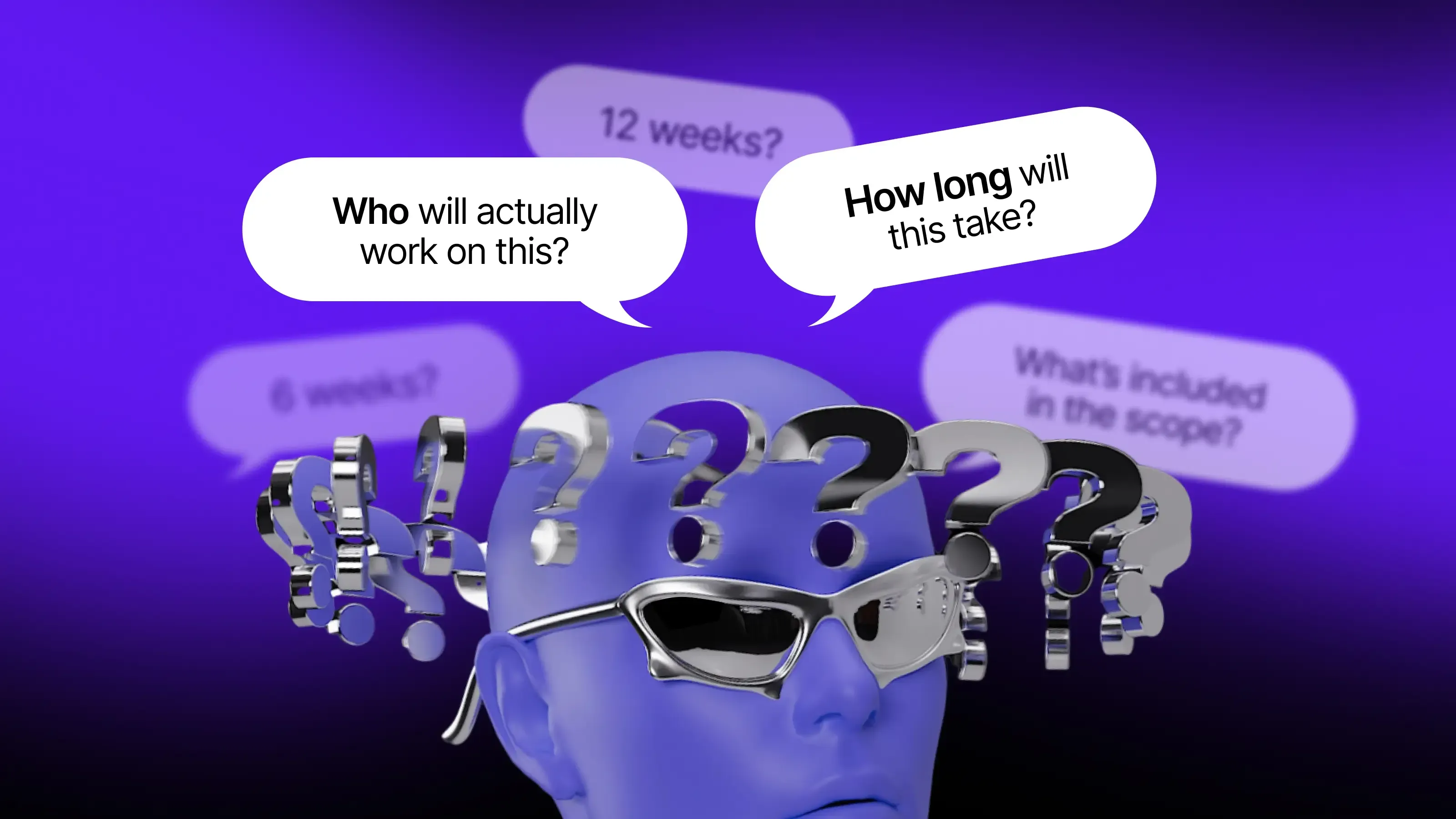
What does your process look like from kickoff to launch, and how long does each stage take?
A solid agency should walk you through their process stage by stage—discovery, design, development, testing, launch—with rough timelines for each and what could push those timelines out. Vague or overly generic answers (“it depends,” “we’ll figure it out as we go”) usually signal weak project management later.
Can you walk me through a project similar in scope to mine, including the results?
Listen for specifics: what the client’s problem actually was, what the agency changed, and what happened after launch. If the answer stays at “we redesigned the site and the client was happy,” push further. That’s not a result, that’s a brief summary.
Who exactly will work on my project?
A good agency gives you names and roles: who’s your main point of contact, who’s designing, who’s building. If they only talk about the founders or senior team without naming who’ll actually touch your project day-to-day, that’s worth a follow-up question.
How do you handle changes and scope creep?
The answer should spell out a real process: how change requests get logged, priced, and approved before work starts on them. If they wave it off with “we're flexible” and nothing more concrete, expect that flexibility to show up as unplanned costs later.
What do you need from us, and by when?
A strong agency can already tell you, roughly, what content, assets, and decisions they’ll need from you and by what point in the timeline. If they can’t give you even a rough list this early, that’s often a sign the timeline itself isn’t well thought out.
What happens after launch?
Push for specifics: response times, what’s covered, what costs extra. Get it in writing if you can. “We’re always here for you” is a nice sentence, but without real numbers behind it. “Always” tends to end right around the time the final invoice clears.
If an agency can’t give you a clear answer to even one of these, that’s a pretty complete answer too. The conclusions are all yours from here.
How to read a portfolio (results, not screenshots)
Keep in mind that most portfolios are built to show off their best side. Behind all those flashy adjectives—“clean,” “modern,” “impactful”—it’s easy to lose the point. And what you actually need is information about whether they can handle your problem.
Look at 2 things:
The agency’s own site. If a company couldn’t pull off a great site and brand for itself, why would you assume it’ll do better for you? This is one of the most honest signals you’ve got: there’s no one to blame here, no client, no constraints, just them.
Case studies with real numbers, or real thinking. “Redesigned the site, conversion rate went up 34%, time to first demo dropped from 12 days to 4”—now that says something. That’s an agency thinking in business results.
But not every project has a number attached. A visual refresh, a new layout, a rebrand, these don’t always come with a before/after metric, and that’s a normal thing. In these cases, look at how the team approached the problem: what was broken, why they made the choices they made, and how that ties back to the client’s business goals. An agency that can walk you through their thinking is just as telling as one that hands you a stat.
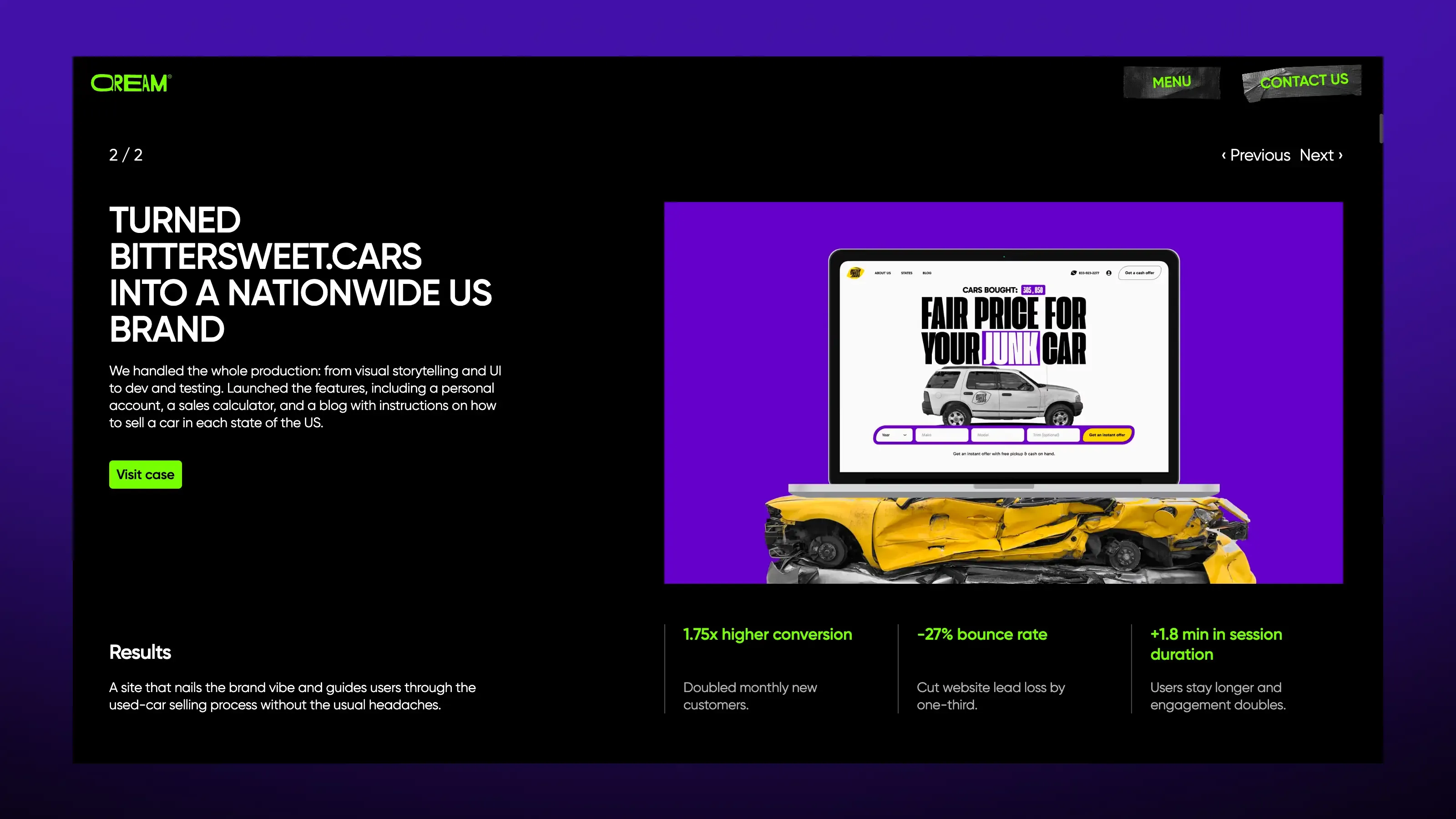
That’s exactly why we track performance before and after every redesign at Qream. Take BitterSweet.cars—after the rebuild, conversion went up 1.75x, bounce rate dropped 27%, and session duration increased by 1.8 minutes. That’s the kind of before/after proof worth asking every agency on your shortlist for.
Awards are another signal worth checking. They’re not everything, but the proof that peers in the industry rated the work as genuinely standout.
An empty portfolio with no context doesn’t automatically mean the agency is bad. But it does mean you should ask directly: “What changed for the client after launch?” The answer will settle it.
Why size matters—agency vs big vs freelancer
Agency size is the thing everyone thinks about last, when it should come first. Too small, and you’re taking on real risk. Too big, and you’re paying for capacity you’ll never use.
Solo freelancers work well for a small, tightly scoped project with a fixed budget. But one person physically can’t carry strategy, design, development, and project management at once without something slipping through the cracks. And if that person gets sick or takes on too many other clients—say goodbye to your deadlines.
Large agencies (100+ people) bring process and polish, but you’re usually several layers removed from whoever’s actually doing the work, and the price tag carries the full overhead of that scale. A small or mid-sized B2B project ends up paying for infrastructure it never needed.
Mid-sized agencies. The sweet spot, and for most B2B web design agencies, this is the right call. The team’s small enough that you work directly with senior people, and structured enough that the project doesn’t hinge on any single person. You get accountability, without paying for overhead you don’t need.
None of this is a silver bullet, a massive enterprise overhaul might genuinely need a large agency’s bench strength, and a five-page site might be perfectly fine with a freelancer. But for the mid-sized B2B projects most companies are actually running, agency is the smarter default.
Here’s the comparison side by side:
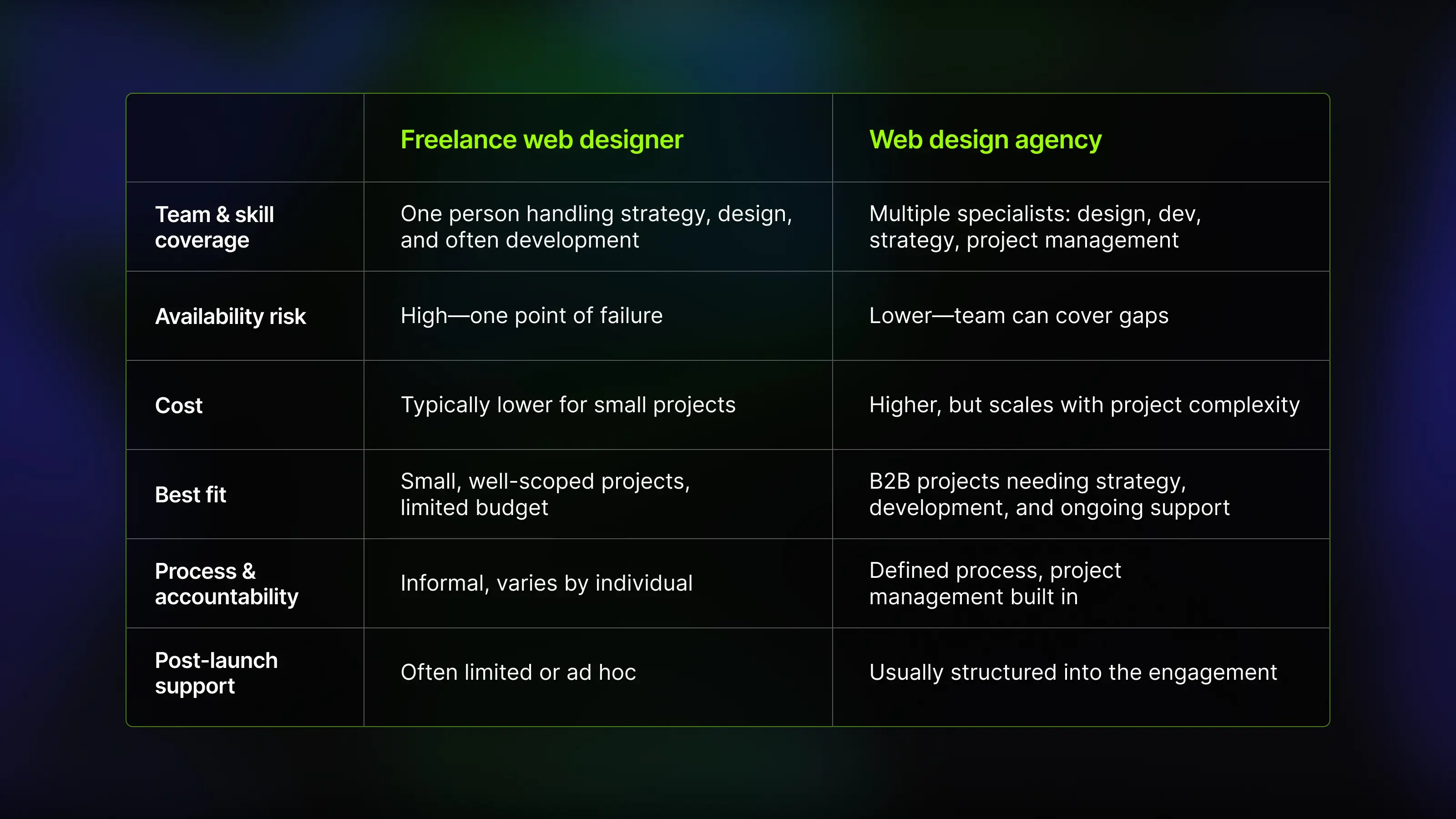
None of these options is automatically better than the others. The choice between a freelancer and an agency comes down to the complexity of the project and how worried you are that this one person might suddenly become unavailable halfway through.
Web design agency red flags to walk away from
Spotting a red flag doesn’t mean you should cut the agency on the spot. One issue alone might just be a bad day or a miscommunication. But if you spot 2 or more of these in a single conversation, that’s your cue to walk away. Here’s what to watch for:
- They can’t explain their process. If an agency can’t walk you through how a project actually moves from kickoff to launch, expect chaos after you sign.
- They push you to sign fast. A confident agency can wait a week while you think it over.
- A vague quote with no breakdown of what you’re paying for. If the scope is fuzzy at the proposal stage, the invoices will be just as fuzzy later.
- They don’t ask about your business. If an agency jumps straight to “here’s what we’ll build” without asking what you’re trying to achieve, they’re designing for their own portfolio. Your results were never really the point.
- They won’t put you in touch with a past client. A legit agency can always introduce you to at least one.
- Everything runs through one person who can’t answer technical questions.That’s a sign the people building your site aren’t the ones you’re actually talking to.
How Qream approaches this
We didn’t start Qream as a small agency by accident. We’ve seen how both extremes let B2B companies down: a freelancer who disappears mid-project, or a large agency that hands the work to a team of junior staff three weeks in.
Seven years and 300+ B2B projects have shaped a specific process—one built around what actually matters to a client during a project, not just around getting the work done.
A few things that come out of that:
- Senior, award-winning designers on the work—not a junior team learning on your project.
- A project manager who own the process—the manager tracks the project end to end, catches problems before they become delays, and keeps you informed without you having to ask.
- We go beyond the brief when it serves the result. If we see a better answer than what was scoped, we bring it.
- A defined flow, so you always know what’s next. Every stage—from moodboarding to a live site—has a clear sequence, so there's no guessing what happens after this week.
- Regular follow-ups, by default. You’re not the one chasing a status update; we send it before you have to ask.
Want a partner that designs and builds?
FAQ
Web design cost varies a lot depending on scope, but here’s the short version: freelancers typically start around $3K for a small, tightly scoped site. At Qream, a small 5-page site starts at $15K; a full custom B2B site with design and development starts around $50K. Big agencies or complex, feature-heavy projects can climb into 6 figures.
Don’t anchor on industry averages. Get 2–3 detailed quotes for your specific project instead. Because “web design” can mean anything from a 5-page brochure site to a fully custom platform. The price gap is huge depending on what you actually need.
The typical web design timeline for a medium-sized website in the B2B segment is usually 6–12 weeks from project start to launch. Simple websites can be developed faster, while complex ones with custom functionality may take longer.
The bottom line: speed largely depends on you—or, more precisely, on how quickly your team delivers content and feedback. Ask designers and developers for a timeline based on the actual scope of work. Because delays with content are the number one reason why deadlines go out the window.
When it comes to web design agency vs freelancer, the decision usually comes down to scope and expertise. Choose an agency if your project needs a mix of skills—design, development, strategy—or ongoing support after launch. A freelancer is a good fit for small, well-defined projects that don’t require a full team, where one person’s skill set covers everything you need.
The key is to match the setup to what your project actually requires, not just go with whoever’s cheaper.
The questions to ask a web design company before signing anything:
- What’s their workflow and timeline?
- Do they have an example of a similar project with real results?
- Who exactly will be working on your site?
- How do they handle revisions and post-launch support?
These questions will tell you right away whether you're dealing with a real process—or just a slick pitch deck with nothing behind it.
Written by

Qream co-founder | Business growth and strategy
Leads Qream's business development and commercial strategy, bringing experience across sales, customer support, and complex digital projects. Reviews topics around project scoping, agency engagement, strategic partnerships, and growth.